Editorial notice: Reviewed for underwriting accuracy by the RJI Institutional Review Team | Published: May, 2026 | Updated: June, 2026
—————————————————————————————————————————
Executive Summary
Catastrophic Fall Risk in Occupational Insurance refers to severe workplace falls that can permanently disable or kill a worker. Insurers treat these injuries as one of the most serious occupational insurance exposures because a single fall can trigger massive medical costs, long-term disability payments, claim investigations, and years of financial liability. This directly affects underwriting approval, policy pricing, exclusions, and claim scrutiny.
What Is Catastrophic Fall Risk?
Catastrophic fall risk refers to the possibility that a worker could suffer a life-changing or fatal injury after falling from an elevated work environment.
In insurance underwriting, the concern is not just whether a fall happens. The real concern is how severe the injury becomes and how long the financial consequences last.
A minor fall injury may involve:
- sprains
- bruises
- temporary back strain
- short-term recovery
A catastrophic fall injury is very different.
These incidents often involve:
- spinal cord injuries
- traumatic brain injuries
- paralysis
- multiple fractures
- permanent mobility loss
- amputations
- fatal injuries
From an insurer’s perspective, catastrophic falls are dangerous because they can permanently affect a worker’s ability to earn income.
A roofer who cannot climb again, a tower worker who suffers spinal damage, or an offshore technician with permanent mobility loss may require years of disability benefits, medical care, rehabilitation, and wage replacement.
This underwriting process closely connects to height exposure underwriting, where insurers evaluate climbing frequency, maximum elevation, rescue difficulty, and fall severity before approving coverage for elevated workers.
That long-term financial exposure is why insurers evaluate elevated work very aggressively.
Why Do Insurers Treat Fall Injuries So Seriously?
Insurers understand that one severe fall can become an extremely expensive claim.
A catastrophic fall does not usually end with one hospital visit. The financial impact can continue for years.
Federal occupational injury data consistently identifies falls as one of the leading causes of severe and fatal workplace injuries in elevated occupations, reinforcing why insurers treat catastrophic fall exposure as a major long-term financial risk.
Underwriters evaluate exposures such as:
- long-term disability payments
- expensive surgeries
- rehabilitation costs
- permanent work restrictions
- home care support
- lost income replacement
- legal liability exposure
- fatality benefits
- ongoing medical treatment
For example, a utility lineman who suffers permanent spinal damage after falling from height may never return to physically demanding work again.
That means the insurer may face:
- lifetime disability payments
- repeated surgeries
- physical therapy costs
- workers’ compensation settlements
- legal disputes
- survivor benefits in fatal incidents
These long-term financial consequences closely connect to Permanent Disability Risk from Elevated Work, where insurers evaluate how catastrophic injuries permanently alter earning capacity, long-term disability exposure, and future underwriting risk.
From an underwriting perspective, severe falls create two major concerns:
| Exposure | Insurer Concern | Insurance Consequence |
|---|---|---|
| High-elevation work | Permanent injury potential | Stricter underwriting |
| Severe injury probability | Long-term claim costs | Higher premiums |
| Difficult rescue environments | Increased fatality exposure | Coverage restrictions |
| Physical labor dependency | Loss of earning capacity | Disability underwriting scrutiny |
This is why elevated occupations are often classified as high-risk even when accidents are not frequent.
Severe falls can also create major workers’ compensation exposure because insurers may face years of medical treatment costs, wage replacement obligations, rehabilitation expenses, and permanent disability settlements.
Why Severity Matters More Than Frequency
One of the most important underwriting concepts in occupational insurance is that severity often matters more than frequency.
Some workplace injuries happen regularly but cost relatively little.
Others happen less often but create catastrophic financial losses.
For insurers, catastrophic falls fall into the second category.
A worker who slips and strains a shoulder may recover in a few weeks.
A worker who falls from a communication tower may never return to physical labor again.
This long-term claim evaluation closely connects to Fall Severity Modeling in Disability Insurance, where insurers estimate how permanent injuries affect future disability exposure and lifetime benefit obligations.
That difference completely changes how insurers evaluate risk.
Underwriters know that:
- severe injuries generate larger claims
- permanent disability creates ongoing financial obligations
- catastrophic injuries often trigger legal action
- fatal falls create survivor benefit exposure
- recovery timelines become unpredictable
This is why a low-frequency but high-severity occupation can still receive aggressive underwriting restrictions.
In many elevated occupations, insurers worry less about small injuries and more about the possibility of one devastating incident.
Underwriting severity model: Catastrophic occupational risks are often priced more aggressively based on potential claim size rather than claim frequency, especially when permanent disability exposure exists.
How Insurers Evaluate Catastrophic Fall Exposure
Insurers do not evaluate fall risk using job titles alone.
They study the actual exposure conditions surrounding elevated work.
A worker classified as “maintenance technician” may receive completely different underwriting treatment depending on whether the job involves warehouse repairs or climbing offshore drilling structures.
Maximum Working Height
Higher elevations increase the probability of catastrophic injury.
A fall from a six-foot ladder is not viewed the same way as a fall from a 300-foot communication tower.
Greater height exposure usually means:
- higher disability probability
- higher fatality exposure
- larger insurance losses
These underwriting limits closely relate to Height Restrictions in Occupational Insurance Policies, where insurers use elevation thresholds to determine eligibility, exclusions, and approval conditions for high-risk workers.
Frequency of Climbing
Insurers evaluate how often workers leave ground level.
Occasional ladder use creates less concern than daily climbing.
Workers repeatedly exposed to elevated environments face greater cumulative risk.
Type of Elevated Structure
Different structures create different underwriting concerns.
| Structure Type | Underwriting Concern |
| Ladders | Stability and improper usage |
| Scaffolds | Collapse and balance risk |
| Towers | Extreme fall severity |
| Bridges | Open-edge exposure |
| Wind turbines | Rescue difficulty |
| Offshore platforms | Combined environmental hazards |
Offshore vs Land-Based Work
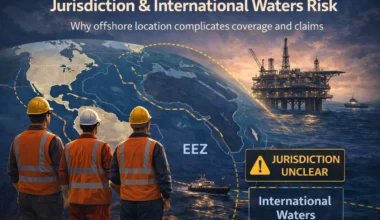
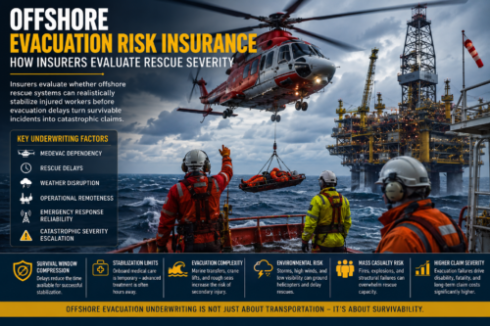
Offshore elevated work receives stricter underwriting because rescue operations are harder.
Insurers understand that:
- medical access may be delayed
- weather conditions change rapidly
- evacuation becomes more complicated
- rescue costs increase significantly
This increases potential claim severity.
Rescue Difficulty
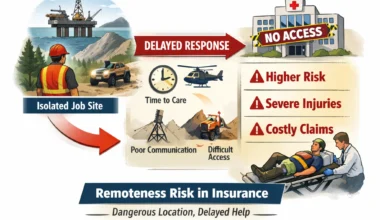
Workers in remote or elevated environments may not receive immediate emergency treatment.
Longer rescue times can worsen injury outcomes. This issue is examined further in Rescue Difficulty in High-Elevation Underwriting, where insurers evaluate how delayed medical access increases catastrophic claim severity.
Underwriters consider this carefully.
Fall Arrest Systems
Insurers review whether workers use:
- harness systems
- anchor points
- lifelines
- engineered fall protection
- rescue systems
Reliable fall protection can reduce underwriting concern.
Poor or inconsistent safety systems increase insurer caution.
Weather Exposure
Rain, high winds, ice, storms, and unstable conditions increase catastrophic fall probability.
Outdoor elevated occupations often face stricter underwriting because environmental conditions are difficult to control.
Ladder vs Scaffold vs Tower Work
Insurers distinguish between different climbing environments.
Tower climbing usually receives stricter underwriting than standard ladder work because:
- fall heights are greater
- rescue operations are harder
- exposure duration is longer
Confined Elevated Spaces
Workers operating in tight elevated environments may face restricted movement and complicated rescue conditions.
This increases severity concerns.
Prior Fall Incidents
Previous fall claims or injury history can increase underwriting scrutiny.
Insurers may view repeated incidents as evidence of elevated exposure or poor safety controls.
Safety History
Employers with poor safety records, repeated OSHA violations, or weak fall-protection programs often create higher underwriting concern.
Insurers use safety history to estimate future claim severity.
Occupations With High Catastrophic Fall Exposure
Roofers
Roofers work near open edges, steep surfaces, unstable footing, and changing weather conditions.
Insurers worry about severe falls resulting in spinal injuries, traumatic brain injuries, or permanent disability. This is one reason Why Roofers Face Strict Insurance Underwriting remains a major underwriting issue across disability insurance, workers’ compensation, and occupational accident coverage.
These same catastrophic fall exposures are examined in Roofing Contractor Insurance Underwriting, where insurers evaluate working height, fall-protection compliance, crew supervision, claim history, project scope, and overall loss potential before determining eligibility, pricing, and coverage restrictions.
Tower Climbers
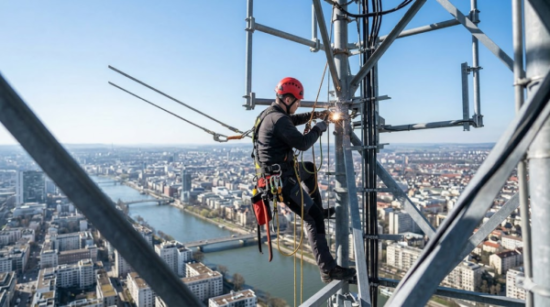
Tower climbers face some of the highest catastrophic fall exposures in occupational insurance. Extreme heights, difficult rescues, and prolonged elevated exposure create major underwriting concern.
These same factors heavily influence Tower Climbers Insurance, where insurers evaluate extreme height exposure, rescue complexity, fatality risk, and long-term disability potential before determining eligibility and pricing.
Structural Ironworkers
Structural ironworkers often work on unfinished elevated structures with open-edge exposure. Insurers evaluate the potential for fatal falls and severe trauma.
This elevated severity profile is a major factor in Structural Ironworkers Insurance, where underwriting decisions often depend on working height, structural steel exposure, fall-protection practices, and catastrophic injury potential.
Many of these same underwriting principles also apply to Structural Steel Erector Insurance, where insurers evaluate steel frame erection, beam installation, connection work, crane-assisted operations, and elevated structural assembly because these activities significantly increase catastrophic fall exposure and claim severity.
Bridge Workers
Bridge construction and maintenance workers frequently operate above water, traffic, or significant elevations. Underwriters consider both fall severity and rescue difficulty.
Insurers also evaluate the complexity of elevated infrastructure environments because structural steel work, bridge construction, and industrial access systems often create larger catastrophic exposure than standard ground-level construction work.
These same exposures heavily influence Bridge Workers Insurance underwriting, where insurers assess open-edge work environments, infrastructure height exposure, rescue complexity, and the potential for severe fall-related claims.
Bridge projects performed over navigable waters may also involve unique compensation frameworks discussed in Bridge Workers and the Longshore and Harbor Workers’ Compensation Act (LHWCA), where federal maritime compensation rules can influence claim handling, employer liability exposure, and occupational risk evaluation.
Wind Turbine Technicians
Wind turbine work combines climbing exposure with confined elevated environments and difficult emergency access. Insurers often apply stricter underwriting because catastrophic injuries can be difficult to manage quickly.
These underwriting concerns are also central to Wind Turbine technician Insurance, where insurers evaluate turbine height, rescue difficulty, remote work environments, and catastrophic fall exposure when determining coverage eligibility and pricing.
Utility Linemen
Utility workers climb poles and elevated systems while also facing electrical hazards.
A severe fall combined with electrical injury can produce extremely expensive insurance claims.
Scaffold Workers
Scaffold workers face balance risks, structural instability exposure, and repeated elevated movement.
Insurers study whether workers operate on temporary or complex scaffold systems.
Industrial Painters
Industrial painters frequently work on elevated structures such as bridges, tanks, and towers.
Underwriters evaluate prolonged height exposure and environmental conditions.
These same exposure factors shape Scaffolder Insurance, where insurers evaluate scaffold height, temporary access structures, erection and dismantling duties, fall-protection practices, and project complexity before determining underwriting eligibility and pricing.
Offshore Maintenance Workers
Offshore maintenance workers combine elevated work with remote rescue conditions and severe environmental exposure.
These occupations are often assigned higher occupational class ratings because insurers associate elevated work with severe injury exposure, permanent disability potential, and large long-term claims.
These classifications directly influence workers’ compensation pricing, disability underwriting restrictions, and long-term claim severity projections.
This creates heightened concern for catastrophic claims.
How Catastrophic Fall Risk Affects Insurance Coverage
Workers with elevated fall exposure often face higher premiums, stricter approvals, and reduced coverage availability because insurers expect larger long-term claim exposure from catastrophic injuries.
Many of these pricing and eligibility decisions are influenced by NCCI Occupational Classification and EMR Systems, where occupational classifications and experience modification rates help insurers evaluate historical loss performance, claim severity trends, occupational risk categories, and future underwriting exposure.
Higher Premiums
Severe fall exposure usually increases insurance pricing. Insurers charge more when they believe catastrophic injury probability is higher.
This pricing structure closely relates to Why Elevated Workers Pay More for Insurance, where insurers calculate elevated occupations based on long-term severity exposure rather than simple accident frequency.
Stricter Disability Insurance Underwriting
Disability insurers carefully evaluate whether a worker could realistically return to work after a severe fall. This directly affects disability insurance for high-risk workers because insurers must evaluate whether an injured worker could realistically return to physically demanding labor after a catastrophic fall.
Physically demanding occupations often face:
- stricter approvals
- reduced benefit amounts
- longer waiting periods
- occupational exclusions
Underwriting decision thresholds usually become stricter when elevated workers combine multiple severity factors, such as:
• extreme working heights
• offshore exposure
• prior fall claims
• inconsistent safety records
• physically demanding labor dependency
At certain thresholds, insurers may:
• reduce available coverage
• extend waiting periods
• add occupational exclusions
• require full medical underwriting
• decline coverage entirely
Occupational Exclusions
Some policies exclude:
- tower climbing
- offshore elevated work
- certain contracting duties
- side climbing jobs
Workers sometimes discover these exclusions only during claim investigations.
Benefit Limitations
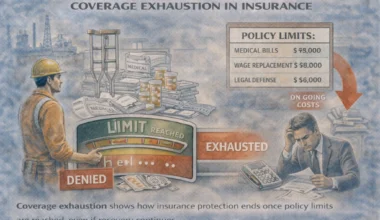
Insurers may reduce available benefit levels for workers with extreme fall exposure.
This limits the insurer’s long-term financial liability.
Waiting Periods
High-risk workers may receive longer disability waiting periods before benefits begin.
Insurers use waiting periods to reduce short-term claim exposure.
For example, a worker may need to remain disabled for:
- 30 days
- 60 days
- 90 days
- 180 days
before disability payments begin.
From an underwriting perspective, longer waiting periods help insurers reduce smaller or temporary claims.
However, catastrophic falls often create permanent injuries that extend far beyond these waiting periods.
While longer waiting periods (e.g., 180 days) lower premiums, a catastrophic fall almost always leads to a claim that exceeds that period anyway. This reinforces why insurers remain strict even with long waiting periods.
That is why elevated occupations still receive strict underwriting even when longer elimination periods are used.
Policy Caps
Coverage limits may be lower for elevated occupations.
Insurers may refuse large disability benefit amounts when catastrophic injury probability is considered too high.
Claim Investigations
Severe fall claims almost always receive heavy review.
Insurers investigate whether:
- occupational duties were accurately disclosed
- side work existed
- tower work was omitted
- offshore exposure was hidden
- job classifications matched actual duties
Severe fall claims often become underwriting breakpoints because catastrophic injuries trigger deeper occupational verification, especially when long-term disability payments or permanent impairment benefits are involved.
Fewer Insurers Willing to Provide Coverage
Some insurers avoid extreme height exposure entirely.
Workers in severe fall-risk occupations may find fewer companies willing to issue policies.
Denied Claims After Misclassification
A worker classified as “maintenance staff” may face major problems if claim investigators later discover undisclosed tower climbing or offshore structural work. This is a frequent “hidden” reason for claim disputes that many independent contractors overlook.
This is why occupational disclosure matters heavily in elevated-risk insurance.
Why Severe Fall Claims Receive Heavy Investigation
Severe fall claims involve large financial exposure.
Because of this, insurers investigate catastrophic injuries very aggressively.
Many of these disputes overlap with common reasons claims are denied for risk jobs, particularly when occupational duties, side work, or elevated exposure were not fully disclosed during underwriting.
The larger the claim, the more closely underwriting disclosures are reviewed.
This investigation process is particularly important in Commercial Roofing Insurance Claims Process, where severe fall injuries often trigger detailed reviews of occupational duties, safety compliance records, project conditions, accident documentation, and policy disclosures before claim benefits are approved or denied.
Undisclosed Tower Work
A worker may apply using a general construction title while regularly climbing communication towers.
If tower exposure was never disclosed, insurers may argue the occupational classification was inaccurate.
Offshore Elevated Duties Omitted
Offshore elevated work creates significantly higher underwriting concern than many land-based jobs.
Failure to disclose offshore duties can create major disputes during claim review.
Inaccurate Job Titles
Generic titles such as:
- technician
- contractor
- maintenance worker
- installer
may hide high-elevation exposure.
Insurers often investigate actual duties rather than job titles alone.
Subcontractor Work Not Disclosed
Workers sometimes perform higher-risk side contracts outside their primary employment.
Undisclosed subcontract climbing work can create classification disputes.
Expired Safety Certifications
Insurers may investigate whether workers maintained required certifications or training.
Expired qualifications can become part of liability disputes.
Working Outside Approved Job Classifications
A worker approved for low-elevation maintenance may later begin performing structural climbing or offshore elevated work.
If underwriting records were never updated, claim conflicts may occur.
Some workers underreport occasional climbing or elevated contracting work because they fear denial or higher premiums.
This creates major underwriting problems.
From an insurer’s perspective:
Undisclosed elevated exposure changes the original risk calculation used to issue the policy.
That is why catastrophic fall claims often receive extensive investigation.
Real-World Underwriting Examples
Residential Roofer vs Tower Climber
Both occupations involve elevated work.
However, tower climbers usually receive stricter underwriting because:
- maximum heights are greater
- rescue operations are harder
- fatality probability increases
- exposure duration is longer
Scaffold Worker vs Bridge Ironworker
Scaffold work creates elevated fall risk, but bridge ironwork often involves larger open-edge exposure and more severe fall consequences.
Insurers may classify bridge work more aggressively.
Offshore Maintenance Worker vs Warehouse Maintenance Worker
A warehouse maintenance worker may occasionally use ladders indoors.
An offshore maintenance worker may operate on elevated structures surrounded by difficult rescue conditions and environmental hazards.
The underwriting treatment can be dramatically different.
Wind Turbine Technician vs Commercial Electrician
Both jobs may involve climbing.
However, wind turbine technicians often work at greater heights with difficult emergency access.
That increases catastrophic claim exposure.
Industrial Painter vs Interior Painter
Industrial painters working on bridges, tanks, or towers usually receive stricter underwriting than painters working primarily indoors.
The difference is driven by catastrophic fall severity.
OSHA, Safety Compliance & Underwriting
Insurers pay close attention to safety compliance because poor safety systems often predict larger claims.
The goal is not simply to measure whether a company follows rules.
The goal is to estimate future catastrophic loss exposure.
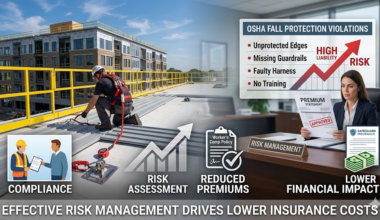
Insurers also review recognized fall-protection standards because repeated violations or weak compliance systems can signal elevated future claim severity. OSHA fall-protection regulations heavily influence how insurers evaluate elevated occupational risk in construction, tower work, scaffold operations, and other high-risk environments.
OSHA Fall Violations
Repeated OSHA fall-protection violations create underwriting concern.
This underwriting relationship is explained further in OSHA Fall Violations and Insurance Costs, where repeated compliance failures can directly affect premiums, underwriting restrictions, and carrier appetite.
Insurers may interpret repeated violations as evidence of:
- weak safety culture
- poor supervision
- inconsistent fall protection
- increased claim probability
Harness Systems
Reliable harness usage and engineered fall-protection systems can improve insurer confidence.
Insurers prefer employers with documented safety controls.
Employer Safety Culture
Underwriters evaluate whether safety procedures are consistently enforced.
A company with strong compliance systems may receive better underwriting treatment than one with repeated incidents.
Incident History
Previous fall injuries matter heavily.
Frequent severe incidents suggest elevated future claim exposure.
Fall-Protection Programs
Formal training and documented fall-prevention systems help insurers evaluate whether risk management is taken seriously.
Strong safety systems do not eliminate underwriting concern, but they can reduce it.
How Elevated Workers Can Reduce Insurance Problems
Workers cannot eliminate occupational risk entirely.
However, accurate disclosure and proper documentation can reduce future claim disputes.
Accurately Describe Occupational Duties
Workers should clearly explain:
- climbing frequency
- maximum heights
- offshore duties
- scaffold work
- tower work
- elevated maintenance tasks
Vague job descriptions create underwriting problems later.
Maintain Certifications
Keeping safety certifications current helps demonstrate compliance and professionalism.
Expired training records may create complications during investigations.
Disclose Offshore Work
Offshore elevated work should always be disclosed accurately.
Insurers treat offshore exposure differently from many land-based occupations.
Report Side Contract Work Honestly
Part-time elevated contracting work matters.
Undisclosed side work can create claim disputes if catastrophic injuries occur during those activities.
Maintain Fall-Protection Training
Documented fall-protection training helps show that workers follow recognized safety procedures.
While this may not eliminate underwriting restrictions, it can improve insurer confidence.
Update Insurers When Job Duties Change
A worker who moves from low-elevation maintenance into structural climbing or offshore elevated work should update occupational information.
Insurance classifications should reflect actual exposure.
Frequently Asked Questions
How does “rescue difficulty” increase catastrophic fall risk?
Rescue difficulty acts as a claim severity multiplier. Jobs in remote, offshore, or extreme-height environments often mean delayed access to emergency medical care. Insurers view this delay as increasing the likelihood of a temporary injury becoming a permanent disability or a fatal event, which directly increases the long-term financial liability of the claim.
Why are policies often denied after misclassification in high-risk jobs?
When an individual applies for coverage with a generic or inaccurate job title—such as calling a tower climber a “maintenance worker”—the insurer does not accurately price the risk. If a severe claim is filed and investigations uncover undisclosed high-risk duties, the insurer may argue that the original risk calculation was based on false pretenses, potentially invalidating the entire policy.
How does OSHA compliance affect occupational insurance underwriting?
Insurers analyze OSHA violations not just for safety compliance, but as a predictor of future catastrophic loss exposure. Repeated violations, particularly related to fall protection or harness usage, create an underwriting concern signaling weak safety culture and poor operational control, which often leads to stricter underwriting, higher premiums, and tighter exclusions.
Can undocumented safety systems reduce my insurance concerns?
No. From an underwriting perspective, undocumented safety compliance does not exist. Insurers rely strictly on verified safety documentation, formal fall-protection programs, and current certifications such as OSHA training records to assess operational control and build confidence that an employer is actively managing catastrophic fall risk.
Final underwriting insight:
For insurers, catastrophic fall exposure is not simply a workplace hazard; it is a long-term financial severity problem that can permanently change how occupational risk is classified, priced, and investigated.
Key Takeaways
- Catastrophic falls are one of the most serious occupational insurance risks because injuries are often permanent or fatal.
- Insurers focus heavily on claim severity, not just accident frequency.
- Elevated occupations face stricter underwriting because one severe fall can create years of disability and medical costs.
- Tower work, offshore exposure, bridge work, and extreme heights receive the most aggressive underwriting scrutiny.
- Misclassification, undisclosed climbing duties, and hidden side work commonly create claim disputes.
- OSHA violations and weak safety systems increase insurer concern.
- Accurate occupational disclosure helps reduce underwriting conflicts and claim investigation problems.
- Elevated workers should understand that fall exposure directly affects premiums, exclusions, approval decisions, and claim scrutiny.
—————————————————————————————————————————
Sources/Reference Verification:
Construction Industry Institute (CII) —
Research on elevated construction exposure, fall-risk management systems, structural work environments, and infrastructure safety performance trends affecting catastrophic occupational fall severity.
OSHA Fall Protection Standards —
Federal elevated-work safety requirements used to evaluate fall-protection systems, scaffold operations, ladder safety, tower climbing exposure, suspended access work, and rescue-planning procedures in high-risk occupations.
National Institute for Occupational Safety and Health (NIOSH) —
Occupational injury research analyzing severe fall exposure, traumatic injury severity, permanent disability patterns, rescue-delay complications, and fatal fall risk across construction, industrial, offshore, and infrastructure sectors.
U.S. Bureau of Labor Statistics (BLS) —
Federal occupational fatality and workplace injury data used to analyze elevated-work fatality trends, severe injury exposure, and long-term occupational disability risk associated with catastrophic falls.
National Council on Compensation Insurance (NCCI) —
Occupational classification frameworks and workers’ compensation rating systems used to segment elevated-risk occupations by catastrophic injury severity, disability exposure, fatality potential, and underwriting loss projections.
Reviewed for underwriting accuracy by:
Reviewed for underwriting accuracy by the RJI Institutional Review Team
Review includes:
catastrophic fall-severity modeling,
height-exposure underwriting systems,
occupational class rating analysis,
workers’ compensation severity structures,
rescue-complexity evaluation,
claim investigation failure paths,
and elevated occupational risk segmentation.
Research & Underwriting Methodology
This article combines catastrophic fall-risk underwriting frameworks,
occupational classification systems,
workers’ compensation severity modeling,
OSHA fall-protection guidance,
NIOSH injury-severity research,
elevated-work fatality analysis,
and long-term disability exposure modeling
to explain how insurers evaluate catastrophic fall exposure and calculate insurance risk for elevated occupations.
Published: May 2026
Last Updated: June 2026