Editorial Notice: Reviewed for underwriting accuracy by the RJI Institutional Review Team | Published: Dec, 2025 | Updated: May, 2026
—————————————————————————————————————————
Executive Summary
Disability insurance for high-risk workers replaces part of lost income when injury or illness prevents safe work. Because hazardous occupations involve higher injury frequency, longer recovery timelines, and greater claim uncertainty, insurers apply stricter underwriting controls, occupational classifications, and coverage limitations than they do for lower-risk occupations.
This structure makes disability insurance more restrictive for hazardous occupations because insurers must manage higher probabilities of long-term income interruption and complex claims.
Introduction: When Injury or Illness Stops the Paycheck
Most high-risk workers worry about accidents that cause serious injury or death. Fewer think about what happens when an injury or illness does not kill them but still makes working impossible.
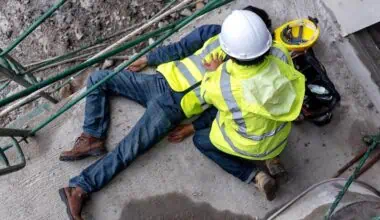
For construction workers, offshore crews, miners, industrial operators, transport workers, and others in hazardous roles, this situation is common. A fall, machinery accident, repetitive strain injury, or serious illness can stop work for months or permanently. When that happens, income often disappears long before recovery is complete.
This is where disability insurance comes in.
For high-risk workers, disability insurance often works differently than expected. Coverage may be harder to qualify for, benefits may be limited, or exclusions may apply based on job duties. These differences are not accidental. They exist because dangerous work changes how insurers evaluate income loss risk.
This guide explains how disability insurance works for high-risk workers, why rules differ, and what job-related factors shape coverage.
What Disability Insurance Is Designed to Do
Disability insurance is designed to replace part of your income when you cannot work due to injury or illness.
Unlike life insurance, which pays after death, disability insurance focuses on what happens while you are alive but unable to earn. Benefits are usually paid monthly and are intended to help cover everyday expenses such as housing, food, utilities, and basic living costs.
To make this possible, insurers estimate:
-
How likely a worker is to become unable to work
-
How long that inability might last
-
How much income would need to be replaced
For high-risk workers, these estimates are heavily influenced by the nature of the job.
Why High-Risk Jobs Change Disability Insurance Rules
Dangerous work changes how insurance operates because higher risk requires special rules, which we explain in detail in our main guide on Insurance rules for high-risk jobs.
This occupational classification framework is part of the broader underwriting system insurers use to evaluate hazardous occupations, where pricing, eligibility, exclusions, and claim exposure are all tied to measurable work-related risk factors.
Disability insurance is especially sensitive to occupational risk.
These factors change not just the likelihood of a claim, but how long income replacement may be needed.
This underwriting approach becomes especially important in elevated-risk occupations, where insurers analyze not only injury frequency but also fall severity, recovery duration, and long-term work-capacity loss. These evaluation models are explained further in Height Exposure Underwriting: How Insurers Evaluate Elevated Workers.
High-risk jobs tend to involve:
-
Greater likelihood of injury
-
More severe injuries when accidents occur
-
Longer recovery periods
-
Higher chance of permanent or partial disability
In elevated occupations, insurers also model catastrophic fall exposure because severe falls often produce long-duration disability claims involving spinal injuries, neurological impairment, or permanent work restrictions. This severity framework is explored in Catastrophic Fall Risk in Occupational Insurance.
From an insurer’s perspective, this means disability claims are not only more likely, but also more expensive and longer-lasting.
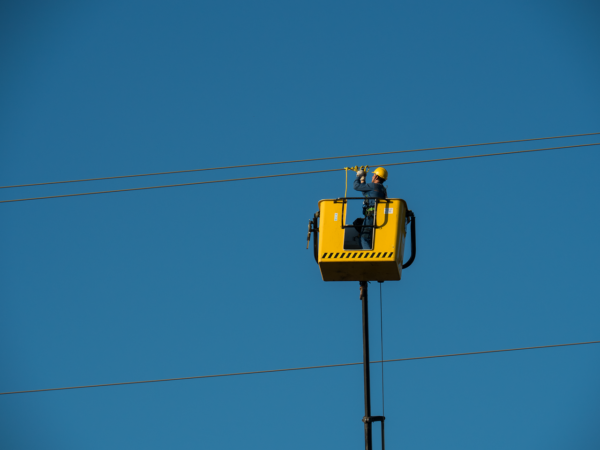
As working height increases, the insurer’s exposure shifts from frequency risk to severity risk because elevated falls are more likely to produce permanent work limitations, extended recovery periods, and long-duration disability claims.
As a result, disability insurance for high-risk work often includes additional controls. These controls are not meant to exclude workers unfairly. They are designed to keep income protection viable in jobs where the risk of losing work ability is higher.
Data from the International Labour Organization (ILO) shows that hazardous occupations experience higher injury rates and longer recovery periods, which helps explain why disability insurance rules differ for high-risk work.
Job Duties Matter More Than Job Titles
As with other forms of insurance, disability insurance decisions are not based primarily on job titles.
Insurers focus on what you actually do, how often you do it, and how physically demanding or hazardous the work is.
Two workers may both be called “operators” or “technicians,” but if one performs heavy manual labor and the other works primarily in monitoring or supervisory roles, their disability risk is very different.
When evaluating disability insurance applications, insurers typically assess:
-
Physical demands of daily work
-
Exposure to hazardous environments
-
Frequency of high-risk tasks
-
Repetitive strain or impact
-
Ability to modify or reduce duties after injury
This is why disability insurance outcomes can vary widely even among workers in similar roles.
How Disability Insurance Applications Are Evaluated for High-Risk Work
Disability insurance underwriting for high-risk workers is usually more detailed than for office-based roles.
In addition to medical history, insurers may request:
-
Detailed job descriptions
-
Breakdown of physical versus non-physical tasks
-
Information on lifting, climbing, or repetitive movements
-
Work environment details (industrial, offshore, remote)
-
Past injuries or work-related conditions
This information helps insurers estimate how likely a worker is to experience income loss and how long that loss might last. Eligibility decisions also depend heavily on occupational duties, functional capacity, and insurer work-ability definitions, which are explained in Who Qualifies for Disability Insurance in High-Risk Jobs? Eligibility, Duties & Work Ability Explained.
The process may feel demanding, but it reflects the complexity of insuring income in hazardous jobs.
Underwriting decisions often change when combined risk factors exceed insurer thresholds. For example, physically demanding duties, prior injuries, hazardous environments, and limited ability to perform modified work can increase the probability of extended disability claims.
When projected claim exposure becomes too high, insurers may:
– Increase premiums
– Limit benefit periods
– Apply occupational exclusions
– Narrow disability definitions
– Decline coverage entirely
Common Ways Disability Insurance Differs for High-Risk Workers
High-risk workers often encounter specific differences in disability coverage:
Higher premiums
Income protection may cost more due to increased likelihood of claims.
Occupational exclusions
Some policies exclude disabilities caused by certain job-related activities.
Longer waiting periods
Benefits may not begin immediately after an injury or illness. Waiting periods, benefit duration structures, and income replacement calculations are explained further in How Disability Insurance for High-Risk Workers Works: Coverage, Waiting Periods & Benefits.
Definition limitations
Policies may define disability more narrowly for physically demanding jobs.
Benefit caps
Maximum payouts may be lower or time-limited.
Structural exclusion model: Disability insurers use exclusions, waiting periods, and narrower benefit definitions to reduce uncertainty in occupations where injury severity, recovery duration, and work-capacity evaluation are harder to predict accurately.
These features vary by insurer and job type, but they reflect how occupational risk is managed.
Some insurers also impose height-based underwriting thresholds where eligibility, exclusions, or pricing change once workers exceed specific elevation exposure limits. These restriction models are explained in Height Restrictions in Occupational Insurance Policies.
Understanding “Own Occupation” vs “Any Occupation”
One of the most important concepts in disability insurance is how disability is defined.
Some policies pay benefits if you cannot perform your own occupation. Others only pay if you cannot perform any occupation.
For high-risk workers, this distinction matters greatly. This definition difference is often a major claim breakpoint in hazardous occupations because physically demanding workers may lose the ability to perform specialized labor while still remaining capable of less demanding work.
A construction worker who can no longer climb, lift, or operate machinery may still be physically capable of lighter work. Under stricter definitions, that worker may not qualify for benefits even though they cannot return to their original job.
This is one of the most common sources of confusion and disappointment for high-risk workers at claim time.
Employer Disability Coverage vs Personal Policies
Some high-risk workers receive disability coverage through their employer. While helpful, employer plans often have limitations.
Employer-provided disability insurance:
-
Is tied to employment
-
May use restrictive disability definitions
-
Often replaces only a portion of income
-
Ends when employment ends
Personal disability insurance, when available, follows the worker rather than the job. However, qualifying for personal coverage can be more complex for high-risk roles.
Understanding the differences helps workers avoid relying on incomplete protection.
Why Disability Claims Are Often Challenging in High-Risk Jobs
Disability claims involving hazardous work are often examined closely.
Claims may involve:
-
Detailed review of job duties
-
Assessment of whether work can be modified
-
Medical evaluations focused on functional ability
-
Ongoing documentation requirements
In high-elevation occupations, claim complexity can increase further when rescue operations, delayed extraction, remote access limitations, or emergency-response constraints affect injury severity and recovery timelines. These operational underwriting concerns are analyzed in Rescue Difficulty in High-Elevation Underwriting.
Claim disputes often occur when insurers determine that a worker retains partial functional capacity, can transition into lighter duties, or does not meet the policy’s exact disability definition.
Common disability claim failure paths for high-risk workers include:
– Medical evidence that does not fully support loss of work capacity
– Insurer determination that lighter or modified work remains possible
– Policy definitions that require inability to perform any occupation rather than the worker’s original occupation
– Disputes over whether limitations are temporary, partial, or permanent
– Occupational exclusions tied to hazardous duties or repetitive-strain conditions
These claim breakpoints are especially important in physically demanding occupations because partial functional ability may still disqualify workers from benefits under narrower policy definitions.
These processes are not meant to deny claims automatically. They exist because determining work ability is more complex when jobs are physically demanding.
Understanding this complexity helps explain why disability claims may feel slow or frustrating.
How Disability Insurance Fits Into the Bigger Picture of Insurance for High-Risk Jobs
Disability insurance is a central part of risk job insurance because it addresses one of the most common outcomes of dangerous work: loss of earning ability.
It works alongside:
-
Life insurance (protection after death)
-
Workers’ compensation (job-related injury benefits)
-
Personal accident coverage (fixed benefits for specific injuries)
Each responds differently to occupational risk. These interactions become easier to understand when viewed alongside broader underwriting concepts such as occupational class ratings, policy exclusions, coverage limits, and how insurers structure coverage for hazardous occupations.
Disability insurance focuses on income interruption, which is why definitions, exclusions, and job duties matter so much.
For a broader explanation of how disability coverage fits within the larger insurance system for hazardous occupations, see our guide to the types of insurance used for high-risk jobs.
Frequently Asked Questions
Why do insurers treat high-risk workers differently for disability insurance?
Hazardous occupations create higher probabilities of injury, longer recovery periods, and more complex income-loss claims. Insurers manage this exposure through stricter underwriting rules, occupational classifications, exclusions, and benefit limitations.
Can hazardous occupations be excluded from disability coverage?
Yes. Some insurers limit or exclude coverage for specific dangerous duties, repetitive-strain conditions, or high-severity occupational risks that are difficult to price accurately.
Why does the definition of disability matter so much in high-risk jobs?
Many claim disputes occur because policy definitions determine whether a worker must be unable to perform their specific occupation or any form of work at all.
Do employer disability plans fully protect high-risk workers?
Employer-sponsored coverage may provide partial income protection, but benefit limits, restrictive definitions, and employment-linked coverage periods can create important protection gaps.
Why are disability claims heavily reviewed in physically demanding occupations?
Insurers often evaluate whether modified duties, partial work capacity, or alternative forms of employment remain possible under the policy definition.
Conclusion: Income Protection Is Possible, but the Rules Are Different
High-risk work does not make disability insurance impossible. It makes it more complex and more specific.
Coverage differences exist because dangerous jobs increase the likelihood and severity of income loss, not because insurers are targeting workers unfairly. Understanding how disability insurance works for high-risk jobs helps workers set realistic expectations and avoid misunderstandings when they need support the most.
Final underwriting insight:
Disability insurance does not remove occupational risk. Instead, it transfers part of the financial impact of lost work ability through a system of classifications, exclusions, benefit definitions, and claim verification controls designed to manage long-term income-loss exposure.
This guide is designed to explain the system clearly, without pressure or sales language, so high-risk workers can understand how income protection works when work itself carries greater danger.
Institutional & Underwriting Reference
Institutional References
- Occupational Safety and Health Administration (OSHA) — elevated work safety standards, fall-protection systems, and hazardous workplace exposure guidance
https://www.osha.gov/ - National Institute for Occupational Safety and Health (NIOSH) — occupational injury severity research, traumatic fall exposure analysis, and worker recovery data
https://www.cdc.gov/niosh/ - International Labour Organization (ILO) — global occupational injury frequency, disability exposure trends, and hazardous work statistics
https://www.ilo.org/ - National Council on Compensation Insurance (NCCI) — occupational classification systems, injury-cost modeling, and risk-based underwriting structures
https://www.ncci.com/ - Society of Actuaries (SOA) — disability insurance claim-duration modeling, morbidity analysis, and occupational risk evaluation frameworks
https://www.soa.org/
Reviewed for Underwriting Accuracy
This article was reviewed for underwriting accuracy with attention to:
- Occupational disability severity modeling
- Elevated-work exposure classification
- Catastrophic fall-risk evaluation
- Long-duration disability claim exposure
- Functional work-capacity assessment frameworks
- Occupational exclusion structures
- Height-restriction underwriting thresholds
- Rescue-complexity and recovery-duration analysis
Research & Underwriting Methodology
This article applies occupational disability underwriting logic used in hazardous-work insurance evaluation. Research incorporated:
- Occupational injury-frequency analysis
- Severity-based disability exposure modeling
- Elevated-work and fall-risk underwriting frameworks
- Functional-capacity and return-to-work assessment systems
- Occupational classification methodologies
- Claim-duration probability modeling
- Structural exclusion and benefit-limitation analysis
- High-risk occupational underwriting controls used to manage long-term income-loss exposure
The article also integrates operational underwriting concepts involving catastrophic injury probability, rescue difficulty, and height-based exposure thresholds because these materially affect disability claim severity and long-duration work interruption risk in hazardous occupations.
Published: Dec 2025
Last Updated: May 2026