Editorial notice: Reviewed for underwriting accuracy by the RJI Institutional Review Team | Published: May, 2026 | Updated: June, 2026
—————————————————————————————————————————
Executive Summary
Height exposure underwriting is the process insurers use to evaluate workers who regularly perform tasks above ground level. Elevated work poses a higher insurance risk because falls from roofs, towers, scaffolding, and industrial platforms often result in severe injuries, permanent disability, or fatal claims, leading to stricter underwriting, higher premiums, exclusions, and tighter coverage limits.
What Is Height Exposure Underwriting?
Height exposure underwriting is how insurers assess the risk of workers who operate at elevated heights as part of their job.
Instead of only looking at job titles, underwriters examine:
- how high a worker operates
- how often they work above ground
- the type of structure involved
- the likelihood of a fall
- how severe an injury could become if an accident happens
In insurance terms, elevated work creates “catastrophic injury exposure.” A single fall can result in:
- permanent disability
- traumatic brain injury
- spinal damage
- paralysis
- long-term rehabilitation
- fatal claims
That is why height exposure heavily affects:
- disability insurance
- life insurance
- workers’ compensation
- accident coverage
- occupational injury underwriting
Common elevated work environments include:
- roofs
- communication towers
- scaffolding
- bridges
- utility poles
- wind turbines
- elevated industrial platforms
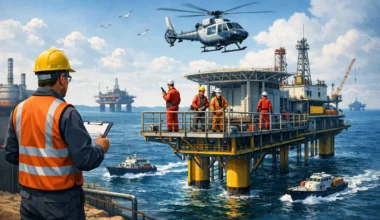
- offshore structures
For insurers, the concern is not simply “working high.” The real concern is:
How likely is a severe claim, and how expensive could that claim become?
This classification system closely connects with Occupational Hazard Classification in Insurance and the broader high-risk job insurance system that insurers use to evaluate hazardous occupations and catastrophic injury exposure.
Many of these occupational risk decisions are influenced by National Council on Compensation Insurance (NCCI) classification systems, which help insurers categorize elevated occupations according to historical loss performance, claim severity trends, and workers’ compensation exposure.
Many of these classification decisions are also shaped by NCCI Occupational Classification and EMR Systems, where occupational class codes and historical loss performance help insurers estimate future claim severity, underwriting exposure, and workers’ compensation risk across elevated occupations.
Why Do Insurers Consider Elevated Workers High-Risk?
Insurers classify elevated workers as high-risk because falls from height often result in severe, long-duration claims.
A worker may survive a fall but still become permanently unable to return to physically demanding labor. This long-term occupational impact is central to permanent disability risk from elevated work, where insurers evaluate whether severe fall injuries could permanently remove workers from physically demanding occupations.
From an underwriting perspective, those claims are extremely expensive.
Falls remain one of the leading causes of severe occupational injuries and construction-related fatalities, which is why elevated work receives heightened underwriting attention across disability, accident, and workers’ compensation insurance systems.
Research from the National Institute for Occupational Safety and Health (NIOSH) has consistently shown that falls remain a major source of traumatic injury, permanent disability, and occupational fatalities across construction, utility, industrial, and offshore work environments.
Severe Falls Create Catastrophic Claims
Falls from roofs, towers, scaffolding, and steel structures often involve:
- spinal cord injuries
- traumatic brain injuries
- fractures requiring surgery
- permanent mobility limitations
- chronic pain conditions
- long-term rehabilitation
These injuries increase:
- disability claim duration
- medical treatment costs
- lost-income exposure
- lifetime benefit payouts
For insurers, a single catastrophic fall can create years of financial exposure.
Insurers use fall severity modeling in disability insurance to estimate how elevated-work injuries may affect long-term income replacement exposure and permanent occupational disability risk.
Many of these claim-severity dynamics can be seen in Commercial Roofing Insurance Claims Process, which examines how serious fall injuries move through investigation, disability assessment, claim valuation, and settlement review.
Rescue Delays Increase Claim Severity
Height-related accidents are harder to manage than ground-level incidents.
Tower climbers, bridge workers, offshore maintenance crews, and wind turbine technicians may require:
- specialized rescue equipment
- rope recovery teams
- confined-space extraction
- helicopter evacuation
- delayed emergency response
The longer the emergency response takes, the worse the injuries often become.
Insurers interpret rescue difficulty as a claim severity multiplier.
This underwriting concern is explored further in rescue difficulty in high-elevation underwriting, where delayed recovery operations can significantly increase catastrophic injury severity and long-term claim exposure.
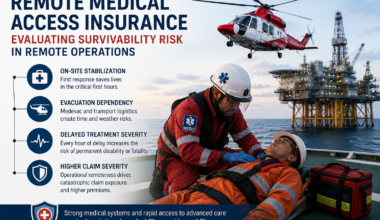
From an actuarial perspective, rescue difficulty is directly linked to the ‘Golden Hour’, the critical period where prompt medical intervention significantly reduces the likelihood of permanent disability. When rescue is delayed due to height or isolation, a manageable injury often transitions into a lifetime disability claim, which carries a much higher financial reserve requirement.
Weather Exposure Increases Accident Probability
Many elevated jobs are heavily affected by:
- wind
- rain
- lightning
- ice
- unstable footing
- reduced visibility
Underwriters know that weather-related instability significantly increases fall probability.
This is especially important in:
- offshore work
- utility repair
- wind turbine maintenance
- bridge construction
- telecommunications tower climbing
Repetitive Climbing Increases Injury Frequency
Some workers climb dozens of times per day.
Repeated ladder use, structural climbing, and elevated movement create:
- fatigue
- balance deterioration
- repetitive strain
- reduced reaction speed
Insurers evaluate repetitive climbing as both:
- an accident-frequency issue
- a long-term musculoskeletal risk
This directly affects disability underwriting decisions.
How Do Insurers Evaluate Height Exposure?
Height exposure underwriting is based on multiple risk factors, not just job titles.
Two roofers may receive completely different underwriting outcomes depending on how they work, where they work, and how often they face elevated exposure.
Underwriting interpretation:
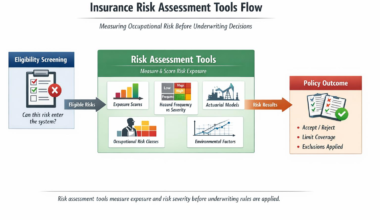
Height exposure is not evaluated as a single hazard. Insurers assess combined severity factors, including elevation level, rescue difficulty, environmental exposure, climbing frequency, and long-term disability probability.
Maximum Working Height
The higher the work elevation, the greater the underwriting concern.
Insurers often separate:
- low-rise work
- mid-rise work
- high-elevation work
- extreme-height exposure
A worker operating 15 feet above ground is viewed differently from someone climbing 1,500-foot communication towers.
Greater height generally means:
- more severe injuries
- more difficult rescues
- higher fatality probability
- larger insurance losses
Frequency of Elevated Work
Insurers ask:
Is height exposure occasional or constant?
A maintenance worker who occasionally uses ladders may receive better underwriting terms than someone who spends most working hours elevated.
Daily exposure increases:
- accident probability
- cumulative fatigue
- long-term claim likelihood
Type of Structure Worked On
Different structures create different risk profiles.
| Structure Type | Core Underwriting Concern | Risk Rating | Typical Insurance Impact |
| Residential Roofs | Frequent lower-elevation falls | Moderate | Higher premiums |
| Telecom Towers | Extreme elevation + rescue complexity | Extreme | Possible exclusions |
| Wind Turbines | Remote rescue + confined climbing | High | Stricter underwriting |
| Offshore Rigs | Isolation + evacuation difficulty | Extreme | Limited disability options |
| Bridges | Weather + open-edge exposure | High | Increased waiting periods |
Underwriters price each environment differently.
Use of Ladders and Scaffolding
Insurers examine:
- ladder frequency
- scaffold dependence
- suspended platform use
- harness systems
- fall-arrest equipment
Poor scaffold controls or heavy ladder dependence often increase underwriting concern because many occupational falls originate from unstable access systems.
Safety Certification History
Workers with documented safety training are often viewed more favorably.
Examples include:
- fall-protection certification
- OSHA safety training
- rope-access qualifications
- confined-space certification
- rescue-response training
Documented safety compliance can reduce insurer uncertainty.
Prior Injury History
Previous:
- back injuries
- shoulder damage
- knee injuries
- fall incidents
- workers’ compensation claims
may increase underwriting concern because insurers evaluate the probability of reinjury.
A worker with prior spinal injuries may face:
- exclusions
- benefit limitations
- premium increases
- disability restrictions
Union vs Independent Contractor Work
Insurers often view structured union environments differently from independent subcontracting arrangements.
Union projects may demonstrate:
- standardized safety systems
- regulated procedures
- formal reporting
- organized training
Independent contractor work may create:
- inconsistent safety oversight
- documentation gaps
- classification uncertainty
That does not automatically mean union workers are safer, but insurers may perceive underwriting stability differently.
Residential vs Industrial Projects
Residential elevated work often involves:
- shorter timelines
- variable safety standards
- ladder-heavy work
- changing job sites
Industrial projects may involve:
- formal compliance systems
- engineered safety controls
- large-scale risk management
Underwriters evaluate project type because safety infrastructure directly affects claim probability.
This approach aligns with research from the Construction Industry Institute (CII), which has long examined how safety systems, operational controls, and infrastructure project management influence accident frequency and injury severity on elevated construction sites.
Offshore vs Land-Based Elevated Work
Offshore elevated work is frequently considered among the highest-risk categories because it combines:
- height exposure
- isolation
- weather risk
- delayed rescue capability
- evacuation difficulty
This combination significantly increases catastrophic claim exposure.
When Does Height Exposure Become Too Risky for Insurers?
Underwriting decisions often become stricter when multiple elevated-risk factors combine.
Insurers may become significantly more cautious when workers combine:
• extreme working heights
• offshore exposure
• frequent climbing
• prior fall injuries
• inconsistent safety records
• independent subcontracting
• structural steel or tower work
At certain risk thresholds, insurers may:
• increase premiums substantially
• reduce available disability benefits
• apply occupational exclusions
• extend waiting periods
• require manual underwriting review
• decline coverage entirely
This is especially common when elevated work creates both high accident probability and high catastrophic injury severity.
Occupations Commonly Affected by Height Exposure Underwriting
Roofers
Roofers face constant fall exposure, unstable surfaces, steep angles, and weather-related hazards. Insurers heavily evaluate fall frequency and long-term disability risk.
This explains why roofers face strict insurance underwriting, particularly in disability and occupational accident coverage, where repetitive elevated exposure creates sustained claim severity concerns.
Many of these elevated-risk considerations are explored further in Roofing Contractor Insurance Underwriting, where insurers evaluate roofing operations based on fall exposure, project type, safety controls, and long-term claim severity potential.
Tower Climbers
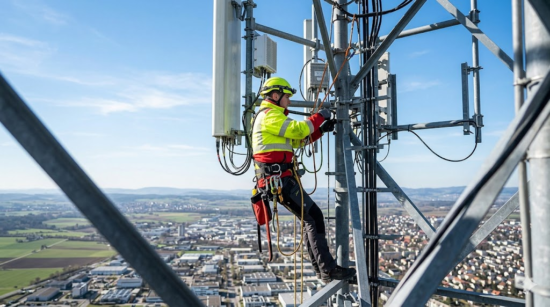
Tower climbers are often placed in extremely high-risk underwriting categories because of extreme elevation, difficult rescues, and fatality exposure.
These same risk factors are explored in greater detail in Tower Climbers insurance, which examines how extreme elevation, rescue complexity, and severe injury exposure influence insurer appetite and occupational classification decisions.
Structural Ironworkers
Ironworkers operate around exposed steel frameworks, open edges, and incomplete structures where falls can become catastrophic.
Many of these underwriting principles also apply to Structural Steel Erector Insurance, where insurers evaluate steel erection activities based on elevated work exposure, structural assembly hazards, fall severity potential, and catastrophic injury risk. These same occupational factors are examined in Why Ironworkers Face Strict Insurance Underwriting, which explains how they influence insurance classification, pricing, and coverage eligibility.
Wind Turbine Technicians
Wind turbine technicians combine:
- extreme height
- confined climbing
- mechanical hazards
- remote rescue challenges
This creates complex underwriting exposure. The unique combination of extreme elevation, confined climbing, and remote rescue exposure is examined further in Wind Turbine Technician Insurance, where insurers evaluate how renewable-energy maintenance work affects occupational classification, coverage eligibility, and disability risk.
Bridge Workers
Bridge work introduces:
- open-edge exposure
- weather instability
- suspended platform work
- traffic hazards
Insurers evaluate both fall risk and environmental exposure. These underwriting considerations are explored in greater detail in Bridge Workers Insurance Underwriting, which examines how open-edge exposure, suspended work platforms, weather conditions, and rescue complexity influence insurance pricing and approval decisions.
Linemen
Utility line workers face combined exposure from:
- climbing
- electrical hazards
- weather conditions
- emergency response work
This often increases underwriting severity.
Industrial Painters
Industrial painters working on tanks, bridges, or elevated structures face prolonged scaffold exposure and repetitive climbing risks.
Scaffold Workers
Scaffold erection and dismantling create unstable work environments with high fall probability during assembly stages.
These unique underwriting challenges are examined in Scaffolder Insurance, where insurers evaluate temporary elevated access systems, scaffold assembly and dismantling exposure, fall severity potential, and occupational risk classification.
Offshore Maintenance Workers
Offshore workers combine elevated work with marine isolation, delayed emergency response, and difficult evacuation conditions.
These occupations are commonly affected by Catastrophic Fall Risk in Occupational Insurance and stricter hazardous occupation underwriting systems.
How Height Exposure Affects Insurance Coverage
Can Elevated Workers Be Denied Insurance Coverage?
Height exposure directly changes how insurers structure coverage.
Elevated workers often pay more because insurers expect:
- higher injury probability
- more severe claims
- longer recovery periods
- larger disability payouts
Greater claim severity increases policy pricing. This pricing structure is explained further in Why Elevated Workers Pay More for Insurance, where underwriting models connect fall severity and disability duration directly to premium increases.
Disability Insurance Restrictions
Some disability insurers restrict:
- benefit amounts
- policy duration
- occupation classes
- approval eligibility
Workers in extreme-height occupations may receive reduced protection compared to lower-risk occupations.
This directly affects disability insurance underwriting systems used for high-risk workers, where elevated injury severity and long-term income replacement exposure heavily influence coverage decisions.
Waiting Periods
Insurers may impose longer waiting periods before disability benefits begin.
This reduces insurer exposure to shorter-duration claims.
For workers, it means more time without income after an injury.
Occupational Exclusions
Some policies exclude:
- tower climbing
- offshore work
- structural steel work
- hazardous subcontracting activity
If excluded work causes an injury, coverage disputes may occur.
Policy Caps
Insurers sometimes limit:
- maximum monthly benefits
- payout duration
- lump-sum limits
This helps control catastrophic claim exposure.
Stricter Underwriting Reviews
Elevated workers may face:
- additional questionnaires
- safety reviews
- occupational interviews
- manual underwriting
- employer verification
Insurers often require more documentation before approval.
Denied Claims After Misclassification
If a worker describes themselves inaccurately during the application, claim problems can appear later.
For example:
- “maintenance worker” may not disclose tower climbing
- “construction worker” may omit structural steel work
- “technician” may hide offshore elevation exposure
Most insurance policies include a ‘Contestability Period’ (typically the first two years). During this window, insurers have a legal right to investigate and void coverage if they discover that height exposure or hazardous duties were omitted during the application. For elevated workers, this makes early, accurate disclosure a mechanical necessity for claim safety.
When claims investigations uncover undisclosed duties, insurers may dispute coverage.
This is closely connected to Why High-Risk Jobs Face Stricter Insurance Approval and occupational classification verification.
Failure-path insight:
For elevated workers, underwriting disputes often begin with incomplete occupational disclosure rather than the accident itself. Insurers focus heavily on whether the actual work environment matches the risk classification approved during policy issuance.
Common Claim Problems for Elevated Workers
Why Do Elevated Workers Face More Insurance Claim Disputes?
Height-related claims often become disputed when the underwriting information is incomplete or inaccurate.
Undisclosed Tower Work
A worker may describe general telecommunications duties while omitting tower climbing responsibilities.
If the insurer later discovers extreme-height exposure, claim disputes may occur because the occupational risk was materially different from the application.
Inaccurate Job Descriptions
Generic titles create underwriting problems.
“Technician” can mean:
- ground-level repair work
- offshore maintenance
- wind turbine climbing
- tower installation
Insurers evaluate actual duties, not vague titles.
Working Above Approved Height Limits
Some policies are approved based on disclosed elevation limits.
This is closely related to height restrictions in occupational insurance policies, where insurers apply specific elevation thresholds to control catastrophic fall exposure and underwriting severity.
If a worker later performs higher-risk work outside approved underwriting assumptions, insurers may investigate whether risk disclosure was accurate.
Expired Safety Certifications
Lapsed fall-protection or rescue certifications may create disputes around:
- employer compliance
- safety standards
- occupational eligibility
Insurers interpret expired certifications as increased operational risk.
Subcontractor Misclassification
Independent subcontractors are sometimes incorrectly classified under lower-risk occupational categories.
During claims review, insurers may reassess:
- actual work duties
- project environments
- height exposure frequency
This can trigger underwriting conflicts.
Offshore Work Not Disclosed
Offshore elevated work significantly changes underwriting exposure.
Failure to disclose offshore duties may create:
- coverage disputes
- exclusions
- rescission investigations
- denied disability claims
Part-Time Elevated Work Omitted During Application
Some workers primarily perform ground-level duties but occasionally:
- climb towers
- work roofs
- perform elevated maintenance
If this exposure was omitted during underwriting, insurers may argue that the occupational risk profile was incomplete.
Real-World Underwriting Examples
Residential Roofer vs Tower Climber
An insurer may classify a residential roofer differently from a tower climber because expected fall severity, rescue complexity, and elevation frequency are substantially different.
Industrial Painter vs Office-Based Safety Inspector
An industrial painter operating on suspended platforms faces direct fall exposure. A safety inspector visiting job sites occasionally may receive significantly lighter underwriting treatment.
Wind Turbine Technician vs Ground-Level Mechanic
Both may work in energy industries, but turbine technicians combine:
- extreme elevation
- confined climbing
- remote rescue exposure
This creates much higher underwriting concerns than ground-level mechanical repair.
Offshore Ironworker vs Land-Based Fabricator
An offshore ironworker faces:
- elevated structures
- marine weather
- delayed rescue access
A fabrication worker in a controlled plant environment may present lower catastrophic injury exposure.
Utility Lineman vs Warehouse Electrician
Both handle electrical systems, but linemen frequently climb poles and work during storms, increasing underwriting severity.
OSHA and Workplace Safety Considerations
Insurers closely examine workplace safety records because safety performance helps predict future claim probability.
Underwriters may review:
- OSHA violations
- fall-protection compliance
- employer incident history
- safety inspection records
- training documentation
- workers’ compensation history
Commercial insurers do not review these records simply to verify compliance. They use them as indicators of operational control, helping estimate whether past safety performance is likely to translate into future claim frequency and claim severity.
Insurers frequently reference OSHA fall-protection standards because repeated fall-protection violations can signal elevated future claim risk for workers performing elevated duties.
The compliance framework behind these underwriting decisions is examined in OSHA Fall Protection Standards for High-Risk Work, which explains how fall-protection requirements influence insurer perceptions of operational safety and future claim risk.
Frequent safety violations can signal:
- weak safety culture
- inadequate supervision
- poor compliance systems
- increased accident probability
This relationship becomes especially important in OSHA fall violations and insurance costs, where repeated compliance failures can directly influence underwriting decisions and premium adjustments.
Strong safety programs may improve insurer confidence because they demonstrate operational control.
Insurers do not use OSHA information simply to punish employers. They use it to estimate:
How likely is a future catastrophic claim?
This underwriting interpretation also affects Workers’ Compensation for Hazardous Occupations and occupational liability evaluation.
How Elevated Workers Can Improve Insurance Approval Chances
How Can Elevated Workers Improve Insurance Approval Odds?
Use Accurate Job Descriptions
Avoid vague job titles.
Clearly explain:
- actual duties
- elevation exposure
- climbing frequency
- work environments
Accurate disclosure reduces future claim disputes.
Document Safety Training
Maintain records for:
- OSHA certification
- fall protection
- rescue training
- confined-space training
- rope-access qualifications
Safety documentation helps reduce underwriting uncertainty.
Maintain Certifications
Expired certifications can increase underwriting concerns.
Keeping qualifications current demonstrates operational compliance and professionalism.
Disclose Offshore or Tower Work
Never omit:
- offshore duties
- tower climbing
- suspended platform work
- extreme-height exposure
Insurers eventually investigate severe claims in detail.
Reduce Misclassification Problems
Independent contractors should carefully describe:
- project types
- work environments
- subcontracting duties
- actual field exposure
Misclassification is a major source of claim disputes.
Demonstrate Safety Compliance
Workers connected to employers with:
- strong safety records
- documented compliance
- formal training systems
- low incident rates
may experience smoother underwriting reviews.
Height Exposure Underwriting: Frequently Asked Questions
How do insurers define “height exposure” for high-risk jobs?
Insurers define height exposure as the risk associated with workers performing tasks above ground level, where a fall could lead to catastrophic injury or death. Underwriters evaluate not just the job title, but the maximum height reached, the frequency of climbing, and the specific structures involved, such as towers, roofs, or wind turbines.
Why do elevated workers pay higher insurance premiums?
Elevated workers are classified as high-risk because falls from heights often result in long-term disability, traumatic brain injuries, or fatal claims. These types of accidents create significant financial exposure for insurers due to high medical costs and extended benefit payout periods.
Can safety certifications lower my insurance costs?
Yes, documented safety training can reduce insurer uncertainty. Qualifications such as OSHA certification, fall-protection training, and rope-access credentials demonstrate a commitment to risk management and can lead to more favorable underwriting terms compared to uncertified workers.
What are the most common insurance exclusions for height-related work?
Many standard policies explicitly exclude specific high-risk activities like tower climbing, offshore structural work, or work performed above a certain height limit. It is critical to disclose all elevated duties during the application process to avoid denied claims later due to misclassification.
How does “rescue difficulty” affect insurance underwriting?
Insurers view rescue complexity as a “claim severity multiplier”. Jobs that require specialized rope recovery, helicopter evacuation, or confined-space extraction—such as wind turbine maintenance or offshore bridge work—are rated more strictly because delayed emergency response can worsen the severity of an injury.
Does working as an independent contractor affect my insurance approval?
Independent contractors often face stricter reviews because they may lack the standardized safety systems and formal training oversight found in unionized or large industrial environments. Insurers look for consistent documentation of safety compliance to bridge this “stability gap”.
At what height do insurers consider a job high-risk?
There is no universal height limit used by all insurers. Underwriters evaluate overall exposure based on factors such as climbing frequency, structure type, rescue difficulty, and fall severity potential. However, tower work, offshore elevated work, and repeated high-elevation tasks are commonly classified within stricter occupational risk categories.
Final underwriting insight:
Height exposure underwriting is ultimately built around catastrophic injury prediction. Insurers are not simply evaluating whether a worker operates above ground level—they are estimating how severe a future fall-related claim could become, how difficult rescue operations may be, and whether long-term disability exposure can be financially controlled.
Key Takeaways
- Height exposure underwriting evaluates how dangerous elevated work is from an insurance perspective.
- Insurers care about elevated work because falls often produce catastrophic injuries and long-term disability claims.
- Maximum height, climbing frequency, structure type, offshore exposure, and safety history all affect underwriting decisions.
- Tower climbers, roofers, ironworkers, linemen, and wind turbine technicians often face stricter insurance review.
- Higher premiums, exclusions, waiting periods, and benefit limitations are common insurance consequences.
- Inaccurate job descriptions and undisclosed elevated duties frequently create claim disputes.
- OSHA records, safety culture, and certification history strongly influence insurer confidence.
- Accurate disclosure and documented safety compliance can improve approval chances.
—————————————————————————————————————————
References & Underwriting Review
Construction Industry Institute (CII) —
Research on elevated construction exposure, fall-risk management systems, infrastructure safety performance trends, and operational safety frameworks affecting high-risk occupational environments.
OSHA Fall Protection Standards —
Federal elevated-work safety requirements are used to evaluate fall-protection systems, scaffold operations, ladder safety, suspended access exposure, rescue-planning procedures, and hazardous climbing environments in elevated occupations.
National Institute for Occupational Safety and Health (NIOSH) —
Occupational injury research analyzing severe fall exposure, traumatic injury severity, long-term disability patterns, rescue-response limitations, and elevated-work fatality risk across construction, utility, industrial, and offshore sectors.
National Council on Compensation Insurance (NCCI) —
Occupational classification frameworks and workers’ compensation rating systems are used to segment elevated-risk occupations according to claim severity potential, catastrophic injury exposure, frequency risk, and underwriting loss projections.
Bureau of Labor Statistics (BLS) —
Occupational injury and fatality data are used to evaluate elevated-work accident frequency, construction fall fatalities, severe injury trends, and hazardous occupation exposure patterns affecting insurance underwriting models.
Reviewed for underwriting accuracy by:
Occupational Underwriting Research Team | Risk Job Insurance
Review includes:
height exposure underwriting systems,
occupational hazard classification analysis,
catastrophic fall-risk modeling,
workers’ compensation severity evaluation,
rescue-complexity assessment,
elevated occupational exposure segmentation,
and disability claim severity interpretation.
To better understand how insurers classify and evaluate hazardous occupations, readers should also explore:
- What Is High-Risk Job Insurance?
- Why Elevated Workers Pay More for Insurance
- Fall Severity Modeling in Disability Insurance
- OSHA Fall Violations and Insurance Costs
- Rescue Difficulty in High-Elevation Underwriting
- Height Restrictions in Occupational Insurance Policies
- Occupational Hazard Classification in Insurance
- Disability Insurance for High-Risk Workers
- Catastrophic Fall Risk in Occupational Insurance
- Why High-Risk Jobs Face Stricter Insurance Approval
- Workers’ Compensation for Hazardous Occupations