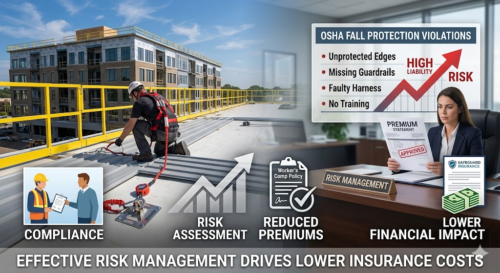
Editorial notice: Reviewed for underwriting accuracy by the RJI Institutional Review Team | Published: May, 2026 | Last reviewed: June, 2026
—————————————————————————————————————————
Executive Summary & Overview
Executive Summary: The Direct Link Between Safety History and Insurance Risk
In high-risk sectors like maritime operations, industrial construction, and steel erection, fall protection is a critical operational baseline. When an OSHA inspection flags an employer for missing fall-arrest systems, inadequate scaffolding, or improper anchor points, the financial impact extends far beyond the immediate regulatory fine.
Risk underwriters use regulatory history as a predictive indicator of future claims. A pattern of fall-protection citations may signal to carriers that an operator presents elevated future loss exposure. For elevated-risk employers, an unmanaged safety record directly restricts available insurance market capacity, tightens underwriting terms, and drives up premium costs across multiple lines of coverage. Understanding OSHA Fall Violations and Insurance Costs helps employers recognize why insurers closely monitor workplace safety history during underwriting.
What Underwriters Look For in High-Risk Occupations
In elevated industries, fall-related infractions are consistently the most frequent OSHA citations. According to OSHA data on OSHA fall protection violations, fall-protection failures consistently rank among the most frequently cited workplace safety violations in the United States. Insurers monitor these specific violations closely because falls from heights routinely result in complex, high-severity claims involving permanent disability, long-term medical costs, and substantial liability exposure.
From an underwriting perspective, a safety citation is not merely an administrative issue or a paperwork problem alone. While a slip or trip on a level surface generally results in a minor, manageable claim, a fall from an elevated work structure can involve severe injuries, including permanent partial or total disabilities. This severity profile is one reason occupations such as structural steel erection receive specialized underwriting treatment, as discussed in Structural Ironworkers Insurance.
Insurers price commercial risk based on expected future losses, not just past incidents. Consequently, repeated citations indicate to a carrier that an operational exposure is not being adequately controlled.
Why Insurers Focus on Fall Violations
The Financial Cascades of Elevated Fall Claims
Research from NIOSH on fall-related workplace fatalities shows that falls remain one of the leading causes of fatal injuries in construction and elevated occupations.
Because the physical outcomes are severe, a single major fall incident can create multiple layers of insurance exposure simultaneously.
This is where insurers begin modeling catastrophic claim severity rather than routine workplace injury exposure.
- Statutory Medical Reserves: Claims involving spinal trauma or traumatic brain injuries often require insurers to establish substantial long-term medical reserves.
- Extended Indemnity Payouts: When an experienced tradesperson sustains a permanent injury that prevents them from returning to the field, long-term wage replacement exposure may continue for extended periods depending on injury severity and jurisdictional requirements. These long-term impairment exposures closely connect with the underwriting severity concerns discussed in Permanent Disability Risk from Elevated Work.
- Third-Party Liability Exposure: Falls on commercial or multi-contractor job sites may increase the likelihood of third-party liability disputes involving employers, contractors, or site operators.
Systemic vs. Isolated Risk Profiles
When reviewing an employer’s OSHA history, an underwriter’s primary objective is to estimate how likely these severe claims are to occur in the future by differentiating between an isolated oversight and systemic operational risk. Underwriters generally interpret repeated fall-protection failures as indicators of uncontrolled operational risk rather than isolated compliance lapses.
For example, a roofing company with repeated fall-protection violations may signal to underwriters that workers are operating in unsafe conditions regularly. This underwriting approach closely connects with how insurers evaluate elevated occupational exposure in Height Exposure Underwriting: How Insurers Evaluate Elevated Workers.
From an underwriting standpoint, insurers often become more concerned when violations appear systemic rather than isolated, which may suggest a weak employer safety culture marked by:
- Poor field supervision or inconsistent safety enforcement.
- Inadequate or undocumented personnel training.
- Production pressures that bypass standard safety procedures.
- A repeated failure to correct known hazards.
This concern becomes particularly important in occupations such as wind turbine maintenance, where a single lapse in fall-protection compliance can significantly increase severity exposure because of extreme working heights and challenging rescue environments, as discussed in Wind Turbine Technicians Insurance.
How Violations and Insurance Costs Are Connected
Operational Exposures vs. Underwriting Outcomes
Insurance pricing is directly tied to perceived risk. Insurers typically increase pricing when they believe future claims are becoming more likely or more severe. For employers operating at height, workplace safety history establishes the baseline for how underwriters structure, price, and limit policy renewals.
This pricing structure also explains why elevated occupations generally face higher insurance costs, as discussed in Why Elevated Workers Pay More for Insurance. For elevated-risk employers, even a small increase in perceived fall severity exposure can significantly affect underwriting decisions.
The matrix below illustrates how common field compliance failures translate into direct commercial insurance adjustments.
| OSHA History: Common | Insurance Reaction / Practical Financial Impact |
| Repeated fall violations | Higher workers’ compensation premiums. |
| Serious scaffold violations | Increased liability pricing. |
| Prior fatal falls | Reduced standard-market availability. |
| Ignored OSHA citations | Stricter underwriting reviews. |
| Poor safety documentation | Coverage restrictions. |
| Multiple severe incidents | Higher deductibles. |
| Frequent violations | Movement into higher-cost specialty insurance markets with stricter conditions. |
Deep Dive into Workers’ Compensation & Liability Impact
The Long-Term Impact on Workers’ Compensation
Workers’ compensation insurers use claims frequency, injury severity, and Experience Modification Rates (E-Mods) to estimate the probability of future workplace losses. The U.S. Department of Labor explains that the workers’ compensation system is designed to provide medical and wage benefits for employees injured during work-related activities.
When a pattern of OSHA fall citations is paired with actual workplace injuries, underwriters categorize the business as a persistent risk concern rather than an average exposure. This type of loss history may contribute to higher Experience Modification Rates (E-Mods) over time, resulting in compounding premium increases that may affect underwriting evaluations for several years depending on insurer review practices and state rating systems. This classification process is closely connected to the broader underwriting system explained in Workers’ Compensation for Hazardous Occupations.
Third-Party Liability and the Litigation Trigger
Liability underwriters are highly focused on litigation exposure following an accident. After serious falls, employers frequently face negligence allegations, unsafe workplace claims, third-party lawsuits, contractor disputes, and wrongful death litigation. Poor OSHA histories can strengthen the legal perception that unsafe conditions existed before the accident occurred.
Major Litigation Trigger: Beyond premium spikes, a prior OSHA citation may strengthen negligence-related arguments in civil litigation, particularly when the cited hazard is directly connected to the injury event. If a worker falls and a prior citation exists for that specific hazard, liability carriers may interpret the litigation exposure as significantly more severe, particularly when prior unresolved hazards are documented. This elevated litigation exposure is one reason liability carriers may withdraw coverage or apply strict height-related exclusions after repeated serious violations.
Evaluation Factors & High-Concern Violations
How Underwriters Grade Safety Records
Insurers rarely rely on a single OSHA violation alone. They look look beyond the face value of a citation to separate isolated safety incidents from broader operational risk patterns. Underwriters often care less about whether a violation occurred and more about how the employer responded afterward.
| Underwriting Factor | What Insurers Evaluate | Common Insurance Impact |
| OSHA Violation Severity | Whether citations are classified as “Serious,” “Repeat,” or “Willful.” | Severe classifications often trigger premium increases and underwriting restrictions. |
| Corrective Actions | Speed and quality of hazard remediation after citations. | Fast corrective action may reduce renewal concerns. |
| Claims Correlation | Whether OSHA violations align with recent injury claims. | Strong correlation increases long-term underwriting concern. |
| Safety Documentation | Evidence of training, inspections, and PPE compliance. | Strong documentation improves underwriting confidence. |
| Multi-Worker Exposure | Exposure involving scaffolds, towers, or elevated crew operations. | Increases catastrophic severity modeling concerns. |
Which OSHA Violations Create the Biggest Insurance Concerns?
Some OSHA violations create significantly greater underwriting concern because they strongly correlate with catastrophic fall injuries. These severe injury scenarios are examined further in Catastrophic Fall Risk in Occupational Insurance.
- Repeated Fall-Protection Violations: Repeated violations suggest ongoing safety management problems rather than isolated mistakes. Underwriting concern model: Repeated fall-protection violations may indicate persistent operational safety weaknesses that increase the probability of severe injury claims over time.
- Missing Harness Systems: Missing or improperly used harness systems increase concern because falls from height frequently become catastrophic without proper personal fall arrest systems (PFAS).
- Unsafe Scaffold Setups: Scaffold failures can produce multiple-worker injuries at the same time. From an underwriting perspective, multi-worker fall incidents create unusually high claim severity because several catastrophic injuries can emerge from a single operational failure, creating large claim severity exposure for insurers.
- Ladder Misuse: Improper ladder practices may appear minor, but insurers know ladder falls commonly produce serious injuries. Repeated ladder violations suggest poor safety discipline overall.
- Ignored OSHA Citations: When employers fail to correct known hazards and ignore notices, insurers interpret the behavior as elevated, unmanaged operational risk.
- Missing Guardrails: Missing edge protection increases the probability of severe falls significantly, especially in roofing and construction operations.
- Prior Fatal Fall Incidents: Fatal fall history creates some of the strongest underwriting concerns possible. Even when coverage remains available, insurers may apply higher premiums, stricter conditions, reduced policy limits, additional exclusions, or intensive reviews.
Industry Scrutiny & Real-World Examples
Risk Scrutiny Across Industry Classifications
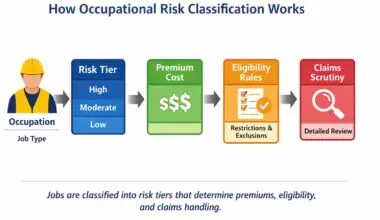
Some industries receive heavier underwriting scrutiny because elevated work exposure is constant. These underwriting classifications are closely connected to how insurers classify hazardous occupations based on injury probability, severity, exposure, and historical claims patterns. Insurers apply the heaviest scrutiny to occupations involving sustained elevated exposure, difficult rescue conditions, or multi-worker fall severity potential.
- Critical Risk (Highest Scrutiny): Commercial Roofing, Tower Work, and Specialized Scaffolding. Tower operations represent some of the most heavily scrutinized elevated occupations because rescue complexity, extreme working heights, and catastrophic fall severity can significantly influence underwriting outcomes, as explored in Tower Climbers Insurance.
- High Risk: Bridge Construction, Offshore Maintenance, and Utility Infrastructure. Bridge construction projects often combine height exposure, difficult rescue conditions, environmental hazards, and multi-contractor operations, all of which influence underwriting decisions, as examined further in Bridge Workers Insurance.
- Moderate/Persistent Risk: General Construction and Industrial Maintenance.
Commercial roofing operations receive especially heavy underwriting scrutiny because insurers associate roofing work with sustained elevated exposure, severe fall injury potential, and high long-term claim severity, as examined further in Why Roofers Face Strict Insurance Underwriting.
Case Studies: Field Reality vs. Underwriting Response
The following operational scenarios demonstrate how safety management practices directly dictate underwriting decisions at renewal time:
- Roofing Contractor With Repeated Fall Violations: A roofing contractor receives multiple fall-protection citations over three years. Even in the absence of a major injury claim, standard insurers view the pattern as an unmanaged exposure. The carrier responds by increasing premiums, applying stricter reviews, reducing available options, and requiring safety improvement documentation.
- Tower Company With Strong Safety Compliance: A tower contractor maintains strong training records, documented harness inspections, and a minimal OSHA history. Insurers may classify the employer more favorably despite the hazardous occupation because the safety controls appear reliable.
- Scaffold Contractor With Serious Prior Incidents: A scaffold company experiences a prior scaffold collapse with multiple injuries. Even if violations are corrected afterward, insurers may still apply elevated pricing because catastrophic multi-worker claim exposure remains a concern.
- Offshore Maintenance Employer With Clean Records: An offshore maintenance company operates in hazardous conditions but maintains strong compliance documentation and low incident frequency. Insurers may still price the account cautiously due to occupational severity, but cleaner safety records can improve underwriting flexibility.
- Utility Contractor With Ignored Citations: A utility contractor repeatedly ignores fall-protection correction notices. Insurers may interpret this as elevated operational risk and potentially restrict coverage availability or refuse renewal entirely.
Coverage Limitations & Claims Scrutiny
Underwriting Breakpoints and Market Restrictions
Repeated fall-protection violations can eventually affect coverage availability itself. Underwriting decision breakpoints often become more severe when multiple risk indicators combine, such as: repeated fall-protection violations, prior severe injury claims, ignored OSHA citations, poor safety documentation, and multiple elevated-risk operations simultaneously.
At this point, some standard-market insurers may become less willing to offer favorable terms or renewal options. which may push some employers toward higher-cost specialty insurance markets with stricter underwriting conditions:
- Increase premiums aggressively or restrict coverage availability.
- Require higher deductibles and demand corrective-action verification.
- Refuse policy renewal entirely.
Heightened Scrutiny During Claims Investigations
When serious violations continue over time, insurers may conclude that injury exposure is no longer adequately controlled. Consequently, after severe injuries, insurers may investigate claims more aggressively when employers already have poor OSHA histories.
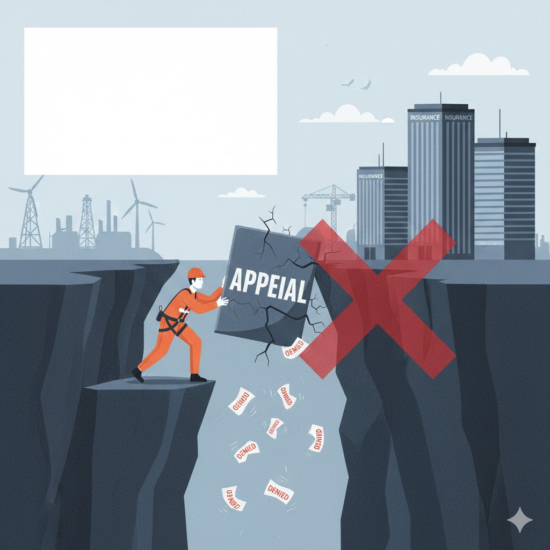
Claim scrutiny often increases substantially when serious injuries occur after previously documented fall-protection violations or unresolved OSHA citations. These claim-related underwriting concerns also connect to issues discussed in Common Reasons Claims Are Denied for Risk Jobs. This is especially common after repeated serious violations, ignored citations, fatal fall incidents, or known uncorrected hazards.
Risk Mitigation Strategies for Employers
Actionable Strategies to Optimize Underwriting Positions
To improve underwriting outcomes, secure competitive terms, and preserve corporate capital, high-risk employers must demonstrate to insurers that elevated work exposures are being actively controlled through documented operational safety systems.
- Improve Fall-Protection Systems & Maintain Logs: Employers should maintain compliant harness systems, guardrails, anchor points, and scaffold protections. Implement mandatory, documented daily equipment inspections. Written records provide the objective evidence that matters significantly during manual underwriting reviews.
- Document Safety Training: Maintain structured training records to help insurers verify that fall prevention systems are actively enforced throughout operations. A strong safety culture can improve underwriting outcomes over time.
- Correct Violations Quickly: Rapid corrective action often reduces underwriting concern compared to ignored citations. Insurers frequently evaluate responsiveness and speed of hazard remediation after violations occur, preferring stable safety performance over short-term improvement claims without documentation.
- Invest in Compliance Programs: Use structured compliance systems to demonstrate to underwriters that elevated-risk operations are being managed systematically rather than reactively.
- Report Elevated Work Accurately: Misrepresenting height exposure can create serious underwriting and claim problems later. Accurate occupational reporting is critical; unmapped exposure can lead to policy rescission or a formal denial of coverage following a major claim.
Frequently Asked Questions
How long do OSHA violations affect insurance premiums?
Most insurers evaluate a 3-to-5-year “look-back” period when reviewing OSHA history during underwriting. While a single violation may create an immediate premium surcharge, employers usually need several years of clean safety performance before insurers restore preferred pricing classifications. In many cases, insurers want to see at least three consecutive years of improved safety records, reduced claims activity, and stronger fall-protection compliance before underwriting concerns begin to ease.
Can an insurer cancel my policy immediately after an OSHA citation?
Immediate mid-term cancellation is relatively uncommon unless the violation represents a major material change in workplace risk. For example, operating elevated worksites without required fall-protection systems or shifting risk classifications without notice may trigger immediate rescission. More commonly, insurers issue a non-renewal notice at the end of the policy period after reviewing the employer’s OSHA history, claims exposure, and overall safety management practices.
Does a clean OSHA record guarantee lower workers’ compensation rates?
Not necessarily. A clean OSHA history helps employers qualify for more favorable underwriting consideration, but insurers must also evaluate additional factors such as injury frequency, claims severity, payroll exposure, and Experience Modification Rate (E-Mod). However, employers with clean safety records generally avoid the premium surcharges and underwriting restrictions that commonly follow repeated OSHA fall-protection violations.
What is the difference between a “Serious” and “Willful” OSHA violation in underwriting?
Underwriters often interpret “Serious” violations as potential lapses in workplace oversight or safety management. These violations still increase underwriting concern, especially when they involve elevated work exposure. “Willful” violations create much greater concern because they suggest that known safety requirements were intentionally or indifferently ignored. Many insurers view repeated or severe “Willful” violations as clear indicators of a broken safety culture, may significantly reduce standard-market insurance availability, or move the employer into higher-cost specialty insurance markets.
Key Takeaways
- Insurers often view OSHA fall violations as predictive indicators of elevated future injury risk and claim severity.
- Repeated fall violations may increase workers’ compensation and liability insurance costs across several policy years.
- A final OSHA citation often functions as Negligence Per Se in civil litigation, potentially weakening the employer’s legal defense position during litigation.
- Poor safety records can trigger stricter underwriting reviews, higher deductibles, reduced policy limits, or complete non-renewal.
- Insurers evaluate OSHA history alongside claims history, structural training programs, and the speed of corrective actions.
- Elevated industries such as roofing, construction, tower work, and offshore maintenance receive especially heavy underwriting scrutiny.
- Employers with strong safety documentation, verifiable safety culture, and fast corrective action profiles receive significantly more favorable underwriting treatment.
Institutional & Underwriting Reference
This article was developed using occupational risk classification principles, commercial underwriting frameworks, OSHA fall-protection standards, workers’ compensation severity modeling, and elevated-work liability exposure analysis commonly applied within hazardous occupation insurance markets.
Primary underwriting reference areas include:
- OSHA fall-protection compliance standards and enforcement classifications
https://www.osha.gov/fall-protection - OSHA Top 10 Most Frequently Cited Standards
https://www.osha.gov/top10citedstandards - Workers’ compensation loss-frequency and claim-severity modeling
https://www.dol.gov/general/topic/workcomp - Occupational injury and fatality research involving elevated work
https://www.cdc.gov/niosh/construction/topics/falls.html - Occupational hazard classification systems used in high-risk underwriting
https://www.ncci.com - Height-exposure severity modeling and catastrophic injury analysis
https://www.iii.org - Experience Modification Rate (E-Mod) underwriting evaluation frameworks
https://www.ncci.com/Articles/Pages/Insights-Experience-Rating-Plan.aspx - Commercial construction and elevated-trade risk assessment methodologies
https://www.irmi.com - Multi-worker catastrophic exposure analysis involving scaffold and tower operations
https://www.osha.gov/scaffolding
Reviewed for Underwriting Accuracy
This article was reviewed for:
- occupational risk classification logic
- elevated-work severity evaluation
- workers’ compensation pricing implications
- commercial liability underwriting interpretation
- catastrophic fall exposure analysis
- coverage restriction and market-capacity implications
- operational safety culture risk indicators
- underwriting decision-breakpoint realism
- claim severity and litigation exposure modeling
Research & Underwriting Methodology
The underwriting interpretations throughout this article are based on how insurers commonly evaluate:
- fall-protection compliance history
- elevated-work injury severity exposure
- workers’ compensation claim probability
- employer liability litigation exposure
- operational safety management practices
- catastrophic multi-worker fall scenarios
- underwriting market availability for high-risk occupations
Research incorporated regulatory guidance, occupational injury data, commercial insurance risk evaluation frameworks, and elevated-work exposure analysis from the following institutional and industry reference sources:
- Occupational Safety and Health Administration (OSHA)
https://www.osha.gov - National Institute for Occupational Safety and Health (NIOSH)
https://www.cdc.gov/niosh - U.S. Department of Labor Workers’ Compensation Resources
https://www.dol.gov/general/topic/workcomp - National Council on Compensation Insurance (NCCI)
https://www.ncci.com - Insurance Information Institute (III)
https://www.iii.org - International Risk Management Institute (IRMI)
https://www.irmi.com
Published: May, 2026
Last reviewed: June, 2026
Related articles