Editorial Notice: Reviewed for underwriting accuracy by the RJI Institutional Review Team | Published: Dec 23, 2025 | Updated: May 28, 2026
—————————————————————————————————————————
Executive Summary
Insurance claims are denied in high-risk jobs when the injury, operational exposure, medical evidence, or disclosed job duties fall outside the policy’s exact underwriting assumptions, exclusions, or contractual definitions. Because hazardous occupations involve higher injury severity and greater financial exposure, insurers apply stricter verification standards than for lower-risk work. Most denials are structural rather than personal. They usually trace back to occupational classification, disclosure accuracy, policy limitations, medical documentation, or procedural failures established long before the incident occurred.
Introduction: When a Claim Doesn’t Go Through
Insurance claims denied in high-risk jobs are often misunderstood and feel deeply personal, even though most denials simply follow clear policy rules. For many high-risk workers, a denied insurance claim is actually more shocking than the injury itself.
Construction workers, offshore crews, industrial operators, and transport workers often assume that once a policy is active, benefits are guaranteed when something goes wrong. When a claim is denied, it can easily feel like betrayal, bad faith, or a system designed to avoid paying. In reality, claim denials in high-risk jobs are common, but not for the reasons most workers assume.
The Goal of This Guide: To replace fear and suspicion with clarity. We will explain why insurance claims are denied in high-risk jobs, what those denials actually mean, and how they fit into the broader risk job insurance system.
This article is part of our broader explanation of risk job insurance, where we show how eligibility, underwriting, pricing, and claims all connect. Claim denials make more sense when they’re viewed as one step in that larger system.
What a Claim Denial Really Is
A claim denial is not a judgment about a worker’s honesty or worth. It is a determination that a specific claim does not meet the exact conditions defined in the insurance policy. Insurance does not operate on intention or fairness; it operates on definitions, exclusions, and evidence.
In high-risk jobs, where claims are both more frequent and more complex, those definitions are applied with strict precision.
       [ Active Policy ]
               │
      Does the specific claim
     match definitions exactly?
        /              \
     [YES]             [NO]
      /                  \
[Claim Paid]       [Claim Denied]
In insurance operations, this process is commonly referred to as claims adjudication, where insurers evaluate whether the reported loss satisfies the contractual conditions established at policy issuance. Most claim denials are about policy fit, not wrongdoing.
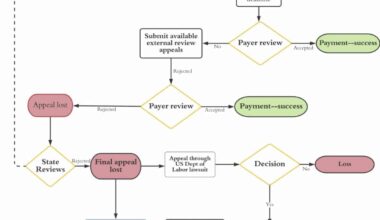
Furthermore, a denial does not always end the process. In some situations, workers can ask the insurer to review the decision. We explain the step-by-step process in our guide on how insurance appeals work for high-risk jobs, including when appeals actually succeed.
Why Denials Are More Common in Hazardous Industries
High-risk work naturally increases both the likelihood of claims and the financial cost when claims occur. This high-exposure combination forces insurers to apply policy terms with extreme care. Industries involving heavy machinery, physical labor, hazardous environments, or remote locations experience distinct risk patterns:
-
Higher Frequency: More individual injuries occur per capita.
-
Severe Outcomes: Accidents result in major trauma rather than minor strains.
-
Extended Timelines: Recovery periods are significantly longer.
-
Permanent Impact: A higher overall risk of permanent functional impairment.
As occupational severity increases, insurers shift from frequency-based risk management toward catastrophic severity control. This means claim verification standards become stricter because a single approved claim in a high-risk occupation can produce substantially larger long-term financial exposure than multiple lower-risk claims combined.
Institutional Evidence Block
According to occupational injury data from organizations such as the International Labour Organization (ILO), OSHA, and NIOSH, hazardous occupations consistently experience higher rates of severe injury, permanent disability, and fatality compared to low-risk environments. This elevated severity profile directly affects how insurers structure underwriting rules, occupational exclusions, claim verification standards, and post-incident investigations.
In severe occupational injury cases, a single approved long-duration disability claim can represent years of wage replacement, medical costs, rehabilitation expenses, and reserve exposure for the insurer.
Denials often follow the same rigorous review process explained in why insurance claims are scrutinized more closely in high-risk jobs, where increased exposure triggers higher verification requirements.
Common claim denial triggers in hazardous occupations include:
- Undisclosed high-risk job duties
- Injuries involving excluded operational activities
- Medical evidence that does not verify functional impairment
- Violations of policy notification procedures
- Occupational exposures outside approved underwriting classifications
- Offshore, elevation, confined-space, or machinery exclusions
The 6 Most Common Reasons Claims Are Denied
Claim denials in high-risk jobs tend to fall into six predictable, structural and operational categories.
1. The Event Falls Outside Coverage Definitions
Insurance policies are built on precise definitions. If an injury, illness, or loss does not match those definitions perfectly, the claim may be denied.
-
Accidental vs. Gradual: An injury classified by a doctor as “gradual wear-and-tear” (like carpal tunnel or degenerative disc disease) being claimed under a policy that only covers sudden, “accidental” trauma.
-
Functional Mismatches: Conditions that do not meet the policy’s exact definition of total or partial disability, or events occurring outside covered timeframes.
2. Occupational Exclusions and Waivers Apply
Many policies for high-risk jobs include explicit exclusions or require signed occupational hazard waivers related to specific duties, environments, or activities. If a claim involves an excluded activity, the denial is often automatic, regardless of how severe the injury is.
-
Height and Elevation Limits: Many standard policies draw a hard line at a specific altitude or story count. If a worker is injured while operating above these thresholds, coverage may be flatly denied based on standard Height Restrictions in Occupational Insurance Policies.
-
Specialized Machinery: Using a specific class of heavy machinery (like tower cranes or high-reach lifts) that requires specialized certification not explicitly listed on the policy.
-
Geographic and Spatial Risks: Operating in offshore environments or remote international waters when the policy only covers domestic, land-based operations. This often includes complications around Rescue Difficulty in High-Elevation Underwriting, where the sheer logistics of reaching an injured worker can drastically impact the initial claims assessment.
Structural Exclusion Model
High-risk insurance policies frequently use structural exclusions to isolate exposures that cannot be priced accurately under standard underwriting assumptions. These exclusions commonly involve:
Extreme elevation work or unscheduled hazardous duties
Offshore helicopter transport and international maritime operations
Confined-space rescue exposures and specialized industrial machinery
The purpose of these exclusions is not simply to reduce payouts, but to prevent unquantifiable exposure from destabilizing the insurer’s overall risk pool.
3. Job Duties Do Not Match What Was Disclosed
Underwriting decisions are based on how work was described during the initial application process. If a claim reveals that actual day-to-day duties were more hazardous than disclosed, insurers may deny coverage on the grounds of material misrepresentation or omission. Insurers often rely on occupational classification frameworks similar to those used in workers’ compensation systems, where classification accuracy directly affects underwriting assumptions, pricing structures, and claim evaluation standards.
In high-risk sectors, this frequently traces back to gravity-based incidents. When analyzing an incident, underwriters look directly at Catastrophic Fall Risk in Occupational Insurance to map out whether the worker’s true daily exposure matched their paperwork. For example, if an employer reports a regulatory clean record but the claim uncovers active OSHA Fall Violations and Insurance Costs, the resulting discrepancy can completely void the coverage. Ultimately, these complex variables feed directly into the insurer’s internal Fall Severity Modeling in Disability Insurance, which dictates how long-term payouts are calculated.
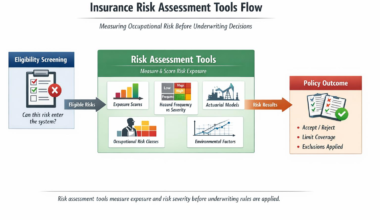
Insurers evaluate hazardous occupations through occupational classification systems that estimate expected injury frequency, claim severity, environmental exposure, and operational risk characteristics for each type of work performed.
4. Allegations of Recklessness or Gross Negligence
Because hazardous environments have clear safety protocols, adjusters minutely examine worker behavior surrounding the incident. Claims are systematically rejected if the insurer determines the loss resulted from an intentional disregard for mandatory safety systems, unapproved shortcutting, or performing high-risk operations while under the influence of drugs or alcohol. In the eyes of the underwriter, recklessness breaches the baseline behavioral expectations baked into the policy rate.
5. Medical Evidence Does Not Support the Claim
Claims require objective, bulletproof documentation. Denials routinely occur when medical records do not explicitly support functional limitation, or when independent medical assessments contradict the treating provider’s notes. In physically demanding jobs, proving a functional inability to work can be far more complex than simply proving an injury occurred.
6. Policy Conditions and Prior Authorizations Were Not Met
Some denials are entirely procedural rather than substantive. These feel especially frustrating to workers because they are not about the injury itself, but about the administrative process.
-
Filing Windows: Missing the policy’s strict timeline for late notification or claim filing.
-
Prior Authorization: For health-related or specialized workers’ compensation care, insurers frequently issue automatic administrative denials if medical procedures or treatments were performed without formal pre-approval.
Claims Adjudication Breakpoint
In practical terms, this means a worker may believe they are covered because the policy is active, while the insurer is evaluating whether the actual work performed still fits the original risk the company agreed to insure.
In high-risk occupations, claim approval often depends on whether the event remains inside the insurer’s original underwriting assumptions. A claim is highly vulnerable to failure when:
Actual job duties exceed disclosed occupational exposure or run afoul of an occupational hazard waiver.
The incident involves unapproved equipment shortcuts, gross negligence, or excluded environments.
Medical evidence cannot objectively verify explicit functional impairment, or care lacked prior authorization.
The worker’s operational environment differs materially from the original policy classification.
Why Denial Does Not Mean the System Is Broken
From the worker’s perspective, a denial feels like a final door slamming shut. From the insurer’s perspective, it is a mathematical necessity to keep the policy pool solvent.
| What the Worker Experiences | What the System Seeks to Achieve |
| Rejection & Financial Stress | Consistently applying uniform rules across the entire risk pool. |
| Frustration with Red Tape | Controlling extreme, volatile financial exposure in high-risk environments. |
| A Feeling of Betrayal | Preventing premiums from becoming so expensive the pool becomes unsustainable. |
Without strict boundaries, insurance for dangerous jobs would rapidly become unavailable or completely unaffordable for everyone in the pool. While this reality does not make a denial any less painful, it explains why these boundaries exist. Eligibility rules for hazardous work, explained in our guide on insurance eligibility for high-risk jobs, set the initial boundaries that later influence these exact claim outcomes.
How Denials Fit Into the Insurance Lifecycle
This underwriting lifecycle exists to maintain pricing stability across the broader insurance pool, particularly in occupational categories associated with elevated injury severity and long-duration claims exposure. Large unresolved claims also force insurers to increase internal claim reserves, which directly affects pricing stability across hazardous occupational categories.
Claim denials are not isolated, random events; they are the downstream outcome of choices made months or years prior.
In hazardous occupations, claim outcomes are often determined long before the injury occurs because underwriting decisions establish the operational boundaries that later control claim eligibility.
-
Eligibility determines whether coverage can exist for your specific profession.
-
Underwriting defines what explicit risks within that profession are accepted.
-
Pricing mathematically reflects the statistical exposure of those risks.
-
Claims enforce the rules established by the first three steps.
Most claim disputes trace back to misunderstandings or misalignments at the eligibility and underwriting stages, not to the claim event itself.
What a Denial Actually Means for the Worker
It is vital to separate the immediate shock of a denial from what it actually implies for your future financial security.
| A Denial Does NOT Mean: | A Denial Usually Means: |
| Your policy is entirely useless, void, or fake. | The specific event does not fit this exact policy blueprint. |
| All future claims you file will automatically fail. | The initial medical or procedural evidence submitted was insufficient. |
| You are entirely uninsurable moving forward. | The policy definitions were narrower than you structurally expected. |
Understanding this distinction is critical before assuming bad faith or permanent exclusion.
For some workers, the logical next step is appealing the decision. However, appeals do not always succeed, especially in dangerous occupations. We break this down in detail in our guide on why insurance appeals fail in high-risk jobs, helping workers understand what realistically changes, and what doesn’t, during a formal appeal.
Operational Reality for Workers
For high-risk workers, a denied claim can affect far more than short-term income. Delayed benefits may disrupt rehabilitation timelines, create employment instability, increase financial dependency, and complicate future insurance eligibility.
This is why understanding policy boundaries before an incident occurs is often far more valuable than attempting to interpret coverage after a catastrophic injury has already happened.
Conclusion: A Boundary, Not a Judgment
Insurance claim denials in high-risk jobs are structural, not personal. They occur because dangerous work fundamentally changes how strictly policies must be managed and applied. Understanding why denials occur helps workers evaluate coverage disputes more realistically and make more informed decisions about appeals, documentation, and future insurance planning.
If you are currently facing a complex or systemic denial, consumer protection frameworks (like those outlined by regional Insurance Commissioners or the Consumer Financial Protection Bureau) provide explicit regulatory resources to help you understand your local dispute options.
This understanding sets the foundation for what happens next: first, deciding whether a formal appeal makes sense, and second, knowing what to do if the dispute continues. In some situations, disagreements move beyond the insurer entirely, which we explain in our guide on when insurance disputes escalate to complaints, regulators, or legal action.
Final Underwriting Insight
Insurance claim denials in hazardous occupations rarely originate at the moment of injury. Most denials are the downstream result of earlier underwriting boundaries, occupational classifications, disclosure assumptions, and policy limitations established long before the incident occurred.
For a complete picture of how claims fit into the entire ecosystem, see our primary pillar guide: Risk Job Insurance Explained.
—————————————————————————————————————————
Sources & Underwriting Reference
This article was developed using occupational risk frameworks, underwriting principles, and claims-management standards commonly referenced across hazardous industry insurance systems, including guidance and research from:
-
Occupational Safety and Health Administration (OSHA) — workplace injury exposure, fall protection standards, and hazardous operation compliance frameworks.
-
National Institute for Occupational Safety and Health (NIOSH) — occupational injury severity, fatality trends, and worker risk research.
-
International Labour Organization (ILO) — global occupational injury and long-term disability exposure data.
-
National Council on Compensation Insurance (NCCI) — occupational classification logic and workers’ compensation risk modeling.
-
Insurance Information Institute (Triple-I) — insurance claims processes, underwriting structures, and policy interpretation principles.
Reviewed for underwriting accuracy by the RJI Institutional Review Team, including review of:
- Occupational classification exposure analysis
- Hazardous work underwriting structures
- Claim verification and denial pathways
- Policy exclusion frameworks
- Severity-based risk evaluation systems
- Disclosure and operational exposure assessment
Research & Underwriting Methodology
This article applies an underwriting-system approach to explain how claim denials develop in hazardous occupations. Research focuses on the relationship between occupational exposure, underwriting assumptions, policy definitions, exclusion structures, medical verification requirements, and claims adjudication procedures within high-risk insurance environments.
Published: May 2026
Last Updated: May 2026