Reviewed for underwriting accuracy by the RJI Underwriting Research Team | Published: Aug, 2026 | Last reviewed: Aug, 2026.
Executive Summary
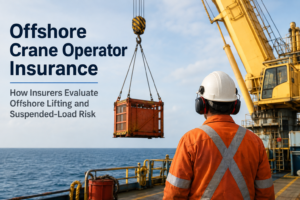
Offshore crane operator insurance exists because lifting offshore combines three difficult conditions: a suspended load, a moving platform or vessel, and workers operating around the lift path. If control is lost, the consequences can be much more serious than they would be on many land-based lifting sites. This is why insurers treat offshore crane work differently from ordinary crane operations.
Offshore crane work is treated as a high-consequence occupation because a loss of control can quickly produce a serious event. The load may be suspended above workers, equipment, or critical infrastructure, leaving little room to recover once something goes wrong. This is what separates offshore crane operator insurance from ordinary crane operator insurance written for a stationary construction site: the offshore environment removes the operator’s ability to pause the physics of the lift while retaining every consequence of getting it wrong.
The variables that most influence underwriting are not simply the size of the crane or the value of the cargo. Underwriters weigh vessel motion and sea state, wind and weather windows, crane and rigging condition, operator competence and certification, the presence and discipline of a documented lifting plan, and the degree to which simultaneous offshore operations compress the margin for error. A contractor that can evidence reliable equipment, competent personnel, and a disciplined lifting system materially changes how an underwriter reads the same exposure.
Underwriting insight: offshore crane operator insurance is underwritten around control of the lift, not capacity of the crane. Insurers are pricing the reliability of the entire lifting system, not the tonnage on the load chart.
What Is Offshore Crane Operator Insurance?
What Offshore Crane Operator Insurance Covers
Offshore crane operator insurance is not one policy. It is the set of coverages that respond when an offshore lifting operation causes injury, property damage, or business disruption. Depending on how the operator is employed and where the work happens, that set can include workers’ compensation or employers’ liability, general liability, marine liability, equipment coverage, and project-specific construction or property insurance. Which of these actually apply to a given contractor depends less on the job title “crane operator” and more on the specific exposure that title is covering.
An employee running a pedestal crane on a fixed production platform can present a genuinely different insurance profile from a contractor operating a crane vessel on a construction campaign, even though both would be described the same way on a resume. This is the first principle of offshore underwriting worth holding onto through the rest of this article: insurers classify the actual exposure, not the job title.
For the broader insurance framework surrounding offshore employment, see our guide to offshore workers insurance, which explains how occupational duties, location, jurisdiction, and remote working conditions affect coverage.
At its simplest, the job is three steps: pick up the load, move it, set it down. Almost everything this article covers (vessel motion, weather limits, rigging integrity, lift planning, SIMOPS coordination) exists because those three steps get materially harder to execute reliably once they happen above a moving deck, over occupied work areas, with limited room to recover if something goes wrong.
The Reality of Offshore Crane Work
Daily Physical and Environmental Realities of Offshore Crane Operation
An offshore crane operator typically works from a pedestal crane fixed to a platform or vessel, or from a knuckle boom or lattice boom crane aboard a support vessel, construction vessel, or crane vessel. The work is centered on moving equipment, containers, personnel baskets, subsea components, structural members, and general cargo between a supply vessel and an offshore platform, between deck and crane barge, or between a construction vessel and an installed structure. Much of this activity happens during routine deck operations, loading and unloading supply boats, staging materials for maintenance campaigns, and repositioning equipment across a working deck with limited lay-down space.
The operating cab of an offshore crane sits above a deck that is never fully still. The crane itself may be mounted on a fixed platform, where motion is limited to structural response, or on a floating vessel such as an FPSO, drilling rig, or construction vessel, where the operator is compensating in real time for pitch, roll, and heave while tracking a load that swings independently of the vessel beneath it. Visibility is frequently constrained by the geometry of the boom, by weather, or by the working deck itself blocking a clear sightline to the landing point. Where structural obstructions block the operator’s direct view, the lift becomes a blind lift: one conducted entirely on radio and hand signals relayed through a banksman or signalman, in conditions where wind and engine noise routinely degrade both.
Lifts range from routine supply runs to heavy-lift and critical-lift work supporting construction campaigns, shutdowns, and, increasingly, offshore wind component installation. Each of these lift categories carries a different exposure profile, but all of them share the same underlying reality: the operator is directing a suspended load over a deck occupied by other workers, positioned above or beside equipment that cannot easily be moved out of the way, in an environment where the operator’s control inputs are the last line of defense against a loss event.
Common Injuries and Illnesses Among Offshore Crane Operators
The exposures associated with offshore crane operation are not unique in category (struck-by injury, crush injury, and fall exposure appear across most heavy-lifting occupations), but they are distinguished by consequence. A dropped object or an uncontrolled load swing on an offshore deck does not occur in isolation; it occurs in a confined working area, often above or adjacent to personnel who have limited room to move clear. The exposures underwriters track most closely include:
- struck-by injuries from a swinging or dropped load
- crush injuries during rigging, landing, or positioning of suspended loads
- falls from crane structures, cabs, or elevated deck positions during access and maintenance
- suspended-load incidents involving loss of load control
- rigging failures, sling, shackle, or lifting-point failure under load
- crane structural failure, including boom, pedestal, or slewing-system failure
- mechanical or hydraulic failure affecting load control or braking
- electrical and control-system failure affecting crane response
- musculoskeletal exposure from repetitive control operation and vibration
- fatigue-related judgment and reaction-time degradation over extended shift patterns
Underwriters weigh severity and accumulation potential far more heavily than raw injury frequency in this occupation. A crane operator with a low claim count can still present an elevated severity profile if the nature of the work (critical lifts over occupied deck space, personnel lifting, or lifting over live production equipment) carries high-consequence potential even when it rarely materializes. This is a defining feature of high-loss occupations: the underwriting question is not how often something goes wrong, but how bad it is when it does.
Regulatory data supports treating lifting as a standing high-severity category rather than an occasional hazard. In proposing updated offshore crane safety regulations, BSEE stated that lifting incidents had been associated with approximately 16% of offshore fatalities over the preceding seven years. That figure is tied to the specific rulemaking that cited it, so it should be read as directional evidence rather than an up-to-date statistic. More durably, BSEE’s ongoing “Lifting Our Awareness” initiative has found that approximately 90% of lifting incidents reported to the agency occurred during lifts the facility or crew considered routine, not during unusual or heavy-lift operations, which typically receive additional planning and oversight. This is a genuinely counterintuitive finding for underwriting purposes: it means routine, high-frequency lifting is where the exposure actually concentrates, not the occasional critical lift that gets the most scrutiny.
The Worker’s Claim Experience and Insurance Friction
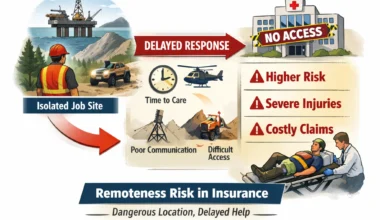
A serious lifting incident offshore does not resolve the way a comparable incident would onshore. Medical response is constrained by distance and transport: an injured worker may require stabilization on the platform or vessel before helicopter evacuation to a shore-based trauma facility can even begin, and evacuation itself is dependent on weather, daylight, and aircraft availability. This delay between injury and definitive care is a recurring theme across offshore occupations, and it shapes claims outcomes independently of the severity of the initial injury: a moderate injury with a delayed evacuation window can develop into a more severe claim than the same injury would produce onshore.
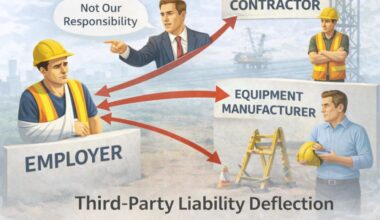
Once a claim is underway, investigation is complicated by the number of parties typically present on an offshore lift: the crane operator’s employer, the vessel owner or operator, the platform operator, a rigging or lifting contractor, and — on construction or shutdown campaigns — multiple subcontractors working the same deck. Establishing causation and allocating responsibility across this structure is materially harder than on a single-employer land-based site, and it tends to draw multiple insurance programmes: workers’ compensation, general liability, and marine liability, into the same claim simultaneously. For a broader analysis of how insurers evaluate these interacting marine, occupational, jurisdictional, and remote-work exposures, see Offshore Risk Underwriting. For the specific effects of offshore medical and evacuation constraints, see Remote Rescue Delays in Offshore Claims and Remote Medical Access and Occupational Coverage.
How Offshore Crane Operators Are Classified
SOC, NCCI, USL&H and Jones Act Classification
At the occupational level, crane and tower operators are recognized under Standard Occupational Classification code SOC 53-7021 (Crane and Tower Operators), the code the U.S. Bureau of Labor Statistics uses to track this occupation’s employment and wage data. That code describes the occupation in general terms (operating mechanical boom, cable, or tower equipment to lift and move materials), and it does not, by itself, capture the offshore-specific exposure that drives underwriting.
This is where offshore crane work diverges structurally from its land-based counterpart. NCCI workers’ compensation classification, and the class codes carriers apply to premium calculation, are built around state-based jurisdiction and standard employment relationships. Offshore work frequently falls outside that framework entirely, and which federal regime applies turns on vessel status rather than job title. A crane operator working from a fixed platform is generally not considered to be working aboard a “vessel,” so coverage typically runs through the Longshore and Harbor Workers’ Compensation Act (USL&H) as extended to the Outer Continental Shelf by the Outer Continental Shelf Lands Act (OCSLA). A crane operator working from a vessel (a crane barge, construction vessel, or floating rig) may instead qualify as a Jones Act seaman if their connection to that vessel is substantial in duration and nature; courts have applied this status to vessel-based crane operators in reported cases. Where that connection does not rise to seaman status, USL&H typically applies instead. This is a case-by-case legal determination, not a fixed rule tied to occupation title, and it should not be treated as settled for any specific account without independent review.
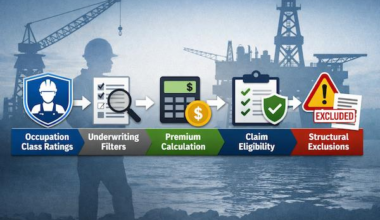
Because of this, this analysis does not present a universal NCCI, ISO, or NAICS code for offshore crane operators. Classification depends on the employer’s operational structure, the crane’s mounting (fixed platform versus vessel-mounted), the jurisdiction and flag state involved, and the specific duties the operator performs. A contractor moving between state, federal, and international waters over the course of a single project may cross multiple classification regimes within that project. Jurisdiction fragmentation is a first-order underwriting variable for this occupation, not a secondary detail.
Why classification matters to you: Your job title alone does not determine which insurance system applies to you. Where you work, whether you work from a vessel or fixed platform, who employs you, and what duties you perform can all affect the workers’ compensation or maritime system that applies.
Occupational Classification Logic for Offshore Crane Operators
Underwriters distinguish offshore crane operators from land-based crane operators, mobile crane operators, and tower crane operators primarily based on environment rather than equipment. A pedestal crane on a fixed platform and a comparable capacity mobile crane on a construction site may share load charts and certification pathways, but the platform-mounted crane operates against vessel and weather variables the land-based unit never encounters. Offshore crane operators are also distinguished from riggers, lifting supervisors, deck crew, and offshore mechanics, roles that participate in the same lifting operation but carry a different point of control. The crane operator’s underwriting identity rests on the combination of lifting authority, offshore environment, and suspended-load consequence: the operator is the one individual whose control inputs determine whether the load stays governed once it leaves the deck.
Classification Mismatch and Transitional Duties
In practice, offshore crane operators rarely perform lifting in isolation. Smaller contractors and remote assignments frequently blend crane operation with rigging, lifting supervision, deck operations, routine maintenance, cargo handling, and, on some vessels, personnel transfer duties. Each additional duty shifts the underwriting profile: an operator who also rigs their own lifts changes the accountability structure for a rigging failure; an operator who supervises other lifts takes on exposure beyond their own console. Underwriters look for a clear description of the actual duty mix rather than a job title, because a policy underwritten against “crane operator” duties alone can leave gaps if the operator’s real-world responsibilities extend further.
Payroll, Audit and Classification Exposure
Mixed offshore duties create payroll allocation challenges that surface at audit rather than at binding. A contractor running a shutdown or construction campaign may deploy the same individual across crane operation, rigging, and general deck labor within a single pay period, and across contractor and subcontractor arrangements that shift by project phase. Where payroll is not allocated accurately across these duties, the resulting audit can produce disputes over premium base and, in more serious cases, coverage questions if the duties actually performed diverged materially from those declared at inception. Contractors operating across marine and construction classifications simultaneously, as is common on offshore wind and platform construction campaigns, carry the highest exposure to this kind of reporting mismatch.
How Insurers Underwrite Offshore Crane Operator Risk
A note on how to read this section and those that follow: references to how “underwriters” evaluate a given factor describe common practice patterns observed across the specialty marine and energy market, not a rule binding every carrier identically. Individual underwriting guidelines, risk appetite, and the weight given to any single factor vary by insurer, program, and market cycle.
Base Rates for Offshore Crane Operator Insurance
Offshore crane operations begin underwriting review from an elevated baseline relative to comparable land-based lifting work, reflecting the severity dynamics already established: suspended-load exposure compounded by vessel motion, weather dependency, and constrained emergency response. This analysis does not publish a universal premium figure for this occupation, because actual pricing is a function of variables that differ by account: crane type and capacity, the operating environment (fixed platform versus dynamically positioned vessel), the nature of the project (routine supply support versus heavy-lift construction), claims history, operator experience and tenure, equipment condition and age, prevailing weather exposure for the operating region, the contractor’s demonstrated operational maturity, and the governing jurisdiction. Two contractors performing superficially similar lifting work can present materially different underwriting profiles once these variables are examined individually.
EMR and Experience Modification for Offshore Crane Operators
Where a state workers’ compensation framework applies, Experience Modification Rate functions as it does across other hazardous occupations, a numeric signal of whether an account’s loss history runs better or worse than its classification peer group. For offshore crane operations specifically, underwriters read EMR alongside a narrower set of loss indicators: prior crane incidents, dropped-object history, and rigging-failure history carry disproportionate weight relative to a single blended modifier, because a contractor can present an acceptable EMR while still carrying one or two severe lifting losses buried in the loss run. Underwriters also weigh contractor performance history, documented safety management systems, and evidence of operational maturity (repeat engagement with the same client base, consistent crew retention, and a track record of completed campaigns without major incident) as qualitative modifiers that sit alongside the numeric EMR.
How Insurers Interpret Offshore Crane Claims History
Underwriters reviewing an offshore crane account examine dropped-object claims, struck-by injuries, crane and rigging failures, resulting property damage, fatalities, and, where disclosed, near-miss patterns that indicate a developing exposure before it produces a claim. Reserve development matters as much as initial claim size: a lifting claim that reserves upward significantly after first report suggests either an underestimated initial severity or a complication in the claims process itself, both of which concern underwriters evaluating renewal terms. Recurring maintenance-related failures across a loss run (repeated hydraulic, wire-rope, or brake-related incidents) read differently than a single isolated event, because they suggest a systemic equipment-management gap rather than an unfortunate occurrence.
The central interpretive distinction is between frequency risk and severity risk. A contractor with several minor incidents (a dropped tool, a minor deck strike) presents a different underwriting picture than a contractor with a single serious rigging failure that produced a fatality or major property loss, even if the second contractor’s overall claim count is lower. In offshore crane underwriting, severity risk generally carries more weight than frequency risk, because the occupation’s loss mechanism is inherently capable of producing severe outcomes from a single failure event.
Eligibility Requirements for Offshore Crane Insurance
Underwriters assess eligibility through a set of operational documentation questions, treated as evidence of operational maturity rather than paperwork for its own sake:
- current crane certification and inspection records
- documented maintenance history and adherence to manufacturer service intervals
- operator competency verification and relevant certification (such as recognized crane-operator or lifting-supervisor credentials)
- documented lift planning procedures, including critical-lift procedures for non-routine lifts
- rigging competence and inspection discipline
- defined weather restrictions and go/no-go criteria for lifting operations
- reliable communication systems and protocols between operator, banksman, and deck
- emergency response and evacuation procedures specific to lifting incidents
- contractor management practices where subcontracted crane services are involved
- equipment age and remaining service life relative to maintenance investment
A contractor that can produce these records on request is read as operationally mature; a contractor that cannot, or that produces incomplete or inconsistent records, is read as an unknown quantity regardless of how favorable its claims history appears, because the absence of documentation limits the underwriter’s ability to distinguish a genuinely low-risk operation from one that has simply not yet had a serious incident.
Offshore Crane Insurance Underwriting Red Flags
Certain patterns draw heightened underwriting scrutiny regardless of an account’s overall claims history:
- repeated dropped-object incidents, even where none produced serious injury
- identified crane structural defects or deferred structural repairs
- poor or inconsistent inspection history
- expired, lapsed, or incomplete operator certification
- repeated overload events or evidence of lifts performed outside rated capacity
- poor or deferred maintenance practices
- weak or informal lift planning, particularly for non-routine or critical lifts
- inadequate rigging controls or inconsistent rigging inspection
- poor communication protocols between operator and deck teams
- unexplained or inconsistently documented claims
- inexperienced operators assigned to complex or critical lifts
- lifting activity that falls outside the operator’s documented experience profile
- poor coordination among multiple contractors sharing the same lifting operation
How Suspended-Load Risk Drives Offshore Crane Insurance
Offshore Crane Lift Size and Operational Complexity
Offshore lifting spans a wide operational range, and underwriting assumptions shift materially across that range. Routine supply lifts (moving containers, drums, and general cargo between a supply vessel and platform deck) represent the highest-frequency, generally lower-severity end of the spectrum, though even routine lifts retain full suspended-load exposure.
Maintenance lifts supporting equipment servicing and construction lifts supporting platform modification sit at an intermediate level of complexity. Heavy lifts and critical lifts (moving high-value modules, structural components, or equipment near the crane’s rated capacity, often with limited clearance or narrow weather windows) represent the highest-complexity category, frequently requiring engineered lift plans and specialist review before execution.
Offshore wind component lifting and crane-vessel operations supporting large-scale installation campaigns sit at the far end of this range, combining heavy-lift complexity with the accumulation exposure of a multi-week or multi-month construction programme. As lifting complexity increases, underwriters expect a corresponding increase in the rigor of lift planning, engineering review, and operational controls. An account that treats a critical lift with the same informality as a routine supply run is a meaningfully weaker risk than one that scales its controls to the lift.
Suspended-Load Exposure and Dropped-Object Risk
Suspended-load exposure is the mechanism that defines this occupation’s underwriting identity. Once a load leaves the deck, the available recovery options become substantially more limited. A failure in the crane, rigging, environment, or operator control can quickly turn a suspended load into an uncontrolled event. The translation from mechanical event to insurance loss follows a direct chain:
Load
↓
Suspension
↓
Loss of Control
↓
Dropped Object / Impact
↓
Injury / Property Damage
↓
Insurance Loss
This chain is what separates suspended-load exposure from ordinary manual material handling. Manual material handling usually involves shorter distances and more direct control by the worker. A suspended crane load can travel much farther and may be positioned above several workers or critical assets. If control is lost, the resulting event can affect multiple people or assets at once. This is the reason suspended-load occupations carry a structurally different severity profile than most other material-handling work, and why underwriters treat lifting exposure as a category distinct from general labor exposure.
Load Weight, Height and Energy
Underwriters do not evaluate exposure through crane capacity alone. What matters operationally is the combination of load weight, lifting height, load trajectory, and, critically, proximity to personnel and to critical assets along that trajectory. A modest load lifted at height over occupied deck space or over live production equipment can present a more serious severity profile than a heavier load moved at low height across an open, unoccupied area. Underwriters reviewing a lift plan look for evidence that the contractor has considered this full picture rather than simply confirming the load falls within the crane’s rated capacity.
Vessel Motion and Dynamic Loading
Where a crane is mounted on a floating vessel rather than a fixed platform, pitch, roll, and heave introduce dynamic loading that a land-based crane never experiences. The crane, the vessel, and the suspended load can each be moving independently, and the operator’s task is to control the load’s position relative to a landing point that is itself moving. If a load is picked at the wrong point in the vessel’s heave cycle (for instance, just as the vessel drops away beneath it), the effective force on the crane’s boom and rigging can spike well above the load’s static weight for an instant. Engineers describe this as dynamic amplification, and it is a central reason offshore lift plans specify not just a safe working load but a timing and sequencing discipline for the pick itself. Sea state directly governs how much of this dynamic loading the system must absorb, and the interaction between crane-vessel motion and load response is one of the principal variables separating offshore lifting risk from onshore lifting risk.
Wind, Weather and Offshore Crane Operating Limits
Wind speed and gusting affect load control directly, particularly for loads with significant surface area exposed to wind. Visibility conditions affect the operator’s and banksman’s ability to track the load and landing point accurately. Defined weather windows and go/no-go criteria are a primary operational control, and underwriters view a contractor’s discipline in observing those limits, rather than pushing lifts to meet schedule pressure, as a direct indicator of underwriting confidence.
Load Swing and Crane Control
Uncontrolled load swing, whether induced by wind, vessel motion, or an abrupt operator input, can bring a suspended load into contact with personnel, structures, other vessels, equipment, pipelines, or subsea assets positioned along or near the intended lift path. Because offshore working decks are typically constrained in space, the margin between an intended lift path and an unintended contact point is often narrow, which is part of why lift planning specifically addresses swing radius and clearance rather than relying on operator judgment alone during execution.
Crane Structural Integrity and Equipment Condition
The boom, pedestal, slewing system, hydraulic system, wire ropes, hooks, brakes, and control systems each represent a potential single point of failure in the load-control chain. Underwriters translate the physical condition of this equipment directly into underwriting confidence: a crane with a current inspection record, a documented maintenance programme, and no history of deferred structural repair supports a materially stronger submission than one without that evidence, independent of the crane’s age or original specification.
Rigging Integrity and Inspection
Rigging failure is underwritten as a distinct exposure from crane failure, because it sits outside the crane manufacturer’s engineering and depends entirely on the rigging selected, inspected, and configured for a specific lift. Slings, shackles, hooks, lifting points, spreader beams, and the overall rigging configuration must be matched to the load’s weight, geometry, and center of gravity for each lift; a rigging failure often reflects a planning or inspection gap rather than an equipment defect, which is why underwriters look at rigging inspection discipline as a separate line item from crane maintenance.
Critical Lifts and Heavy-Lift Operations
Lifts involving high-value equipment, complex load geometry, limited lifting margins relative to crane capacity, close personnel proximity, critical offshore assets in the lift path, or narrow weather windows draw heightened underwriting scrutiny. These lifts typically warrant engineered lift plans, pre-lift briefings, and, for the most complex operations, third-party or specialist engineering review before execution, and evidence of this review process is a meaningful underwriting positive.
Personnel Lifting by Offshore Crane
Where personnel are lifted by crane, for transfer between vessel and platform, or to access work areas not reachable by other means, insurers apply additional scrutiny, because lifting people carries a fundamentally different consequence profile than lifting cargo. Not every offshore crane operator performs personnel lifting, and where it does not occur, that should be reflected clearly in the account’s operational description; where it does occur, underwriters expect a distinct, more rigorous procedure governing it than the procedure applied to routine cargo lifts.
Dropped-Object Exposure
Dropped objects can result from load release, rigging failure, component failure, or unsecured tools and equipment falling from height during lifting or associated work at elevation. The consequences extend beyond the primary load itself to secondary objects (tools, fittings, or debris) that can fall independently and strike personnel or critical infrastructure below. Dropped Object Exposure is treated as a standing underwriting category on offshore accounts precisely because its consequences are frequently disproportionate to the size of the object involved.
SIMOPS and Exposure Stacking
Offshore crane operations rarely occur in isolation. Lifting frequently proceeds alongside welding, diving, helicopter operations, cargo transfers, ongoing production activity, maintenance work, scaffolding erection, and vessel movements, all competing for the same limited deck space and safety oversight. Each additional concurrent operation narrows the margin for error and increases the number of ways a single failure can cascade into a multi-party loss. This layering of concurrent exposures is described here as Exposure Stacking, and it is a primary reason underwriters scrutinize a contractor’s SIMOPS management procedures as closely as the lifting procedures themselves.
Communication and Human Coordination
A safe lift depends on reliable coordination among the crane operator, the banksman or signalman, the rigger, the lifting supervisor, deck crew, and, where a vessel is involved, the vessel’s own crew. Communication failure between any two of these roles is a recurring root cause in lifting incident investigations, and underwriters treat documented communication protocols, defined roles, and briefing discipline as direct evidence of operational reliability rather than procedural formality.
Operator Fatigue and Human Reliability
Fatigue, extended or irregular shift patterns, the repetitive nature of routine lifting operations, and schedule or production pressure all affect operator reliability over time. These are best read as system reliability factors rather than matters of individual blame: a contractor whose scheduling consistently pushes operators into extended shifts or compresses rest periods is building a systemic reliability gap into its operation regardless of how skilled any individual operator is. Underwriters weigh operator experience and supervision structure alongside these scheduling patterns.
Offshore Crane Equipment Age and Maintenance
Ageing cranes are not automatically a red flag, but they raise the bar for maintenance evidence. Corrosion, hydraulic system deterioration, wire-rope condition, and structural fatigue all accumulate over an offshore crane’s service life, and the offshore environment (salt exposure, constant vibration, weather cycling) accelerates that accumulation relative to comparable land-based equipment. Underwriters look for inspection quality and consistency, and for evidence that maintenance has not been deferred, as the practical offset to equipment age.
Offshore Asset Criticality and Lift-Path Exposure
A lift conducted over accommodation quarters, production equipment, hydrocarbon-handling systems, or critical electrical infrastructure carries a materially different severity potential than a routine lift over open deck space, even where the load itself is unremarkable. Underwriters read the lift path in relation to what sits beneath it, not only in relation to the load being moved.
Accumulation Risk in Offshore Crane Operations
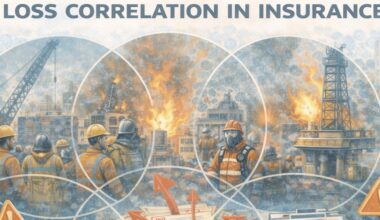
A single lifting incident has the potential to affect the crane operator, riggers, deck crew, maintenance personnel, and multiple contractors working the same deck simultaneously, as well as the offshore asset itself. Because offshore working areas concentrate personnel and equipment in confined space, one failure event can generate several concurrent claims across multiple coverage lines and multiple employers, a dynamic that underwriters translate into accumulation risk when assessing an account’s aggregate exposure rather than evaluating each potential claim in isolation.
Safety Controls That Strengthen Offshore Crane Insurance Eligibility
Underwriters read each of the following controls for what it signals about operational reliability, not merely for its presence on a checklist:
- Lift plans: evidence that load, rigging, environment, and personnel exposure were considered before the lift, not improvised during it
- Critical-lift procedures: evidence that non-routine lifts receive proportionally greater scrutiny than routine ones
- Crane inspection: evidence of ongoing structural and mechanical fitness rather than a one-time certification
- Maintenance programmes: evidence that equipment condition is actively managed rather than run to failure
- Load testing: evidence that rated capacity claims are verified rather than assumed
- Operator competency verification: evidence that the individual at the controls is qualified for the specific crane and lift type
- Rigging inspection: evidence that the load-bearing components outside the crane itself are independently verified
- Weather monitoring: evidence that go/no-go decisions are data-driven rather than judgment-based under schedule pressure
- Communication protocols: evidence that coordination failure has been designed out rather than left to informal practice
- Exclusion zones: evidence that personnel exposure beneath the lift path is actively managed
- Emergency procedures: evidence that a failure event has a defined response rather than an improvised one
A contractor able to demonstrate reliable implementation of these controls, not merely their existence in a policy manual, presents materially stronger underwriting confidence than one that can only produce the documents themselves.
Seasonal Weather and Offshore Crane Operations
Storm seasons, cyclone activity, and winter conditions materially narrow the available weather windows for offshore lifting in many operating regions, compressing construction and maintenance campaigns into shorter operating periods and increasing schedule pressure during those periods. Underwriters assess whether a contractor’s lift planning and scheduling practices account for this seasonal compression or whether schedule pressure during favorable windows tends to erode the discipline applied to weather-restriction limits.
Where Offshore Crane Insurance Claims and Coverage Break Down
Common Offshore Crane Claim Failures
Claims involving offshore lifting incidents commonly encounter friction from incomplete incident documentation, unclear or informal lift plans that cannot establish what was actually planned versus what occurred, missing inspection records that leave equipment condition at the time of loss unverifiable, unclear allocation of responsibility across multiple contractors present on the same lift, and disputed causation where mechanical, rigging, and human factors are difficult to disentangle after the fact.
Coverage Gaps in Offshore Crane Insurance
Coverage issues can arise around the specific crane operations performed, subcontractor arrangements, marine operations conducted from vessels, the equipment itself, personnel-lifting activity, and territorial restrictions tied to where the work is actually performed. Policy wording on each of these points varies meaningfully by insurer and jurisdiction, and a wording that adequately addresses one contractor’s operation may leave a gap for another whose duty mix, vessel arrangements, or operating territory differs, even where both are nominally underwritten as “offshore crane operator” accounts.
Coverage Issues That Complicate Offshore Crane Claims
In some cases, insurance is in place but a claim becomes complicated because of undisclosed operations that fell outside the account’s original underwriting description, incorrect classification relative to duties actually performed, unreported changes in crane use or capacity, undocumented subcontracting arrangements, unclear contractual risk allocation between the parties present on the lift, or incomplete records that cannot substantiate the account’s operational history at the time coverage was placed. These failures are rarely the product of bad faith; more often they reflect operational change that outpaced the underwriting file.
Offshore Crane Insurance Claim Breakpoints
Breakpoint 1, Rigging Failure
| Operational Situation | A sling or shackle fails under load during a routine or non-critical lift. |
| Underwriting Interpretation | Underwriters trace the failure to rigging inspection and configuration discipline rather than crane condition, and examine whether the rigging was matched to the specific load. |
| Insurance Consequence | The dropped load results in personnel injury, triggering emergency evacuation and a Workers’ Compensation / Employers’ Liability claim, with potential third-party exposure if other contractors’ personnel are affected. |
| Operational Improvement | Documented rigging inspection intervals and load-specific rigging selection procedures materially strengthen the account’s position on future submissions. |
Breakpoint 2, Crane Failure
| Operational Situation | A structural or mechanical failure occurs in the crane itself during a lift. |
| Underwriting Interpretation | Underwriters assess whether the failure reflects a maintenance gap, an equipment age issue, or an isolated component defect, and review the inspection and maintenance record accordingly. |
| Insurance Consequence | Structural damage to the crane or supporting deck can halt lifting operations and interrupt production, generating a combined Property and Business Interruption loss alongside any injury claim. |
| Operational Improvement | A documented, adhered-to maintenance programme and evidence of proactive component replacement reduce the likelihood of this breakpoint recurring. |
Breakpoint 3, Dropped Object onto Critical Equipment
| Operational Situation | A dropped object strikes production, electrical, or other critical offshore equipment rather than personnel. |
| Underwriting Interpretation | Underwriters evaluate the lift path relative to asset criticality and whether exclusion-zone or routing controls existed to keep lifts clear of critical infrastructure. |
| Insurance Consequence | Damage to critical equipment can force an operational shutdown, generating property damage and business interruption exposure that frequently exceeds the value of the dropped object itself. |
| Operational Improvement | Lift-path planning that routes suspended loads away from critical assets, wherever operationally feasible, is one of the highest-value controls available to reduce this exposure. |
Insurance Coverage for Offshore Crane Operators
Workers’ Compensation, USL&H and Jones Act Coverage
Workers’ Compensation (or, where offshore jurisdiction applies, USL&H or Jones Act coverage) responds to the crane operator’s own employee injury exposure. Given the jurisdictional fragmentation described earlier in this article, confirming which regime actually governs a given operator’s employment is a prerequisite to interpreting this coverage correctly, not an afterthought.
General Liability for Offshore Crane Operations
General Liability responds to third-party injury and property damage arising from lifting operations, injury to personnel employed by other contractors present on the same lift, or damage to property not owned by the crane operator’s employer. Given the multi-contractor nature of most offshore lifting operations, GL exposure is rarely isolated to a single clean incident; it typically intersects with contractual risk-transfer arrangements among the parties sharing the deck.
Marine Liability for Vessel-Based Crane Operations
Where crane operations are conducted from a vessel (a crane vessel, construction vessel, or support vessel), marine liability exposure can apply alongside, or in place of, standard general liability coverage, potentially addressing vessel operations, marine contractor exposure, and cargo-handling liability arising from the vessel’s role in the lift. Precisely where general liability wording ends, and marine liability wording begins is policy-specific and is one of the more frequently contested interpretive points in offshore lifting claims; that boundary should not be treated as fixed across insurers.
Inland Marine and Crane Equipment Coverage
Crane-related equipment and other mobile lifting assets are typically addressed under inland marine or equipment coverage, addressing physical damage to the crane, rigging, and associated lifting equipment itself, separate from the liability exposure arising from its use.
Builders Risk for Offshore Construction Lifts
Offshore construction projects involving structural components, modules, turbine components, or other heavy equipment installed via crane frequently intersect with Builders Risk coverage, which responds to damage to the project under construction rather than to third-party injury or the contractor’s own equipment.
Environmental and Pollution Liability
Where a dropped load or lifting failure ruptures a hydrocarbon line, fuel tank, or other containment system, environmental and pollution liability coverage can become relevant alongside, not instead of, the standard liability and property lines. This is a distinct coverage trigger worth checking for specifically, because many, though not all, general liability forms carry a pollution exclusion of varying scope, and a lifting incident that produces both a struck-by injury and a containment breach can require two separate policies to respond to what was, operationally, a single event.
Commercial Auto for Offshore Support Operations
Commercial Auto coverage becomes relevant only at the boundary where onshore transportation and logistics support the offshore lifting operation (moving equipment or personnel to a port or heliport, for instance) and does not extend to the offshore lifting exposure itself. Clearly identifying where transportation exposure ends, and offshore lifting exposure begins avoids coverage confusion at claim time.
The important point for workers is that there may not be one insurance policy responsible for every part of an offshore crane accident. Different policies can respond depending on who was injured, what was damaged, where the operation occurred, and how the crane was being used.
Offshore Crane Insurance Market Conditions and Carrier Appetite
Capacity and Availability for Offshore Crane Insurance
Complex offshore lifting operations, heavy-lift and critical-lift work in particular, frequently require specialist underwriting rather than standard-market placement, reflecting the combination of severity potential, accumulation exposure, high equipment values, marine exposure, and the need for specialist engineering review that these accounts present. Capacity for this class of risk is not unlimited, and availability can tighten meaningfully around specific operating regions or vessel types during periods of elevated market caution.
Regulatory and Litigation Effects on Market Appetite
A major offshore lifting incident, particularly one involving fatality or significant environmental or asset damage, tends to produce ripple effects well beyond the account directly involved: heightened regulatory scrutiny of lifting operations generally, increased litigation activity around comparable exposures, tightened carrier appetite for the broader class, and elevated engineering-review requirements at renewal across the market. Offshore crane operator insurance is therefore sensitive to market cycle conditions in ways that extend beyond any individual contractor’s own loss experience.
Reinsurance and Offshore Accumulation Risk
A carrier’s appetite for any individual offshore crane account is also shaped by what else sits in its book. A carrier holding significant exposure across platforms and support vessels concentrated in a single operating region (the Gulf of Mexico or the North Sea, for instance) has an incentive to manage its aggregate accumulation across that region, independent of any single contractor’s own loss record. A single storm system or a catastrophic lifting failure affecting several insured assets in the same geographic block can strain a carrier’s net retention, which is part of why reinsurance treaty structure and regional concentration influence terms even for accounts with clean individual histories.
Carrier Appetite for Offshore Crane Operators
Carrier appetite differentiates meaningfully between experienced operators and new entrants, routine lifting and critical or heavy-lift operations, newer equipment and ageing fleets, and straightforward platform-based operations versus complex marine crane-vessel operations. These distinctions are not static (appetite shifts with market cycle conditions, with recent loss activity across the class, and with individual carriers’ evolving risk tolerance), so the specific terms available to any given contractor should be understood as a function of current market conditions rather than a fixed hierarchy.
How Contractors Can Strengthen Offshore Crane Insurance Eligibility
Immediate Risk-Mitigation Improvements
Contractors seeking to strengthen their underwriting position without a full operational overhaul typically start with improved lift planning discipline, closing gaps in inspection compliance, formalizing rigging verification procedures, tightening operator competency verification, implementing or formalizing weather-monitoring and go/no-go criteria, standardizing communication procedures across operator, banksman, and deck crew, and introducing or strengthening critical-lift review for non-routine operations.
Documentation, Inspection and Safety Records
Beyond immediate operational fixes, underwriters look for a durable record: crane inspection records maintained on a consistent schedule, complete maintenance records, load testing documentation, current operator qualifications and certifications, rigging inspection records, a transparent and complete incident history, retained lift plans for completed operations, and clear contractor records establishing responsibility across multi-party lifts. This is the documentation base that allows an underwriter to distinguish operational maturity from favorable luck.
Presenting a Strong Offshore Crane Insurance Account
A contractor presenting for renewal or new placement strengthens its position by demonstrating operational maturity as a coherent narrative rather than a stack of disconnected certificates: crane and equipment reliability supported by maintenance evidence, competent personnel supported by certification and experience records, controlled lifting procedures supported by consistent lift-plan documentation, a transparent claims history presented with context rather than left for the underwriter to interpret unaided, and clear exposure transparency across all duties actually performed. Presented together, these elements translate directly into underwriting confidence, the working currency that determines both the terms an account is offered and the capacity available to support it.
Offshore Crane Operator Classification Reference
Classification Frameworks Relevant to Offshore Crane Operators
The table below summarizes the classification frameworks most commonly relevant to offshore crane operator accounts. It is a reference orientation, not a substitute for jurisdiction-specific classification review; actual classification depends on the factors discussed in Section 2 above.
| Framework | Application |
| SOC 53-7021 | U.S. Bureau of Labor Statistics occupational code for Crane and Tower Operators; describes the occupation generally and does not capture offshore-specific exposure. |
| State NCCI / WC Schedules | Apply where the operator’s employment is governed by standard state workers’ compensation jurisdiction; typically displaced for vessel-based offshore work. |
| USL&H (Longshore Act) | Typically applies to fixed-platform crane operators via the OCSLA extension, and to vessel-based operators who do not meet Jones Act seaman status. |
| Jones Act | May apply to vessel-based crane operators (e.g., aboard a crane barge or construction vessel) with a substantial, case-specific connection to that vessel; not applicable to fixed-platform operators. |
| NAICS | Classifies the employing entity’s industry (e.g., marine cargo handling, offshore construction, oil and gas field services) rather than the individual occupation. |
| ISO | Commercial liability classification varies by insurer program and the specific operations declared; no single universal ISO code applies across all offshore crane accounts. |
Insurance Programs Commonly Used for Offshore Crane Operations
Offshore crane operator accounts typically intersect several coverage lines rather than sitting under a single policy. The programmes most frequently engaged include Workers’ Compensation / USL&H / Jones Act coverage for employee injury; General Liability for third-party injury and property damage; Marine Liability where vessel-based operations are involved; Inland Marine or Equipment coverage for the crane and rigging assets themselves; Builders Risk on construction projects involving crane-installed components; and, at the boundary of the offshore operation, Commercial Auto for supporting onshore transportation. Which of these programmes actually respond to a given loss depends on the specific facts of the incident, the governing jurisdiction, and the policy wording in force. This list orients the reader to the relevant coverage landscape rather than confirming applicability for any specific account.
Offshore Crane Insurance Policy Conditions and Endorsements
The condition and endorsement structures below are representative of the types commonly discussed across offshore lifting placements; they illustrate the kind of policy mechanics this class of business tends to involve, not a confirmed universal form set. Their exact wording, and whether a given insurer uses them at all, varies by carrier and jurisdiction:
- Critical-lift warranty or notification conditions, requiring specific advance procedures for lifts exceeding defined weight, height, or complexity thresholds
- Weather-restriction or sea-state warranties, tying coverage conditions to defined operating limits for wind speed or significant wave height
- Named-operator or minimum-experience endorsements, restricting cover to operators meeting specified certification or tenure criteria
- Marine cargo and vessel-warranty clauses, where crane operations are conducted from a vessel subject to separate hull or marine liability placement
- Subcontractor and cross-liability conditions, addressing how coverage responds when multiple contractors share a single lifting operation
- Equipment age or inspection-currency conditions, tying coverage to demonstrated maintenance and inspection compliance
As with the coverage lines above, whether and how these conditions apply is insurer- and jurisdiction-specific; contractors should confirm the precise wording governing their own placement rather than assuming a standard form applies across the market.
Why Offshore Crane Operators Are Underwritten Differently
A land-based crane operator and an offshore crane operator can hold the same certification, run comparable equipment, and lift comparable loads, and still present very different underwriting profiles. The difference is environmental, not mechanical. The table below summarizes where the two exposures diverge.
| Exposure Variable | Land-Based Crane Operator | Offshore Crane Operator |
| Suspended-load exposure | Present | Present, compounded by motion |
| Vessel motion / dynamic loading | Not applicable | Central variable |
| Sea state / weather windows | Rarely a governing factor | Governs go/no-go decisions |
| Emergency medical response | Minutes to a trauma center | Hours; helicopter-dependent |
| Marine liability exposure | Not applicable | Frequently applicable |
| Contractor / multi-party interfaces | Variable | Commonly complex |
| SIMOPS / exposure stacking | Occasional | Frequent |
| Accumulation potential per incident | Typically contained | Can span multiple parties and assets |
None of this means offshore lifting is simply “more dangerous” in a generic sense. It means the offshore environment adds interacting variables (motion, weather, distance from care, multi-party structure) that change how predictable a given lift is, and predictability is what underwriters are ultimately pricing.
Real-World Offshore Crane Insurance Scenarios
The following scenarios illustrate how the underwriting translation logic used throughout this article applies to representative offshore lifting situations. They are presented as underwriting case studies rather than incident narratives.
Routine Offshore Supply Lift
| Operational Situation | A crane operator lifts general cargo from a support vessel to an offshore platform in moderate sea state, following standard operating procedures. |
| Underwriting Interpretation | Underwriters treat this as baseline exposure: the highest-frequency lift category, carrying full suspended-load exposure but lower complexity than heavy or critical lifts. |
| Insurance Consequence | Loss potential is governed primarily by rigging discipline and communication quality rather than by lift complexity itself. |
| Operational Improvement | Consistent application of standard lift-planning discipline even to routine lifts, rather than reserving planning rigor for critical lifts alone, reduces baseline frequency exposure. |
Critical Lift During a Shutdown
| Operational Situation | Heavy equipment is lifted near the crane’s rated capacity during a scheduled platform shutdown, under compressed project timelines. |
| Underwriting Interpretation | Underwriters scrutinize whether an engineered lift plan and third-party review were completed, and whether schedule pressure eroded planning rigor. |
| Insurance Consequence | Inadequate planning under time pressure elevates both the probability and potential severity of a loss event, directly affecting renewal terms if incidents occur. |
| Operational Improvement | Evidence of engineering review completed independent of schedule pressure, and of contractor willingness to delay a lift when planning is incomplete, strengthens the account materially. |
Crane Operation During Deteriorating Weather
| Operational Situation | Wind and sea state begin exceeding the platform’s defined operating limits partway through a lifting operation. |
| Underwriting Interpretation | Underwriters assess whether defined go/no-go criteria existed and whether the operation was suspended in accordance with them. |
| Insurance Consequence | A lift continued past defined weather limits that results in a loss event is read as a controls failure, not an unavoidable weather event, with corresponding implications for future terms. |
| Operational Improvement | Documented weather-monitoring protocols and a demonstrated track record of suspending operations at defined thresholds are among the strongest underwriting positives available to a contractor. |
Rigging Failure Resulting in a Dropped Load
| Operational Situation | A sling fails during a lift, and the load falls to the deck below. |
| Underwriting Interpretation | Underwriters examine rigging selection, inspection currency, and whether the rigging configuration matched the specific load’s weight and geometry. |
| Insurance Consequence | The event typically generates a Workers’ Compensation / Employers’ Liability claim if personnel are struck, with potential Property and General Liability exposure depending on what the load damages. |
| Operational Improvement | Formalized, load-specific rigging selection and inspection procedures directly address the most common root cause of this failure mode. |
Heavy Lift During Simultaneous Offshore Operations
| Operational Situation | A heavy lift proceeds while welding, maintenance, and vessel movement are all underway on the same platform. |
| Underwriting Interpretation | Underwriters evaluate SIMOPS management and whether Exposure Stacking was actively managed through scheduling and exclusion-zone controls, rather than left to informal coordination. |
| Insurance Consequence | A failure during concurrent operations tends to produce a multi-party loss touching several contractors’ coverage simultaneously, reflecting elevated accumulation risk. |
| Operational Improvement | Formal SIMOPS review and sequencing of incompatible concurrent activities reduce the probability that a single failure cascades across multiple operations. |
Offshore Wind Component Lift
| Operational Situation | A high-value turbine component is lifted from a construction vessel for installation, involving complex geometry and a narrow weather window. |
| Underwriting Interpretation | Underwriters treat this as a critical-lift, high-asset-value scenario requiring specialist engineering review given the component value and installation complexity. |
| Insurance Consequence | Given the equipment value involved, even a partial loss can generate a substantial property claim independent of any injury exposure. |
| Operational Improvement | Specialist engineering review, vessel-crane coordination protocols, and conservative weather-window discipline are standard expectations for this lift category. |
What Insurers Want to Know About Offshore Crane Operators
Stripped of terminology, an offshore crane underwriting assessment comes down to a handful of recurring questions. Reviewing them together is a useful way to see how the sections above connect.
- Is the exposure accurately classified? Does the operational description reflect what the operator actually does, including duties beyond the crane console?
- Is the equipment reliable? Can the contractor produce inspection, maintenance, and testing records rather than assert general compliance?
- Is the operator competent for this specific lift? Certification confirms a baseline; experience with the actual crane type, capacity, and environment is what underwriters are really testing for.
- Is the lift controlled? Do lift planning, rigging verification, and supervision leave a documented trail, or does execution depend on informal judgment?
- Is the environment controlled? Are weather, sea-state, and vessel-motion limits defined in advance and actually observed under schedule pressure?
- Are concurrent operations managed? Does the contractor recognize when SIMOPS materially changes the risk of a given lift, or treat all lifts the same regardless of what else is happening on deck?
- Is the loss history explainable? Can prior incidents be traced to identified causes and followed by corrective action, rather than sitting unexplained in a loss run?
Every one of these questions is really asking the same underlying thing: how predictable is this exposure? The more predictable it is, the more confidently an insurer can price it, which is the thread running through every section of this article.
Key Takeaways
- Offshore crane operator insurance is underwritten around control of a suspended load, not the crane’s rated capacity alone.
- Vessel motion, sea state, and weather turn a mechanically routine lift into a dynamic underwriting problem that land-based cranes do not face.
- BSEE data shows most reported lifting incidents occur during lifts crews consider routine; frequency does not equal low severity.
- Frequency and severity are read differently: a small number of serious lifting losses typically concerns underwriters more than a larger number of minor ones.
- Jurisdiction is not automatic. USL&H, Jones Act, and state workers’ compensation frameworks can each apply depending on vessel status and employment relationship.
- SIMOPS creates exposure stacking. Several concurrent activities sharing the same deck narrow the margin for error and raise accumulation potential.
- A single lifting failure can trigger claims across several coverage lines at once, including workers’ compensation, general liability, marine liability, property, and environmental liability.
- Documentation matters: inspection, maintenance, lift plans, and competency records allow an underwriter to distinguish genuine operational maturity from favorable luck.
Final Underwriting Insight
Offshore Crane Operator Insurance is shaped by more than the operation of a crane. Insurers evaluate suspended-load exposure, crane and rigging integrity, vessel motion, weather, operator competence, lifting procedures, simultaneous operations, and the potential for one lifting event to affect multiple workers or critical offshore assets. Contractors that can demonstrate reliable equipment, competent personnel, disciplined lifting systems, transparent claims history and documented operational controls strengthen underwriting confidence and improve their ability to obtain appropriate insurance capacity.
—————————————————————————————————————————
Sources & Underwriting References
This analysis does not fabricate insurer practices, premium percentages, class codes, or coverage requirements. Where underwriting practice varies by carrier or jurisdiction, that variability is stated explicitly rather than resolved into a false universal rule.
Regulatory / Government Sources
- U.S. Bureau of Labor Statistics: Occupational Employment and Wage Statistics, SOC 53-7021 (Crane and Tower Operators)
- Occupational Safety and Health Administration (OSHA): Cranes and derricks in construction standards
- National Institute for Occupational Safety and Health (NIOSH): Occupational injury surveillance
- U.S. Department of Labor: Longshore and Harbor Workers’ Compensation Act (USL&H) and Jones Act frameworks
- Bureau of Safety and Environmental Enforcement (BSEE): Offshore lifting incident data and the “Lifting Our Awareness” initiative, including routine-lift incident concentration and lifting-related fatality findings
Industry Standards & Guidance
- American Petroleum Institute (API): Specification 2C (offshore pedestal-mounted cranes), Recommended Practice 2D (operation and maintenance of offshore cranes), and RP 2D-2 (training for offshore pedestal-mounted crane riggers, operators, and inspectors)
- International Association of Oil & Gas Producers (IOGP): Report 376, Lifting and Hoisting Recommended Practice
- International Association of Drilling Contractors (IADC): Offshore operational guidance
Marine / Offshore Technical Sources
- International Maritime Organization (IMO): Vessel and marine operations frameworks
- International Marine Contractors Association (IMCA): Offshore crane and marine lifting technical guidance
- Recognized marine classification societies (e.g., ABS, DNV, Lloyd’s Register): Crane and lifting-appliance classification and certification frameworks, applied per vessel, facility, and flag-state requirements
Insurance / Underwriting References
- NCCI: state workers’ compensation classification frameworks
- ISO: commercial liability classification guidance, applied per insurer programme