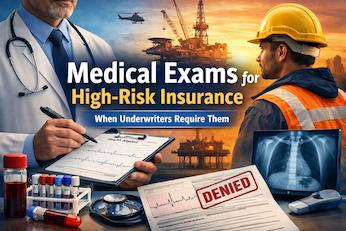
Overview
Medical exams for high-risk insurance are required when underwriters need to verify health risks that increase claim probability. They are triggered by hazardous jobs, age thresholds, high coverage amounts, and medical history. Results determine approval, pricing, exclusions, or denial based on insurer underwriting guidelines.
Executive Summary
Medical exams for high-risk insurance are required when underwriters need to verify health risks that could increase claim probability. Triggers include hazardous occupations, high coverage amounts, age thresholds, and pre-existing conditions. Insurers use exam results to adjust premiums, apply exclusions, or decline coverage based on underwriting guidelines and occupational risk data, supported by regulator evidence from OSHA and NIOSH that links health risk factors to injury and fatality rates.
What Is a Medical Exam in High-Risk Insurance Underwriting?
A medical exam in high-risk insurance is a formal risk assessment tool used by underwriters to evaluate an applicant’s physical fitness, detect undisclosed conditions, and quantify potential claim exposure.
Unlike routine health checkups, underwriting medical exams are:
- Standardized according to insurer guidelines
- Risk-targeted based on occupation and coverage
- Decision-linked to pricing, eligibility, and exclusions
These exams form a core part of How Insurance Underwriting Works for High-Risk Jobs, where insurers verify applicant risk before issuing coverage.
Classification Logic: Who Gets a Medical Exam?
Underwriters typically require medical exams based on:
- Age thresholds (e.g., 40+, 50+)
- Occupation class (e.g., offshore workers, miners, heavy equipment operators)
- Coverage amount (higher sums insured = stricter verification)
- Declared health history
This classification determines whether an applicant proceeds with:
- No exam
- Basic exam
- Full underwriting medical panel
These triggers determine when medical exams for high-risk insurance become mandatory for underwriting approval.
Why Insurers Require Medical Exams (Evidence and Risk Data)
High-risk occupations already carry elevated injury and fatality rates. When combined with underlying health conditions, the probability of disability or death claims increases significantly.
High-risk industries such as construction and offshore operations consistently report elevated fatality rates, according to data published by the U.S. Bureau of Labor Statistics.
Insurers rely on:
- Occupational injury and fatality data (construction, offshore, mining sectors)
- Health-related claim correlations (e.g., cardiac events in physically demanding jobs)
- Actuarial loss ratios tied to health conditions
Occupational health risk factors, including cardiovascular strain and respiratory exposure, are also documented by NIOSH, reinforcing why insurers require medical verification. These datasets are widely used by insurers and reinsurers to model claim probability and underwriting risk.
Underwriting insight:
A worker with untreated hypertension in a high-stress, physically demanding job represents a compounded risk, not just an additive one.
Medical exams help insurers:
- Validate applicant disclosures
- Detect hidden risk multipliers
- Protect against adverse selection
When Do Underwriters Require Medical Exams?
Medical exam requirements are not random; they are triggered by specific underwriting thresholds.
Primary Triggers
1. Coverage Amount
- High sum assured policies require deeper risk validation
- Larger payouts = stricter underwriting scrutiny
2. Hazard Class
- Offshore oil workers
- Aviation personnel
- Mining and tunneling workers
- Heavy machinery operators
These occupations automatically increase the likelihood of medical evaluation.
3. Age Bands
- 40+ → basic exams more common
- 50+ → advanced diagnostics often required
4. Pre-existing Conditions
- Declared or suspected conditions trigger further testing
5. Environmental & Travel Risk
- Remote locations
- Extreme climates
- Limited access to emergency care
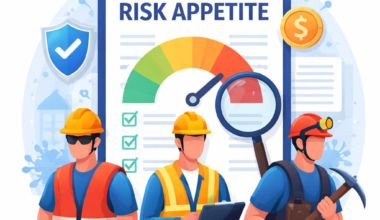
These triggers are heavily influenced by Insurer Risk Appetite Explained, which determines how much medical uncertainty an insurer is willing to accept.
These underwriting thresholds align with global risk assessment practices documented by Swiss Re.
How Underwriters Evaluate Medical Results
Underwriters do not just “review” results; they translate them into risk categories.
They assess:
- Blood pressure → cardiovascular risk
- BMI → obesity-related complications
- Cardiac markers (ECG/stress test) → heart event probability
- Substance indicators → behavioral risk
Underwriting Outcomes
Based on results, insurers may:
- Approve at standard rates
- Apply premium loadings
- Add policy exclusions (e.g., heart-related claims excluded)
- Postpone or decline coverage
How Insurers Translate Medical Exams Into Underwriting Decisions
Medical exam results are not evaluated in isolation—underwriters translate them into specific risk decisions that directly affect policy structure. These outcomes show how medical exams for high-risk insurance directly determine underwriting decisions.
In high-risk insurance, outcomes typically follow a structured pattern:
- Pass (Low Risk): Applicant qualifies for standard rates with no restrictions
- Minor Risk: Premium loadings are applied to compensate for elevated risk
- Moderate Risk: Specific exclusions are added (e.g., cardiovascular or respiratory conditions)
- High Risk: Coverage may be postponed or declined entirely
This translation process ensures that medical findings are aligned with insurer risk tolerance and underwriting guidelines.
What Tests Are Included in High-Risk Insurance Medical Exams?
The scope of medical exams for high-risk insurance depends on occupational hazards and coverage levels.
The type of exam depends on the applicant’s risk profile.
Basic Tests
- Blood pressure
- Height/weight (BMI)
- Urine analysis
- Blood tests (cholesterol, glucose)
Purpose: Detect baseline health risks.
Advanced Diagnostics
- Electrocardiogram (ECG)
- Stress testing
- Imaging (X-rays, scans)
Purpose: Identify hidden or developing conditions.
Occupational-Specific Tests
- Lung function tests (miners, offshore workers)
- Hearing tests (industrial environments)
- Vision tests (aviation, machinery operation)
Purpose: Ensure the applicant can safely perform job duties.
In many cases, these tests are supported by data from Occupational Health Reports in Underwriting, which provide evidence of job-specific health risks.
What Fails a Medical Exam in High-Risk Insurance?
Failure does not always mean outright rejection—but it significantly alters underwriting outcomes.
Many of these issues also overlap with Eligibility Requirements for High-Risk Insurance, where applicants can be declined before medical evaluation even begins.
Primary Failure Triggers
- Non-disclosure of medical history
- Hypertension or cardiac irregularities
- Substance use detection (alcohol/drugs)
- Abnormal test results requiring further investigation
- Mismatch between declared health and exam findings
Critical insight:
Non-disclosure is often treated more severely than the condition itself.
Additional failure points include discrepancies between medical exam records and policy disclosures, as well as missing documentation during claims, which can trigger denial even if the condition was previously detected.
How Medical Exams Affect Claim Approval
Medical exams are not just for entry; they directly impact future claims.
Claim Breakpoints
A claim may be denied if:
- The insured failed to disclose a condition detected later
- Medical records contradict application disclosures
- The condition causing the claim existed before policy issuance
Post-Claim Underwriting
Insurers may:
- Re-evaluate original application data
- Compare it with medical exam results
- Investigate inconsistencies
Example scenario:
- Worker passes exam but omits prior cardiac issues
- Later suffers heart-related incident
- Claim is denied due to material misrepresentation
These post-claim reviews are part of How Insurance Underwriting Works for High-Risk Jobs, especially in cases involving misrepresentation or incomplete disclosure.
Structural Exclusions in High-Risk Insurance Medical Underwriting
Medical exams do not only determine approval; they also define what risks insurers will not cover. In high-risk insurance, underwriters frequently apply structural exclusions based on medical findings to limit exposure to predictable claims.
Common exclusion patterns include:
- Pre-existing cardiovascular conditions: Heart-related claims may be excluded if risk markers such as hypertension or abnormal ECG results are detected
- Respiratory conditions: Workers in mining or offshore environments may receive exclusions for lung-related illnesses due to elevated exposure risk
- Substance-related conditions: Claims linked to alcohol or drug use may be excluded if indicators appear in medical tests
- Chronic conditions under monitoring: Diabetes or similar conditions may lead to partial exclusions depending on severity and control
These exclusions are not arbitrary, they reflect how insurers isolate specific risks while still offering partial coverage.
These outcomes show how medical exams for high-risk insurance directly shape not just approval, but the structure and limitations of coverage.
Do Medical Exams Increase or Reduce Insurance Costs?
Medical exams can both help and hurt applicants.
Lower Costs When:
- Applicant demonstrates strong health
- No risk markers detected
- Insurer gains confidence in risk profile
Higher Costs When:
- Health risks are identified
- Occupation + health creates compounded risk
Other Outcomes:
- Exclusions applied (e.g., respiratory conditions)
- Coverage declined entirely
The outcome of medical exams for high-risk insurance directly influences how insurers price and structure coverage.
Medical Exam Failure Checklist for High-Risk Workers
Avoid these common mistakes:
- ❌ Skipping required medical tests
- ❌ Hiding or omitting medical history
- ❌ Ignoring follow-up diagnostic requests
- ❌ Failing occupational fitness benchmarks
- ❌ Substance use indicators in test results
- ❌ Inconsistent documentation across forms
Failing medical exams for high-risk insurance often results in exclusions, premium increases, or outright denial.
Trigger vs Requirement vs Impact (Underwriting Table)
The table below shows how specific underwriting triggers translate into medical exam requirements and final insurer decisions.
| Trigger | Medical Exam Required | Underwriting Impact | Decision Type |
|---|---|---|---|
| High coverage amount | Full medical panel | Increased scrutiny, pricing adjustments | Standard / Loaded |
| Hazardous occupation | Basic + occupational tests | Higher risk classification, possible exclusions | Loaded / Exclusion |
| Age 40+ | Basic exam | Moderate risk adjustment | Standard / Loaded |
| Age 50+ | Advanced diagnostics | Elevated risk detection, stricter pricing | Loaded / Conditional |
| Pre-existing condition | Targeted tests | Exclusions or limited coverage | Exclusion / Decline |
| Abnormal test results | Additional diagnostics | High-risk flag triggered | Conditional / Decline |
Key Takeaways
- Medical exams are triggered by risk classification (age, job, coverage)
- Underwriters use exams to price, exclude, or decline risk
- Non-disclosure is the primary cause of claim denial
- Exam results directly affect policy structure and claim validity
- High-risk occupations require occupational-specific testing
- Medical exams for high-risk insurance are a core underwriting tool used to assess claim risk and eligibility
- These outcomes reflect broader underwriting principles explained in Risk Job Insurance Explained, including how insurers assess eligibility and claim risk across hazardous occupations.
Frequently Asked Questions
Do all high-risk jobs require a medical exam?
Not always. Medical exams are triggered based on risk classification, including occupation type, age, coverage amount, and medical history.
What happens if you fail a medical exam for insurance?
Applicants may face premium increases, policy exclusions, postponed approval, or outright denial depending on the severity of risk.
Can you get insurance without a medical exam?
Yes, but coverage is usually limited, more expensive, or subject to stricter underwriting assumptions.