Claims denial in Risk Job Insurance (RJI) refers to the formal refusal by an insurer to pay a submitted claim because one or more qualification, eligibility, documentation, or policy-structure requirements were not satisfied.
In high-risk occupations, claims denial is not an exceptional outcome; it is a designed enforcement mechanism within insurance systems that filters losses based on pre-defined risk, compliance, and exposure controls.
A denied claim does not necessarily mean an accident did not occur. It means the loss failed to survive the insurer’s adjudication framework.
Why Claims Denial Is Structurally Common in Risk Job Insurance
Risk Job Insurance operates under stricter underwriting, tighter exclusions, and narrower policy triggers than standard employment insurance. As a result, claims are evaluated less on sympathy and more on system conformity.
Claims are commonly denied because:
-
The worker’s activity exceeded declared job scope
-
The injury occurred outside covered conditions or locations
-
Documentation failed validation thresholds
-
Policy exclusions were activated
-
Eligibility gating failed retroactively
Offshore life insurance claims are especially vulnerable to denial due to causation disputes, jurisdictional ambiguity, and heightened scrutiny of occupational risk. These claim failure patterns are outlined in offshore life insurance for high-risk jobs.
This is why Risk Job Insurance emphasizes that coverage is conditional before, during, and after an incident, not guaranteed at the moment of injury.
The same structural claims denial mechanisms described here can be observed in institutional insurance programs such as Owner Controlled Insurance Programs (OCIPs), where eligibility controls and centralized adjudication are formally embedded at scale.
Primary Claims Denial Triggers in RJI
1. Failure of Claims Qualification Criteria
If a claim does not meet the criteria outlined in Claims Qualification Criteria, denial is automatic, regardless of injury severity.
This includes:
-
Missed reporting windows
-
Incomplete incident documentation
-
Absence of required third-party verification
2. Eligibility Gating Breakdown
Eligibility is not permanent. If post-loss review reveals the worker no longer met policy eligibility standards at the time of injury, the claim may be denied.
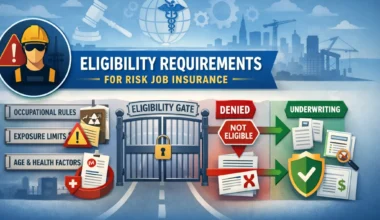
This is structurally tied to Eligibility Gating, where coverage access is continuously re-validated.
3. Policy Structure Misalignment
Many RJI claims fail because workers misunderstand which policy layer responds to their loss.
Common examples:
-
Assuming general liability covers personal injury
-
Expecting workers’ compensation benefits under independent contractor status
-
Filing under employer coverage when enrolled under personal risk policy
This failure path connects directly to Risk Job Insurance Policy Structure.
4. Activated Exclusions
Risk-job policies carry explicit exclusions for:
-
Unauthorized equipment use
-
Off-schedule work
-
Unreported job role changes
-
Non-compliant safety procedures
Once an exclusion is triggered, denial is procedurally mandatory, not discretionary.
Claims Denial vs Claims Rejection (Important Distinction)
| Term | Meaning |
|---|---|
| Claims Rejection | Claim is refused at submission due to missing or invalid inputs |
| Claims Denial | Claim passes submission but fails adjudication after investigation |
In RJI, denials carry more systemic weight because they usually follow compliance review, not clerical error.
What Happens After a Claim Is Denied
Once a claim is formally denied:
-
The insurer’s obligation to pay benefits terminates
-
No further coverage analysis is required
-
Medical or loss evaluation ceases unless reopened on appeal
-
The claim moves into enforcement or finality status
-
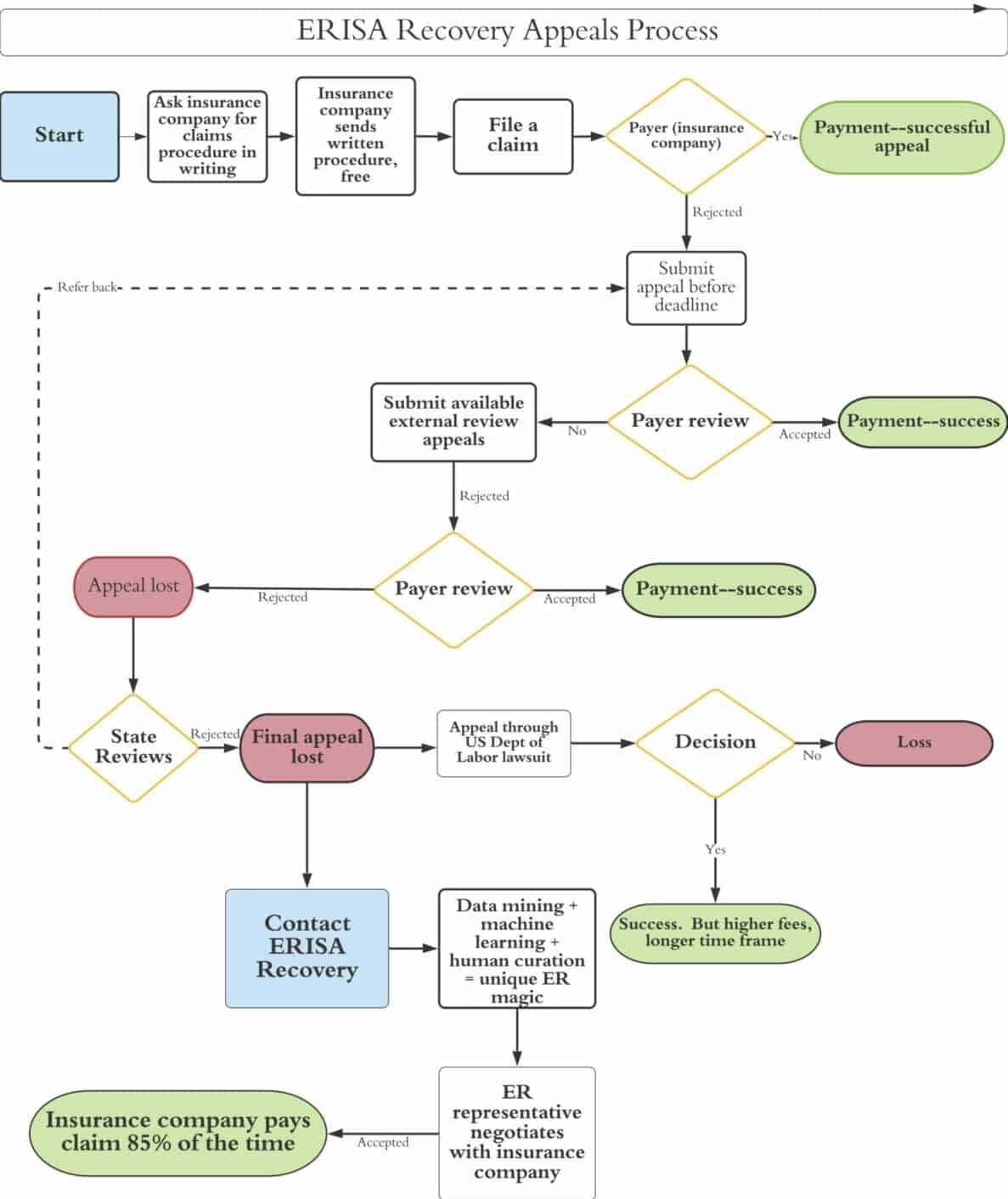
Further action is limited to procedural appeal, not claim re-evaluation
At this stage, the loss is considered non-compensable under the policy unless structural errors are proven.
Can a Denied Claim Be Reversed?
Sometimes, but rarely without structural correction.
A denied RJI claim may be reconsidered only if:
-
New qualifying documentation emerges
-
Misclassification is proven
-
Policy interpretation error is identified
Even then, reversal depends on whether the denial resulted from process failure or policy design enforcement.
This distinction will be expanded further in the upcoming definition on appeals and dispute resolution.
Why Claims Denial Is Central to RJI Understanding
Claims denial is where the theory of Risk Job Insurance becomes reality.
It reveals:
-
How underwriting assumptions are enforced
-
Where worker expectations diverge from policy mechanics
-
Why high-risk coverage feels unpredictable to policyholders
Without understanding denial pathways, workers misinterpret insurance as unreliable; when in fact it is operating exactly as designed.
This definition forms part of the broader Risk Job Insurance framework, which explains how high-risk coverage systems are structured, enforced, and administered across occupations.
This entry is part of the Risk Job Insurance Definitions hub, which organizes and explains the core systems, terms, and mechanisms that govern high-risk insurance coverage.
Related Definition