Introduction: Why High-Risk Jobs Are Not Treated the Same
Job-specific insurance for high-risk workers explains what happens when coverage no longer responds the same way across different occupations, even when risk remains. High-risk work is often spoken about as if it were a single category. If a job is dangerous, insurance should simply adjust for “higher risk” and respond accordingly.
In reality, that is not how insurance works.
Two workers can face danger every day and still experience insurance very differently. Coverage terms, claim scrutiny, limits, definitions, and even eligibility thresholds can change dramatically depending on how risk is created, where it occurs, and what kind of harm insurers expect over time.
This is why construction workers, offshore crews, miners, transport workers, and industrial operators are all classified as “high-risk,” yet are insured in fundamentally different ways.
This guide explains how insurance systems behave across different high-risk jobs, why insurers group work by exposure rather than job titles, and why job-specific insurance guidance must come after system-level understanding.
Job-specific insurance for high-risk workers builds on the broader structure explained in our overview of the risk job insurance system, where eligibility, underwriting, and claims rules are first defined.
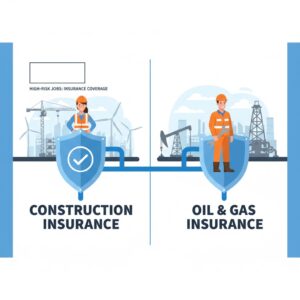
Why “High-Risk” Is Not a Single Insurance Category
Global occupational data published by the International Labour Organization shows that hazardous jobs differ significantly in injury severity, recovery time, and long-term exposure, reinforcing why insurers subdivide “high-risk” work rather than treating it as a single category.
Insurance does not measure danger emotionally. It measures it structurally.
When insurers evaluate high-risk work, they are not asking whether a job feels dangerous. They are asking:
-
How often injuries are likely to occur
-
How severe those injuries tend to be
-
How long recovery usually takes
-
Whether outcomes are predictable or volatile
-
Whether risk can be limited, pooled, and priced
A job that involves frequent minor injuries is treated differently from one that involves rare but catastrophic events. A role with predictable exposure is treated differently from one where conditions change daily.
This is why “high-risk” is not a usable insurance category on its own. It must be broken down.
This breakdown exists because insurers respond to patterns of frequency, severity, and predictability, not labels like “dangerous job.”
How Insurers Actually Group High-Risk Jobs
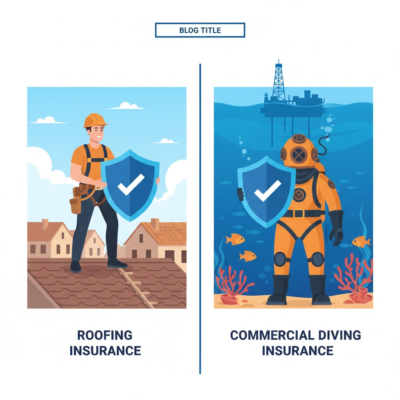
Insurers rarely classify risk by job titles. Titles are unreliable. Instead, they group work by risk patterns.
Insurers often group high-risk jobs into exposure-based job families, such as:
Construction & Skilled Trades
Work involving physical labor, working at height, tools, and changing sites.
Risk is frequent, physical, and often cumulative.
Offshore & Energy Work
Work involving remote locations, transport risk, evacuation delays, and environmental hazards.
Risk is less frequent but more severe when it occurs.
Mining & Extraction
Work involving confined spaces, heavy equipment, and underground exposure.
Risk combines physical danger with long-term health impact.
Transport & Logistics
Work involving vehicles, long hours, fatigue, and road exposure.
Risk includes sudden accidents and gradual wear.
Industrial & Manufacturing Work
Work involving machinery, repetitive motion, and controlled but hazardous environments.
Risk blends acute injury and repetitive strain.
Contract, Rotational & Project-Based Work
Work involving unstable employment patterns, multiple jurisdictions, and shifting duties.
Risk includes gaps in coverage and eligibility instability.
These groupings explain why two “dangerous” jobs can face entirely different insurance outcomes.
These job families reflect underwriting decisions made long before any claim, which are explained in how insurers underwrite high-risk jobs.
How the Same Insurance System Behaves Differently by Job Type
Insurance systems themselves do not change.
Their behavior does.
The same system, life insurance, disability insurance, workers’ compensation, or personal accident coverage, can respond very differently depending on the job family involved.
-
Claims scrutiny increases when injuries are frequent or severe
-
Definitions tighten when alternative work is assumed possible
-
Limits shorten when long recovery is likely
-
Exclusions increase when exposure is volatile
-
Coverage ends sooner when risk becomes concentrated
This is why understanding how insurance works must come before understanding how it works for a specific job.
Without this foundation, job-specific advice becomes misleading.
This uneven response is why many high-risk workers rely on layered protection, as explained in why high-risk workers often need more than one insurance policy.
Why Job Titles Matter Less Than Job Duties
One of the most common insurance misunderstandings comes from relying on job titles.
Two people may both be called “technicians,” “operators,” or “supervisors,” yet face entirely different insurance treatment depending on:
-
What they physically do each day
-
How often they perform hazardous tasks
-
Whether work is hands-on or supervisory
-
Whether environments are controlled or unpredictable
Insurance follows exposure, not labels.
This is why job-specific insurance guidance must focus on work reality, not role names.
This distinction is critical to eligibility decisions, which is why insurance eligibility for high-risk jobs depends on duties rather than job titles.
Why Job-Specific Insurance Guidance Comes After System Education
Up to this point, this site has focused on systems:
-
Eligibility
-
Underwriting
-
Pricing
-
Claims
-
Appeals
-
Disputes
-
Limits
-
Uninsurable risk
These systems apply to all high-risk work; but they do not apply equally.
Job-specific guidance only becomes accurate once readers understand:
-
Where insurance stops
-
Why limits exist
-
How definitions operate
-
When risk becomes uninsurable
Without this knowledge, job advice sounds like promises insurance cannot keep.
That is why this hub exists.
Without understanding the enforcement points described in when insurance coverage truly ends for high-risk workers, job-specific guidance risks promising protection that cannot exist.
What Comes Next: Job-Specific Insurance Guides
With system behavior now clear, guidance can finally move into job-specific reality.
The next phase of this site will explore how insurance actually behaves for specific high-risk jobs, including:
-
Construction workers
-
Offshore and oil & gas workers
-
Miners and extraction workers
-
Truck drivers and transport workers
-
Industrial and manufacturing workers
-
Contract and rotational workers
Each job family will receive its own dedicated hub, followed by deep, practical guides that reflect real insurance behavior, not marketing language.
At this stage, outcomes depend less on policy structure and more on exposure reality, which is why guidance follows the endpoint described in when risk becomes uninsurable for high-risk workers.
Conclusion: This Is the Bridge Between Systems and Reality
Insurance for high-risk workers does not fail randomly.
It responds predictably to patterns of risk.
Understanding how insurance systems behave across different high-risk jobs is the missing link between abstract policy explanations and real-world outcomes.
This guide completes the system foundation for risk job insurance and opens the door to realistic, job-specific guidance.
From here forward, the question is no longer how insurance works, but how it works for your job.