Introduction: When Work Itself Changes the Rules
Many workers assume insurance works the same way for everyone, but insurance rules for high-risk jobs often work differently when work becomes more dangerous. If two people are the same age, earn similar incomes, and apply for the same type of coverage, it feels reasonable to expect the rules to be similar. Some people refer to these as “high-risk jobs insurance rules,” but in practice they are simply the rules insurers use to manage dangerous work.
In high-risk jobs, that assumption often breaks down.
Construction workers, offshore crews, miners, industrial operators, and transport workers routinely discover that insurance behaves differently for them. Coverage costs more, applications face extra scrutiny, exclusions appear, or claims are handled more cautiously. These differences are not random, and they are not designed to punish workers in dangerous jobs.
They exist because insurance systems are built around risk, and risk is not evenly distributed across all types of work.
This article explains why high-risk jobs require special insurance rules, how those rules develop, and what they mean in practice. It is part of the broader Risk Job Insurance Explained guide and is written for workers who want to understand why insurance changes when work becomes dangerous.
How Insurance Is Built Around Risk
At its core, insurance is a system for managing uncertainty.
Insurers group people together based on shared risk characteristics and use past data to estimate how often claims are likely to occur and how costly those claims may be. Premiums, coverage limits, and policy rules are all shaped by these estimates.
When risks are relatively predictable and low, insurance rules tend to be simple. When risks are higher, more variable, or more severe, insurance rules become more detailed.
This is not unique to work-related insurance. The same logic applies across many areas of insurance. What makes high-risk jobs different is the combination of frequency and severity involved. This risk-based structure applies across insurance systems and becomes more visible as work-related exposure increases.
What Makes a Job “High Risk” to Insurers
According to data from the International Labour Organization (ILO), jobs involving frequent physical hazards and unpredictable environments account for a disproportionate share of serious injuries and long-term disability.
A job is not considered high risk simply because it sounds dangerous or carries a physical component. Insurers look at specific characteristics that affect both the likelihood and impact of a claim.
These characteristics include:
-
Frequency of injury: How often accidents or illnesses occur in similar roles
-
Severity of outcomes: Whether injuries tend to be minor or life-altering
-
Recovery time: How long workers are typically unable to work after an incident. This is one reason disability insurance for high-risk workers often applies different definitions of disability, waiting periods, and benefit limits.
-
Permanence: The likelihood of long-term or permanent disability
-
Fatality risk: Whether the job carries a higher chance of death
-
Environmental unpredictability: Exposure to weather, remote locations, or unstable conditions
Jobs that combine several of these factors are more difficult to insure under standard rules. As a result, insurers adjust how coverage is offered and managed.
Why Standard Insurance Rules Break Down in Dangerous Jobs
Many insurance policies are designed around average-risk work environments, such as office-based or light-duty roles. These policies assume relatively low injury rates, short recovery periods, and limited exposure to severe hazards.
When applied to high-risk work, those assumptions no longer hold.
Common problems include:
-
Occupational exclusions that limit or remove coverage for work-related incidents
-
Coverage limits that are too low to reflect serious injuries or long-term disability
-
Policy conditions that restrict benefits during working hours
-
Employer-provided plans that end when employment changes
These limitations are often buried in policy language and may not be obvious when coverage is first obtained. They usually become visible only when a claim is made or when a worker’s job duties change.
Industry data published by OSHA shows consistently higher injury and fatality rates in sectors such as construction, mining, and transportation, which helps explain why standard insurance assumptions often fail in these jobs.
These trends are exactly why workers’ compensation for high-risk jobs plays such a central role in paying medical bills and wage replacement after job-related injuries.
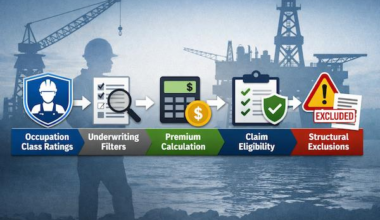
Special Rules Commonly Applied to High-Risk Work
Because standard rules are not well suited to hazardous jobs, insurers introduce special provisions to manage exposure.
These rules vary by insurance type, but commonly include:
-
More detailed underwriting: Applications require clearer descriptions of duties and environments
-
Occupational exclusions: Certain tasks or conditions may be excluded from coverage
-
Waiting periods: Benefits may not begin immediately after injury or illness
-
Coverage caps: Limits may be adjusted to reflect higher claim severity. Some workers add personal accident insurance for high-risk workers, which pays fixed-benefit amounts after covered injuries, even when other forms of insurance apply limits.
-
Documentation requirements: Claims may require more verification
These rules are not inherently negative. They are tools insurers use to keep coverage viable in the face of higher risk.
Why Insurance Rules for High-Risk Jobs Exist From the Insurer’s Perspective
From the insurer’s standpoint, high-risk jobs present a sustainability challenge.
A single severe claim from a dangerous job can cost more than many years of premiums. When injuries are more likely to occur and more expensive when they do, insurers must control how exposure is managed.
Special rules allow insurers to:
-
Predict costs more accurately
-
Prevent misuse or misunderstanding of coverage
-
Keep insurance pools financially stable
-
Continue offering coverage to high-risk workers at all
Without these controls, many forms of insurance would become unavailable or unaffordable for dangerous occupations.
How These Rules Affect Workers in Practice
For workers, special insurance rules often show up as surprises rather than expectations.
They may affect:
-
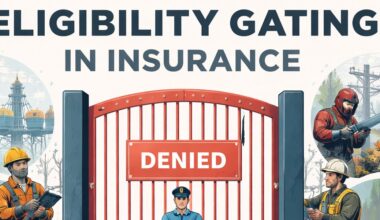
Eligibility: Some workers are declined or restricted based on duties
-
Pricing: Premiums may be higher than expected
-
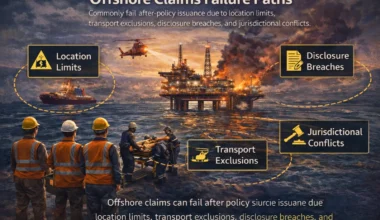
Claims: Benefits may be delayed, reduced, or questioned
-
Coverage gaps: Certain incidents may fall outside policy terms
These outcomes are rarely explained clearly at the beginning. Most workers encounter them only after an injury, illness, or job change forces the policy to be examined closely.
Understanding insurance rules for high-risk jobs helps workers see why exclusions, waiting periods, and coverage limits appear.
Types of Insurance That Change Most in High-Risk Jobs
High-risk work doesn’t just increase premiums, it changes how different kinds of insurance behave. Each type of coverage responds differently to danger, which is why understanding their roles matters.
When it comes to family protection, life insurance often includes tighter approval rules, exclusions, and limits on coverage amounts. We explain how that works in Life Insurance for High-Risk Workers: How Coverage Really Works.
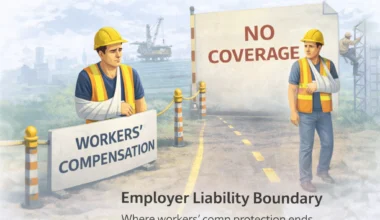
For injuries that happen directly on the job, workers’ compensation remains the primary system paying medical bills and wage replacement, but it doesn’t cover everything. The details are explained in Workers’ Compensation for High-Risk Jobs: How Job Injury Coverage Works.
Why Many Workers Only Discover This After a Problem
Insurance policies are usually quiet until something goes wrong.
Workers often assume coverage is adequate because:
-
Claims have never been tested
-
Job duties evolved gradually
-
Employer explanations were simplified
-
Policy language was difficult to interpret
As a result, misunderstandings persist until a real-world event exposes them. This timing is one of the most frustrating aspects of insurance for high-risk workers.
These insurance rules for high-risk jobs are not punishments, they are structural responses to greater exposure.
How This Fits Into Risk Job Insurance as a System
Risk job insurance is not a single product. It is a way of describing how insurance systems adapt when work involves higher-than-average danger.
Two core forces shape these adaptations:
-
How work is classified
-
How special rules are applied to manage risk
Different types of insurance respond differently to these forces. That difference becomes especially clear with life insurance for high-risk workers, where policy limits, exclusions, and pricing may change based on the dangers of the job. Life insurance, disability insurance, workers’ compensation, and personal accident coverage each apply their own rules, limits, and conditions.
Understanding why special rules exist makes it easier to understand how each type of insurance behaves in high-risk situations.
Conclusion: Different Risk, Different Rules
High-risk jobs do not make insurance impossible. They make insurance different. A clear way to see this contrast is by comparing standard insurance vs risk job insurance, where the same type of coverage can behave very differently once work becomes hazardous.
Special rules exist because dangerous work changes the likelihood and impact of claims, not because insurers are judging workers personally. They are structural responses to risk.
For high-risk workers, understanding why these rules exist is often more valuable than knowing policy names or coverage labels. It reduces confusion, sets realistic expectations, and helps explain why insurance behaves the way it does when work itself carries greater danger.