Claim severity amplification describes what happens when a workplace injury ends up costing far more than the original incident might suggest. The increase in cost is not random. It usually results from environmental conditions, medical complications, legal issues, geography, or the way insurance systems are structured, especially in high-risk occupations.
For insurers, the real concern is often not the accident itself. It is what happens after the accident.
In high-risk insurance, underwriting focuses as much on how a claim might grow over time as it does on whether an injury will occur in the first place.
Core Concept
In many standard occupations, a claim follows a relatively predictable path:
Injury → Treatment → Recovery → Return to work → File closure
In higher-risk roles, the path is often longer and more complicated:
Injury → Evacuation → Specialized treatment → Complications → Extended disability → Legal review → Multiple policies triggered → Delayed closure
Each added step increases the financial impact.
That increase is claim severity amplification.
Why It Matters in Risk Job Insurance
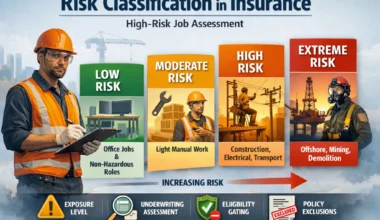
High-risk jobs such as offshore energy, mining, logging, heavy construction, and remote industrial operations create conditions that make claims more complex after an injury occurs.
Offshore work is a clear example. Evacuation logistics, jurisdictional issues, and limited immediate medical access can all increase costs. These containment challenges are examined in Why Offshore Work Is Harder for Insurers to Contain.
The injury itself may be straightforward. The environment is what changes the financial outcome.
Example: Offshore Worker
A hand injury onshore might involve:
-
A local hospital visit
-
Short rehabilitation
-
A quick return to work
The same injury offshore could involve:
-
Helicopter evacuation
-
Transfer from vessel to shore
-
Specialist surgery
-
Delayed return due to rotational schedules
-
Legal or jurisdictional review
The medical issue may be similar. The cost pathway is not.
This difference is one reason offshore workers are underwritten differently.
Primary Drivers of Severity Amplification
Severity amplification usually develops from one or more of the following factors:
1. Geographic Isolation
Remote worksites increase:
-
Transportation costs
-
Treatment delays
-
Emergency response complexity
-
Cross-border legal issues
2. Medical Escalation
Serious industrial injuries often require:
-
Trauma specialists
-
Multiple procedures
-
Extended rehabilitation
-
Permanent impairment evaluation
3. Loss Duration
High-risk roles are often:
-
Physically demanding
-
Certification-dependent
-
Rotation-based
Even minor limitations can prevent a full return to duty, extending wage replacement periods.
4. Legal and Liability Layering
One incident may involve:
-
Workers’ compensation
-
Employer liability
-
Maritime or industry-specific law
-
Contractor or subcontractor disputes
Each additional layer adds cost and uncertainty.
5. Income Replacement Levels
High-risk workers frequently earn:
-
Hazard pay
-
Overtime premiums
-
Offshore or site allowances
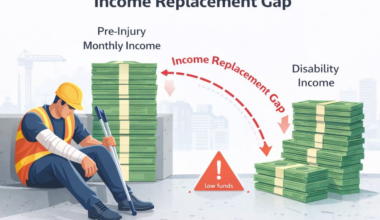
Higher wages increase the long-term cost of disability benefits.
The Insurance System Response
Insurers manage amplification risk through:
-
Strict eligibility rules
-
Occupational exclusions
-
Higher premiums
-
Policy sub-limits
-
Medical disclosure requirements
-
Aggregation controls
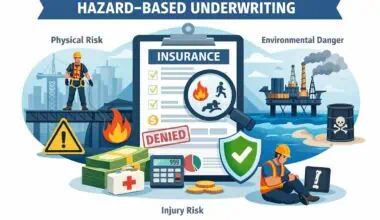
Underwriting is not only about assessing danger. It is about limiting how far a claim can expand once it begins.
Severity Amplification vs. Claim Frequency
These are different measures:
-
Claim frequency — how often injuries occur
-
Claim severity — the average cost of a claim
-
Claim severity amplification — how much a claim grows after the incident due to structural factors
High-risk occupations may not always have dramatically higher injury frequency. What they consistently have is greater potential for cost escalation.
Underwriters price for that escalation risk.
Failure / Breakpoint Path
Amplification becomes most serious when:
-
Evacuation is delayed
-
Medical complications prolong recovery
-
Certification cannot be regained
-
Litigation expands the scope of liability
-
Multiple insurers dispute responsibility
At that point, a manageable injury can turn into a major financial event.
High-risk insurance structures are designed to prevent claims from reaching this stage.
Structural Role in Risk Job Insurance
Within Risk Job Insurance, claim severity amplification functions as:
-
A pricing factor
-
An eligibility filter
-
A policy design consideration
-
A capital protection concern
It helps explain why:
-
Offshore workers face stricter underwriting
-
Mining operations rely on layered coverage
-
Construction contractors operate within structured insurance programs
Insurance systems do not respond to danger alone. They respond to the risk that costs will expand beyond control.
Summary
Claim Severity Amplification is the process by which a workplace injury becomes significantly more expensive over time due to environmental, medical, legal, geographic, or structural factors. In high-risk occupations, managing this escalation risk is central to underwriting and policy design.
Related Definitions
Loss Containment System
The framework of underwriting rules, exclusions, limits, and controls designed to prevent claims from expanding beyond predictable cost levels.
Occupational Risk Stratification
The classification of occupations based on projected claim volatility and cost exposure, not just injury likelihood.
Remote Risk Multiplier
The additional cost pressure created by geographic isolation and limited access to immediate care.
Layered Liability Activation
The triggering of multiple insurance systems from a single incident, increasing administrative and legal complexity.
Capital Exposure Threshold
The maximum loss volatility an insurer is willing to accept from a particular occupational segment before tightening underwriting standards.