Notice of Loss in Risk Job Insurance (RJI) refers to the formal notification to an insurer or program administrator that a covered loss event has occurred, triggering the initiation of claims.
In high-risk insurance systems, notice of loss is not a courtesy or preliminary step. It is a mandatory system signal that determines whether a claim is allowed to enter evaluation at all.
Without a valid notice of loss, no claim exists, regardless of injury severity or eventual documentation.
Why Notice of Loss Is Structurally Critical in RJI
Risk Job Insurance depends on tight exposure monitoring and time-sensitive risk controls. Notice of loss serves as the system’s first checkpoint, allowing insurers to:
-
Verify that the loss occurred within policy terms
-
Confirm the worker’s coverage status at the time of loss
-
Preserve investigation and verification integrity
-
Prevent delayed or retroactive risk entry
This is why late or improper notice frequently results in automatic claim failure before qualification is ever assessed.
What Constitutes Valid Notice of Loss
A notice of loss is considered valid only when it meets policy-defined conditions, which typically include:
-
Notification within the required time window
-
Submission through approved channels
-
Identification of the insured party and loss event
-
Sufficient detail to allow initial classification
Failure on any of these elements may block the claim from advancing to Claims Qualification Criteria.
Notice of Loss vs Claim Submission
These terms are often confused but are not interchangeable.
| Term | Meaning |
|---|---|
| Notice of Loss | Signals that a loss event occurred |
| Claim Submission | Requests benefits or coverage determination |
In RJI, notice of loss precedes claim submission and determines whether submission is even permitted.
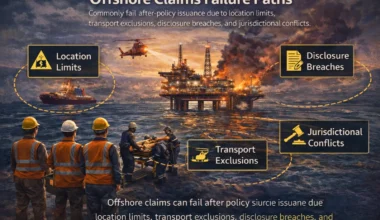
Common Failure Paths at the Notice Stage
Notice of loss fails when:
-
Reporting deadlines are missed
-
The reporting party lacks authority
-
The incident falls outside declared job scope
-
The worker was not actively eligible at the time of loss
These failures prevent the claim from entering the adjudication system described in Claims Denial.
The notice-of-loss requirement described here reflects practices observable in large-scale insurance programs such as Owner Controlled Insurance Programs (OCIPs), where timely and proper loss notification is a prerequisite for any downstream claims handling.
Why Notice of Loss Matters for High-Risk Workers
Many high-risk workers assume insurance responds automatically to injury. In reality, insurance responds to process compliance, not events.
Understanding notice of loss explains:
-
Why some injuries never become claims
-
Why delays are fatal to coverage
-
Why documentation alone cannot cure late notice
Notice is the gate — not the paperwork.
Conclusion
Notice of loss is the entry key to the Risk Job Insurance claims system. If the key is not used correctly, the system never opens, and no amount of subsequent evidence can restore access.
This entry is part of the Risk Job Insurance Definitions hub, which organizes and explains the core systems, terms, and mechanisms that govern high-risk insurance coverage.
Related Definitions (Claims Initiation & Reporting Cluster)
-
Claim Reporting Requirements in Risk Job Insurance (RJI)
-
Claims Filing Windows in Risk Job Insurance (RJI)
-
Incident Documentation in Risk Job Insurance (RJI)