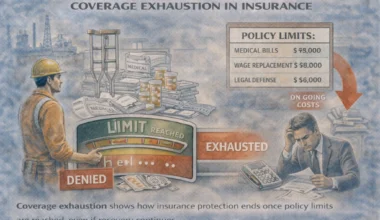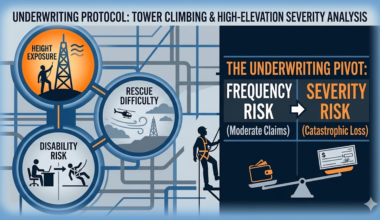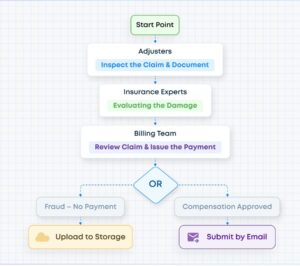
The claims system in Risk Job Insurance governs how losses are evaluated, rejected, challenged, or enforced after an incident occurs.
Unlike underwriting or pricing, the claims system determines whether coverage responds at all, and under what conditions a loss becomes payable, disputed, or permanently closed.
This page maps the core claims definitions used across the Risk Job Insurance framework. Each definition explains a specific stage or control point within the claims lifecycle, including where and why claims commonly fail in high-risk coverage systems.
These definitions function together as a closed subsystem. They should be read as interconnected mechanisms, not as standalone concepts.
Core Claims Definitions in Risk Job Insurance
-
Claims Appeals & Dispute Resolution in Risk Job Insurance (RJI)
-
Claims Finality & Enforcement Outcomes in Risk Job Insurance (RJI)
Each definition addresses a distinct phase of the claims process, from initial eligibility to irreversible enforcement.
How the Claims System Fits Within Risk Job Insurance
The claims system operates downstream of underwriting and eligibility determination. While coverage may appear active at the time of injury, claims outcomes are governed by procedural qualification, adjudication rules, and enforcement limits that apply after a loss occurs.
Claims definitions are closely linked to other core systems, including:
-
Eligibility gating mechanisms
-
Policy structure and coverage layering
-
Underwriting risk controls
Together, these systems explain why high-risk insurance outcomes often diverge from worker expectations despite apparent coverage.
Related System Explainers
-
Risk Job Insurance Claims System Overview
-
Eligibility & Coverage Access in Risk Job Insurance
-
Policy Structure & Coverage Layers in Risk Job Insurance
This entry is part of the Risk Job Insurance Definitions Hub, which organizes and documents the core systems, terms, and enforcement mechanisms that govern high-risk insurance coverage across occupations.