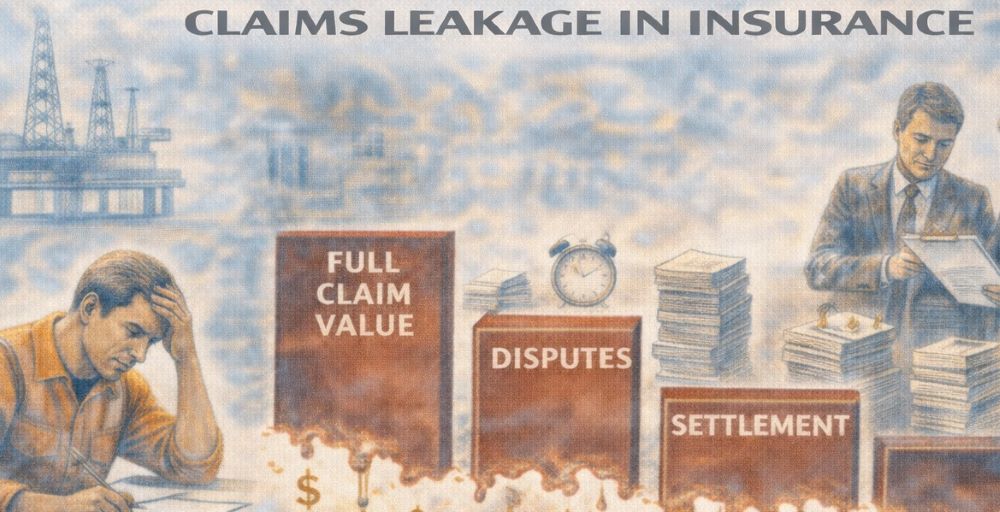
Claims leakage is the loss of value that occurs when insurance claims for high-risk workers are reduced, delayed, or partially paid due to process friction, interpretation gaps, or administrative controls.
It is not about fraud.
It is about money leaking out of the claim before it reaches the worker.
For high-risk jobs, leakage is structural.
What Claims Leakage Means
When a claim is filed, the full policy value rarely reaches the claimant.
Value is lost through:
-
Delays
-
Documentation failures
-
Interpretation disputes
-
Administrative deductions
-
Settlement pressure
Each reduction may seem small.
Together, they create claims leakage.
As claims friction increases, more value is lost at each stage of review, contributing directly to claims leakage.
Why High-Risk Claims Leak More
High-risk claims involve:
-
Complex injuries
-
Long recovery timelines
-
Multiple reviewers
-
Legal uncertainty
These conditions create more opportunities for value to erode.
The longer a claim stays open, the more it leaks.
Once claims cross claims escalation thresholds, settlement pressure and administrative costs accelerate claims leakage.
Early-stage delays caused by coverage latency often force workers to absorb costs before insurance begins responding.
How This Affects Workers
Claims leakage means:
-
Lower final payouts
-
Partial wage replacement
-
Uncovered medical costs
-
Financial stress during recovery
Workers feel paid, but not made whole.
International regulators such as the International Association of Insurance Supervisors analyze how claims handling practices affect fairness and consumer outcomes.
Why This Is Hard to Prove
No single decision causes the loss.
Leakage happens gradually, across many steps.
By the end, the shortfall feels inevitable.
In the Risk Job Insurance System
Claims leakage explains why:
-
High-risk claims settle low
-
Workers feel underpaid
-
Insurance outcomes disappoint
It is the quiet drain inside high-risk claims handling.
This concept is part of the broader Risk Job Insurance Definitions, which explain how insurance systems treat high-risk work.