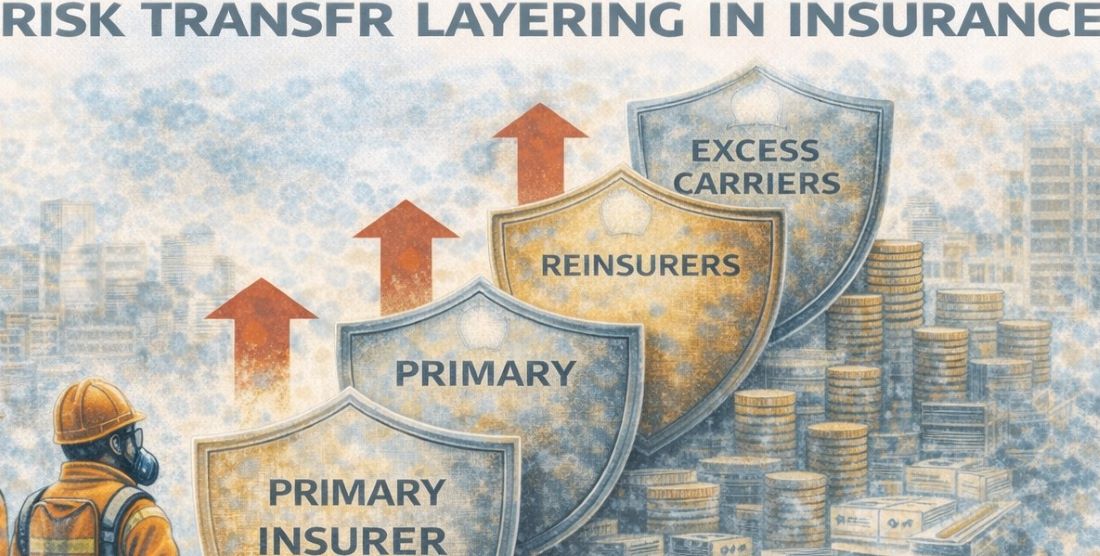
Risk transfer layering is the way insurance companies spread high-risk job exposure across multiple insurers, reinsurers, and financial structures so no single company carries the full loss.
It is not about one policy.
It is about how risk is stacked behind it.
For high-risk workers, coverage only exists because risk is passed upward through many layers.
What Risk Transfer Layering Means
When an insurer sells a policy, it rarely keeps all the risk.
High-risk exposure is divided across:
-
The primary insurer
-
Reinsurers
-
Excess carriers
-
Financial backstops
Each layer absorbs part of the loss.
That structure is risk transfer layering.
These layers exist because of reinsurance dependence, which allows insurers to offload large losses to other carriers.
Why High-Risk Jobs Need It
High-risk occupations create losses that are:
-
Large
-
Unpredictable
-
Correlated
No single insurer can safely hold that exposure.
So insurers stack protection behind every policy.
Without layers, there is no coverage.
Global reinsurers such as Munich Re provide the upper layers of protection that allow high-risk insurance markets to function.
How This Affects Workers
Risk transfer layering means:
-
Coverage depends on many companies
-
Terms are driven by upstream risk tolerance
-
A change in one layer can affect everything
Workers never see these layers, but they control stability, pricing, and renewal.
Why Coverage Breaks Suddenly
When a reinsurer or excess carrier exits, the whole structure can collapse.
The policy still exists.
The risk support does not.
When one layer pulls out, capacity withdrawal can destabilize the entire risk transfer structure.
In the Risk Job Insurance System
Risk transfer layering explains why:
-
High-risk insurance is fragile
-
Markets shift quickly
-
Policies depend on invisible backers
It is the architecture behind every high-risk policy.