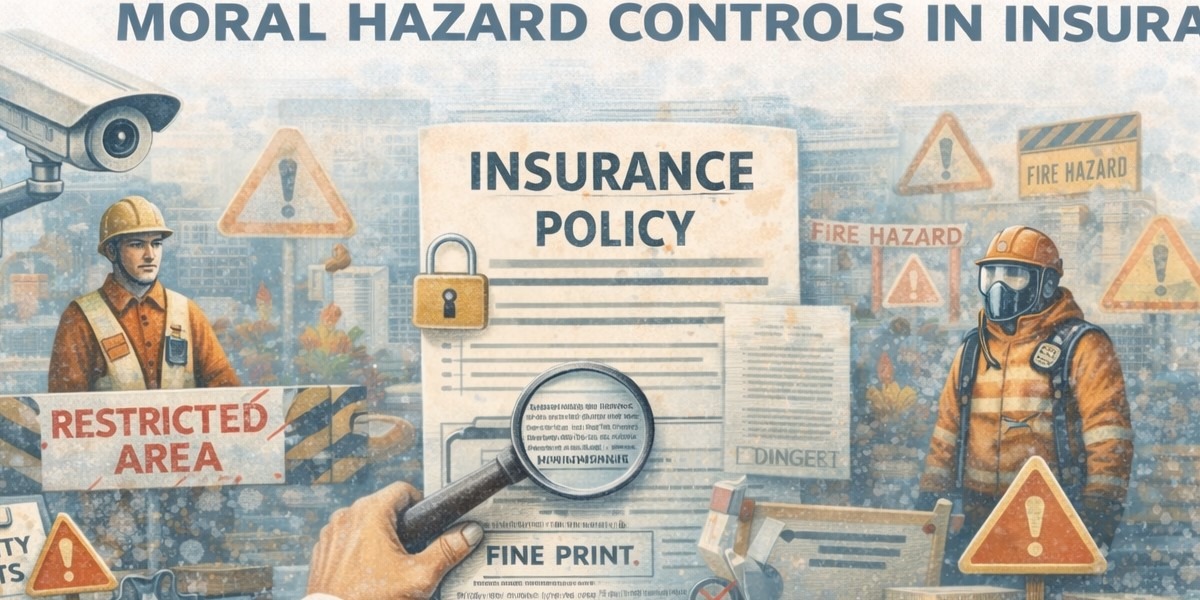
Moral hazard controls are the rules, exclusions, and monitoring systems insurers use to prevent high-risk workers from taking actions that would increase the chance or size of a claim.
It is not about trust.
It is about protecting the system from behavior-driven loss.
In high-risk insurance, insurers assume that behavior matters as much as danger.
What Moral Hazard Controls Mean
Insurance changes how people behave.
When someone is insured, they may:
-
Take more risks
-
Report claims differently
-
Stay in hazardous situations longer
To prevent this, insurers build controls such as:
-
Strict exclusions
-
Activity limits
-
Compliance requirements
-
Surveillance and verification
These mechanisms are moral hazard controls.
Economic and insurance references such as Investopedia define moral hazard as the tendency for insured parties to take more risk when they are protected from loss.
Why High-Risk Jobs Trigger More Controls
High-risk work already has:
-
Severe consequences
-
Expensive injuries
-
Large payouts
If behavior increases that risk, losses explode.
So insurers impose:
-
Narrow definitions
-
Reporting rules
-
Ongoing monitoring
-
Penalties for non-compliance
The higher the risk, the tighter the controls.
When insurers apply underwriting compression, moral hazard controls become standardized rather than tailored to individual workers.
How This Affects Workers
Moral hazard controls mean:
-
Claims are scrutinized
-
Activities are restricted
-
Coverage can be voided
-
Technical violations matter
Workers feel policed. Insurers feel protected.
These strict rules often increase claims friction, making high-risk claims slower and more contested.
Why This Feels Unfair
High-risk workers often see these rules as punishment.
The system sees them as necessary survival tools.
In the Risk Job Insurance System
Moral hazard controls explain why:
-
High-risk policies are full of fine print
-
Small mistakes can void coverage
-
Claims feel adversarial
They are how insurers protect themselves from behavior-driven losses.