Introduction
Construction insurance claim denials often feel personal to construction workers, especially when injuries are real and work-related. When a claim is denied, the outcome can feel unfair or even deceptive.
In most cases, it is none of those things.
Insurance claim denials in construction are rarely the result of clerical error, bad faith, or a misunderstanding unique to the worker. They are usually the predictable outcome of how construction risk is written into insurance policies long before any injury occurs.
Insurance systems are designed to manage population-level exposure, not to evaluate individual hardship or fairness after an injury occurs.
This article explains why construction workers experience insurance denials so frequently, why those denials often feel illogical from a job-site perspective, and why insurers usually view them as correct applications of policy rules. It does not explain how to appeal claims, assign blame, or recommend coverage. Its purpose is to make denial outcomes understandable by revealing the structural logic behind them.
This explanation builds on the broader system logic outlined in Why Construction Insurance Breaks Down in Real Life, where coverage outcomes are shaped by policy structure rather than by intent, effort, or fairness.
These denial patterns reflect the broader logic of risk job insurance, where insurers manage exposure through definitions rather than outcomes.
Why Insurance Denials Feel Personal in Construction
Construction work is physical, visible, and outcome-driven. When an injury happens, the cause usually feels obvious. A fall, a strain, a tool accident, or a repetitive task has a clear connection to the work being done.
Insurance does not evaluate claims based on how obvious an injury feels. It evaluates them based on definitions, thresholds, and exclusions that exist independently of the job site.
This difference creates emotional friction. From the worker’s perspective, the denial contradicts lived reality. From the insurer’s perspective, the denial reflects policy boundaries that were already in place.
Construction workers are especially vulnerable to this disconnect because their work creates injuries that are:
-
Physically undeniable
-
Often career-altering
-
Frequently cumulative rather than sudden
Insurance systems are not built around those characteristics.
The Core Reason Construction Insurance Claim Denials Occur
In insurance terms, a claim denial occurs when an asserted loss fails to meet one or more predefined policy conditions required to trigger coverage. This determination is based on contractual definitions rather than the presence or severity of harm.
This definition-driven structure is consistent with how insurance contracts are regulated and interpreted under state insurance law, where coverage is triggered by policy terms rather than equitable considerations.
These construction insurance claim denials are not errors in judgment, but the predictable result of how construction risk is written into policy definitions.
The most important principle to understand is this:
This reflects a core insurance principle: coverage is definition-driven, not outcome-driven.
Construction work produces harm in ways that do not always align with insurance definitions of:
-
Injury
-
Disability
-
Work-relatedness
-
Loss
When an injury falls outside those definitions, the claim fails even if the harm is real.
This is not a flaw unique to construction insurance. It is how insurance systems control exposure across large populations. Construction simply exposes those limits more frequently.
Common Structural Reasons Construction Claims Are Denied
Each of the following denial scenarios represents a known failure path where construction risk exits coverage by design rather than by error.
1. The Injury Does Not Meet the Policy’s Trigger
Most policies require a specific trigger, a predefined event or condition that must occur before coverage activates.
Most policies require a specific trigger:
-
A sudden accident
-
A defined incident
-
A measurable functional loss
Construction injuries often develop gradually. Repetitive lifting, kneeling, climbing, vibration, and strain accumulate over time. These injuries are real, but they often lack the single triggering event policies are written to recognize.
When a policy is built around incidents rather than exposure, cumulative construction injuries struggle to qualify.
2. Partial Ability Is Treated as Ability
Many construction workers lose the ability to perform construction work long before they lose all functional capacity.
From a construction standpoint, partial limitation can end a career. From an insurance standpoint, partial ability often means the worker is still considered capable of work in general.
This disconnect explains why claims fail even when construction work is no longer possible. Insurance evaluates whether any work can be done, not whether construction work can continue safely.
3. The Injury Is Classified as “Work-Related” and That Stops Coverage
In construction, responsibility often determines coverage more than severity.
When an injury is classified as work-related:
-
Health insurance may step aside
-
Disability insurance may narrow eligibility
-
Accident insurance may exclude coverage
If another system does not accept responsibility cleanly, the worker is caught between systems.
This is not because insurers disagree that the injury exists. It is because each system is designed to avoid absorbing risk assigned elsewhere.
4. Employment Status Overrides Physical Reality
Two workers can perform identical construction tasks and receive completely different insurance outcomes based solely on employment classification.
Insurance systems prioritize legal and contractual relationships before physical exposure. If a worker is classified as a contractor, subcontractor, or self-employed, entire categories of coverage may not apply regardless of injury severity.
From the job-site perspective, this feels irrelevant. From the insurer’s perspective, it is foundational.
5. Policy Exclusions Are Doing Exactly What They Were Designed to Do
Exclusions are not added after a claim is filed. They exist to prevent predictable losses from becoming unlimited obligations.
Construction policies often include exclusions related to:
-
Certain environments
-
Certain duties
-
Repetitive strain
-
Non-sudden injury
-
Specific high-risk activities
When a claim intersects with an exclusion, denial is not discretionary. It is automatic.
The frustration arises because exclusions are rarely understood until they are enforced.
Why Insurance Denials Are More Common in Construction Than Other Jobs
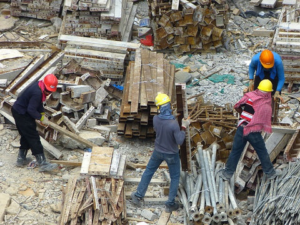
Construction combines multiple characteristics that strain insurance systems:
-
High physical dependency
-
Variable work environments
-
Mixed job duties
-
Non-linear injury patterns
-
Fragmented employment structures
Insurance policies are written for consistency. Construction work is inconsistent by nature. Every mismatch increases the likelihood that a real injury fails to meet a technical requirement.
This is why denial rates feel disproportionately high in construction, even when coverage exists.
This mismatch is well documented in occupational risk research published by NIOSH, which shows that construction injuries are disproportionately cumulative, task-variable, and environment-dependent, precisely the conditions insurance definitions handle least well.
This same boundary problem appears across workers’ compensation, disability insurance, accident insurance, and health insurance, each system managing construction risk through exclusion rather than accommodation.
Why Denial Does Not Mean the Insurer Thinks the Worker Is Wrong
A denied claim does not mean:
-
The injury is fake
-
The worker is exaggerating
-
The work was not demanding
-
The insurer doubts the harm
It means the policy does not recognize the injury in the way the worker experiences it.
Insurance logic is abstract. Construction work is physical. Denials occur where those two systems fail to overlap.
How This Fits Within Construction Workers Insurance
Claim denials are not isolated events. They are the visible outcome of how construction risk is managed across insurance systems. Because these boundaries are structural rather than situational, denial patterns persist across insurers, policy revisions, and regulatory changes.
Within construction workers insurance, denials reveal:
-
Where coverage boundaries actually sit
-
Which risks are intentionally unmanaged
-
Why assumptions drawn from job-site reality often fail
This pattern repeats across workers’ compensation, disability insurance, accident insurance, and health insurance. Each system denies for different reasons, but the underlying logic is consistent: insurance manages exposure, not outcomes.
These patterns are a core part of how construction workers insurance functions, where coverage outcomes are shaped by policy structure rather than job-site reality.
System Boundary
Construction insurance claim denials occur at predictable system boundaries, not at the point of injury. Coverage ends where policy definitions stop recognizing harm, whether due to incident-based triggers, employment classification, partial work capacity, or explicit exclusions. These boundaries are not errors or disputes; they are intentional design limits that allow insurers to manage exposure across large worker populations. In construction, where injuries are often cumulative, task-variable, and employment structures are fragmented, real harm frequently crosses those boundaries without triggering coverage. Denial, in this context, reflects the system functioning as designed rather than a failure to acknowledge injury.
Frequently Asked Questions
Why are workers’ compensation claims often denied in construction?
Workers’ compensation claims in construction are commonly denied because they do not meet specific policy definitions. Denials usually relate to how the injury is classified, whether it is considered work-related, how employment status is defined, or whether reporting rules were followed. These decisions reflect system rules, not the severity of the injury.
Does being injured on a construction site guarantee coverage?
No. Being injured on a construction site does not automatically trigger workers’ compensation coverage. The system evaluates whether the injury arose out of and in the course of employment, whether the activity fell within defined job duties, and whether the worker’s employment classification supports coverage.
Why do similar construction injuries lead to different outcomes?
Similar injuries can produce different outcomes because workers’ compensation evaluates more than the injury itself. Employment status, timing, documentation, and how duties are defined all influence decisions. From the outside this feels inconsistent, but within the system it reflects how responsibility is assigned.
Why are gradual or repetitive construction injuries harder to cover?
Workers’ compensation systems are designed around identifiable incidents rather than long-term physical exposure. Many construction injuries develop gradually through repetitive strain or cumulative stress, which makes them harder to fit into incident-based coverage definitions.
Are workers’ compensation denials personal judgments about workers?
No. Denials are rarely personal. They result from how workers’ compensation applies predefined rules and boundaries. While outcomes may feel unfair, they usually reflect structural limits rather than judgments about the worker’s effort, honesty, or work ethic.
Final Note
Most construction insurance denials are not mistakes. They are the predictable result of policy design colliding with the realities of physically demanding work.
Understanding this does not reduce the impact of denial. But it does clarify why denial is a predictable system outcome rather than an individual judgment. When denial is understood as a structural outcome rather than a personal judgment, the system becomes easier to interpret, even when it remains difficult to live with.