Introduction
Health insurance for construction injuries is often assumed to be the final backstop when other systems do not apply. When workers’ compensation is disputed, when an injury is not clearly work-related, or when recovery extends beyond defined limits, many construction workers expect health insurance to step in and cover the gap.
This expectation feels logical. Health insurance is associated with medical care, hospitals, and treatment. It is not tied to job titles or job sites in obvious ways. As a result, many construction workers believe health insurance functions as a neutral safety net when work-based coverage becomes uncertain.
In practice, health insurance is one of the most conditional systems affecting construction injuries. It does not simply cover injuries because medical care is needed. It evaluates responsibility first. Whether an injury is considered work-related, who is expected to pay, and whether another system should apply all influence whether coverage responds.
This article explains how health insurance actually treats construction injuries, why coverage often becomes complicated when work is involved, and why responsibility frequently breaks down between systems. It does not explain benefits, providers, or legal rights. Its purpose is to clarify how health insurance behaves within construction workers insurance and the broader structure of risk job insurance.
This explanation fits within the broader guide on how insurance systems actually work for construction workers, where health insurance is examined alongside other insurance systems that affect construction jobs.
Why Health Insurance and Construction Injuries Collide
Health insurance is designed to cover medical care for illness and non-work-related injury. Workers’ compensation is designed to cover medical care for work-related injury. The separation sounds clear in theory. In construction, it rarely is.
Construction work places constant physical strain on the body. Injuries may occur gradually, worsen over time, or be aggravated by work rather than caused by a single incident. These patterns make it difficult to assign responsibility cleanly to one system.
Health insurance systems are not built to evaluate construction exposure. They rely on classifications: work-related or not work-related. When an injury falls into a gray area, health insurance often pauses or denies coverage until responsibility is clarified.
This is why construction workers frequently experience delays or confusion even when seeking basic medical treatment. The system is not questioning the need for care. It is determining who should pay.
This conflict reflects a broader issue within risk job insurance, where different systems are designed to avoid overlapping responsibility rather than coordinate coverage for high-risk work.
How Health Insurance Defines “Work-Related”
Health insurance does not decide coverage based on job difficulty or physical demand. It relies on definitions that separate occupational injury from personal medical conditions.
If an injury is considered work-related, health insurance often defers responsibility to workers’ compensation. If it is considered non-work-related, health insurance may apply.
The challenge for construction workers is that many injuries do not fit neatly into either category. Back pain, joint deterioration, repetitive strain injuries, and aggravated conditions may involve both work and non-work factors.
Health insurance systems are not designed to apportion responsibility. They are designed to exclude work-related injuries entirely. When work involvement is suspected, coverage can be delayed or denied until another system accepts responsibility.
This creates a gap where the worker needs care, but no system clearly accepts the obligation to provide it.
Most health insurance policies exclude occupational injuries, meaning work-related injuries are excluded from health insurance coverage, even when medical treatment is urgently needed.
Why Gradual and Aggravated Injuries Create Coverage Gaps
Construction injuries often develop over time rather than from a single incident. Years of lifting, kneeling, climbing, or tool use can gradually damage joints, muscles, and connective tissue.
Health insurance systems struggle with these injuries because they lack a clear origin point. If an injury cannot be tied to a specific non-work event, it may be labeled occupational. If workers’ compensation does not accept it due to lack of a clear incident, responsibility remains unresolved.
Real-world scenario
A construction worker develops chronic shoulder pain after years of overhead work. The pain worsens to the point where medical treatment is required.
-
Workers’ compensation questions whether there was a specific incident.
-
Health insurance identifies occupational involvement and defers responsibility.
-
Treatment is delayed while responsibility is disputed.
From the worker’s perspective, the need for care is obvious. From the system’s perspective, responsibility is unclear.
This is not a failure of either system acting incorrectly. It is a structural gap created by how responsibility is defined.
How Employment Status Complicates Health Insurance Coverage
Employment status plays a critical role in how health insurance interacts with construction injuries.
For employees, health insurance often expects workers’ compensation to apply first. For contractors or self-employed workers, the boundaries are less clear. Health insurance may still exclude occupational injuries, even when no workers’ compensation coverage exists.
This creates a paradox: the worker is exposed to construction risk, but no system is clearly obligated to cover work-related medical care.
Construction work frequently involves subcontracting, project-based roles, and changing employers. Health insurance systems are not designed to track these complexities. They rely on static definitions that do not reflect how construction work is structured.
On many large construction projects, injuries are not insured through the worker’s direct employer at all. Instead, the project operates under owner-controlled or contractor-controlled insurance programs (OCIP or CCIP), where a single insurance policy covers everyone working on the site. Organizations that study construction risk and injuries confirm that large projects often operate under centralized insurance and safety structures rather than individual employer control. When a construction worker is injured, health insurers and medical providers often do not initially know that the claim belongs to a project-wide policy. This leads to injuries being billed to health insurance first, then reversed, delayed, or disputed once the project’s insurance structure is identified.
Why Health Insurance Is Not a Backup for Workers’ Compensation
Many construction workers assume health insurance will serve as a fallback when workers’ compensation fails. This assumption is one of the most common sources of surprise.
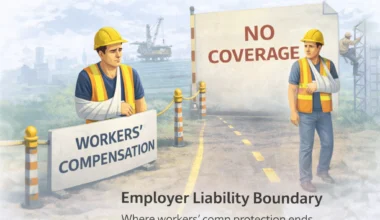
Health insurance is not designed to fill gaps left by workers’ compensation. It is designed to operate in parallel, not in sequence. When an injury is classified as work-related, health insurance generally steps aside rather than stepping in.
This behavior feels counterintuitive because medical care is the same regardless of who pays. From a system perspective, however, responsibility matters more than treatment.
Health insurance policies are written to avoid absorbing occupational risk. This is a deliberate design choice, not an oversight.
How Construction Injuries Get Caught Between Systems
Construction injuries are especially vulnerable to falling between systems because:
-
Work exposure is continuous rather than event-based
-
Injuries may be aggravated rather than caused by work
-
Employment arrangements are fragmented
-
Responsibility is difficult to assign
Health insurance and workers’ compensation each rely on boundaries that construction work frequently blurs. When neither system clearly applies, the worker experiences delay, denial, or confusion.
These outcomes feel arbitrary to workers because they are based on definitions rather than lived experience.
How This Fits Within Construction Workers Insurance
Health insurance is one component of construction workers insurance, but it is not designed to manage construction risk directly. It responds to illness and non-work injury, not occupational exposure.
Within risk job insurance, health insurance illustrates how coverage systems avoid overlapping responsibility. Each system is designed to cover a specific slice of risk. Construction work often falls across those slices.
Understanding this helps explain why health insurance behaves cautiously around construction injuries and why coverage outcomes often differ from expectations.

Frequently Asked Questions
Does health insurance cover construction injuries?
Sometimes. If an injury is clearly non-work-related, health insurance may apply. If work involvement is suspected, coverage may be delayed or excluded.
Why does health insurance deny treatment for work injuries?
Because health insurance policies typically exclude occupational injuries and defer responsibility to workers’ compensation.
Can health insurance be used if workers’ compensation denies a claim?
Not automatically. Health insurance may still exclude the injury if it is considered work-related, even if workers’ compensation does not accept it.
Why does responsibility matter more than treatment?
Because insurance systems are designed to manage financial responsibility, not just medical need.
Is health insurance unreliable for construction workers?
No. It functions as designed. The confusion arises when construction injuries do not fit neatly into system definitions.
Final Note
Health insurance feels like a universal solution because medical care is universal. Insurance responsibility is not. Health insurance for construction injuries operates within narrow boundaries designed to exclude occupational risk.
When construction injuries blur the line between work and non-work, responsibility often breaks down between systems. Understanding this does not remove the difficulty of navigating coverage, but it does explain why the system behaves the way it does.
That clarity is essential when evaluating how health insurance fits into construction workers insurance and the broader logic of risk job insurance.