Introduction
Many high-risk workers are surprised by how detailed insurance applications become once eligibility is confirmed. Health questions expand, job descriptions are scrutinized, and additional documentation may be requested. This stage of the process is underwriting.
Eligibility determines whether coverage can exist at all, while underwriting determines how that coverage is structured.
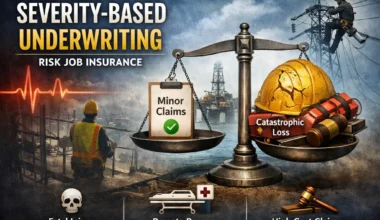
Underwriting high-risk jobs is the stage where insurers move from basic eligibility to detailed risk evaluation, shaping how coverage is priced, limited, or conditioned.
This article expands on the underwriting stage within the broader insurance eligibility and underwriting framework for high-risk jobs.
For workers in dangerous jobs, underwriting often feels intrusive, inconsistent, or unfair. In reality, it follows a structured logic designed to measure risk accurately when work involves higher-than-average danger.
This guide explains how insurers underwrite high-risk jobs, the difference between medical risk and occupational risk, and why both matter when coverage terms are determined.
What Underwriting High-Risk Jobs Really Means
Underwriting is the process insurers use to decide how coverage will be offered.
While eligibility determines whether coverage can exist at all, underwriting determines:
-
Premium cost
-
Coverage limits
-
Exclusions
-
Policy definitions
-
Waiting periods
For high-risk workers, underwriting is where insurance becomes specific. This is the stage where generalized rules are replaced with individual assessment.
The Two Types of Risk Insurers Underwrite
When underwriting insurance for high-risk work, insurers evaluate two distinct categories of risk: medical risk and occupational risk.
Medical Risk
Medical risk relates to the individual’s health profile. Insurers may review:
-
Age
-
Medical history
-
Chronic conditions
-
Previous injuries or illnesses
-
Recovery patterns
Medical risk helps insurers estimate how health may affect future claims.
Occupational Risk
Occupational risk relates to the work itself. Insurers assess:
-
Daily job duties
-
Physical demands
-
Exposure to hazards
-
Work environment (industrial, offshore, remote, transport-based)
-
Frequency of high-risk tasks
Occupational risk helps insurers estimate how likely a claim is to occur because of work conditions.
These two risk types are assessed separately and then combined.
Why High-Risk Jobs Increase Occupational Weight
Global occupational risk data published by the International Labour Organization shows that hazardous work environments experience higher injury severity and longer recovery periods, which increases the weight insurers place on occupational risk during underwriting.
In many insurance applications, occupational risk carries less weight than medical risk. In dangerous jobs, that balance often changes.
High-risk work increases:
-
The likelihood of injury
-
The severity of injuries when they occur
-
The duration of recovery
-
The chance of permanent impairment
Because of this, occupational risk can outweigh medical risk. A healthy worker in a very dangerous role may face more underwriting controls than a worker with mild medical issues in a low-risk job.
This explains why good health alone does not guarantee favorable insurance terms in high-risk occupations.
Occupational risk carries greater weight in dangerous work for the same reasons explained in our guide on why high-risk jobs require special insurance rules.
How Medical and Occupational Risks Interact
Underwriting outcomes depend on how medical and occupational risks combine.
A healthy worker in a high-risk job may receive coverage with exclusions or higher premiums due to occupational exposure.
A worker with medical conditions in a low-risk job may face restrictions primarily related to health, not work.
When medical conditions and high-risk work overlap, underwriting becomes more cautious. Insurers must account for both the likelihood of an event and the difficulty of recovery.
This interaction explains why underwriting outcomes vary widely even among workers in similar industries.
Common Underwriting Outcomes for High-Risk Workers
Underwriting does not always result in denial. More often, it produces adjusted terms, such as:
-
Higher premiums to reflect increased claim probability
-
Occupational exclusions targeting specific duties
-
Modified definitions of disability or injury
-
Benefit caps or waiting periods
-
Temporary postponement until health stabilizes
These outcomes are tools for managing risk, not judgments about the worker.
Why Underwriting Often Feels Inconsistent
Many high-risk workers compare outcomes and feel underwriting is unpredictable. Several factors contribute to this perception:
-
Different insurers tolerate different risk levels
-
Job duties are described differently by applicants
-
Timing matters, especially after recent injuries
-
Risk appetite varies by insurance type
What appears inconsistent is often the result of different risk models rather than arbitrary decisions.
How Underwriting Fits Into Risk Job Insurance
Underwriting is the engineering stage of risk job insurance.
It translates eligibility into real-world policy terms and explains why coverage behaves differently in dangerous jobs. Most claim disputes, exclusions, and surprises trace back to underwriting decisions made at this stage.
Understanding underwriting helps high-risk workers make sense of later outcomes without assuming unfair treatment.
Conclusion: Underwriting Is Risk Alignment, Not Judgment
High-risk work changes how insurance must be underwritten.
Medical risk and occupational risk are evaluated separately, then combined to shape coverage terms. These decisions exist to align insurance with real-world exposure, not to punish workers in dangerous jobs.
Understanding how underwriting works reduces confusion, sets realistic expectations, and completes the foundation needed to understand the broader risk job insurance system.