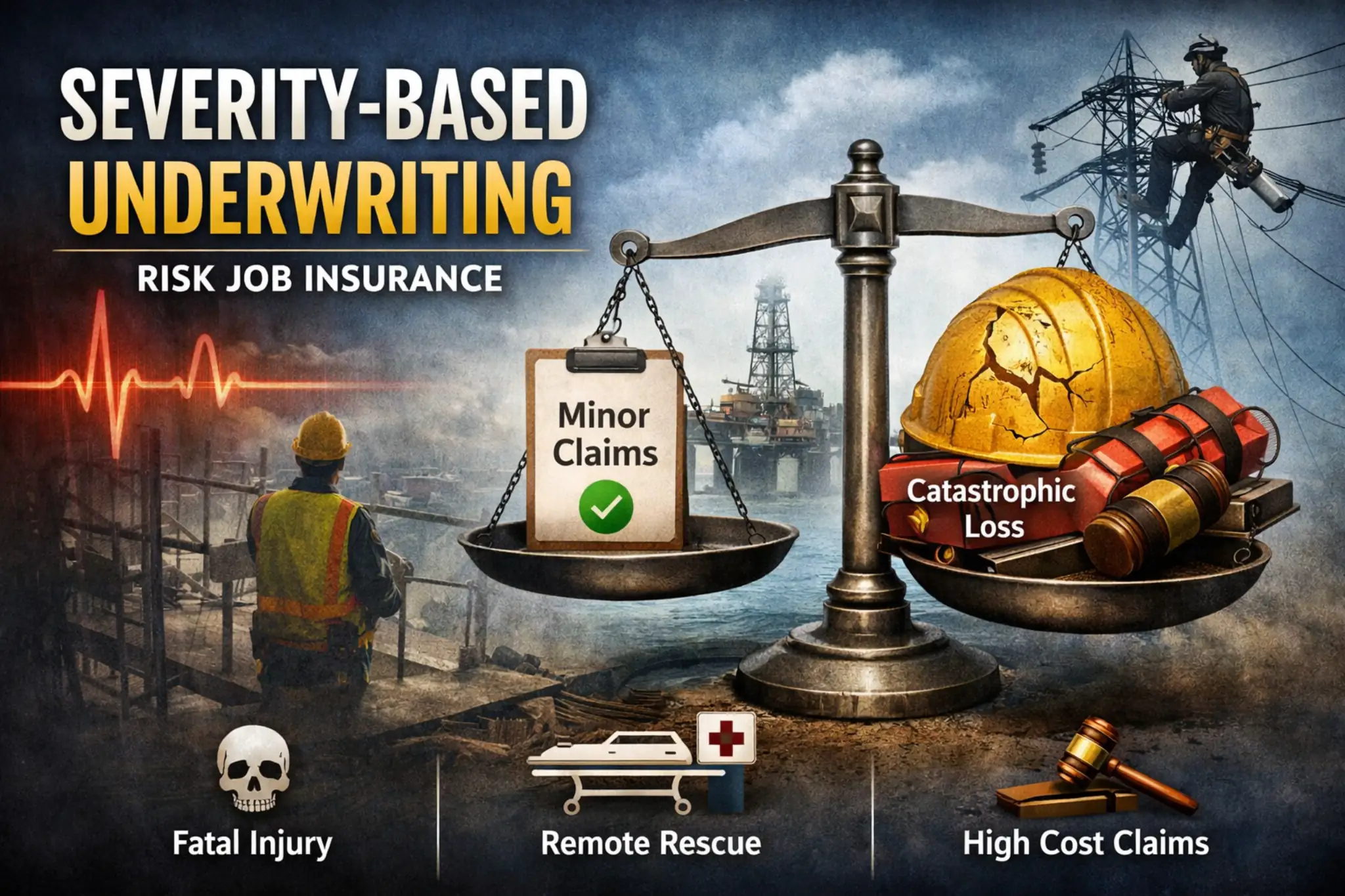
Severity-based underwriting is an insurance risk evaluation method that focuses on the maximum potential loss a job could produce, not just how often incidents occur. In risk-heavy occupations, insurers prioritize how severe a single claim could be (fatality, permanent disability, catastrophic injury) over routine or minor incidents.
In risk job insurance, severity-based underwriting is commonly used for occupations where one accident can trigger a high-cost or irreversible claim, even if incidents are statistically rare.
How Severity-Based Underwriting Works in High-Risk Jobs
Insurers assess:
-
Worst-case injury outcomes (death, paralysis, limb loss)
-
Exposure intensity (height, voltage, explosives, confined spaces)
-
Rescue and medical limitations (remote worksites, offshore locations)
-
Legal and compensation ceilings tied to catastrophic claims
A job with low incident frequency, but extreme injury potential may be rated higher, or declined than a job with frequent but minor injuries.
Severity vs Frequency in Risk Job Insurance
| Underwriting Focus | What It Prioritizes | Typical Outcome |
|---|---|---|
| Frequency-based | How often claims occur | Higher deductibles, manageable premiums |
| Severity-based | How bad one claim could be | Coverage limits, exclusions, or denial |
Severity-based underwriting is dominant in:
-
Construction at height
-
Offshore and marine work
-
Electrical and power-line jobs
-
Mining and heavy industrial roles
-
Hazardous material handling
Why Severity-Based Underwriting Matters for High-Risk Workers
Severity-based underwriting explains why:
-
You may be employed full-time but still declined
-
Coverage is approved with strict exclusions
-
Policies cap payouts well below expectations
-
Premiums spike despite a clean work history
Insurers are protecting against single-event losses, not average outcomes.
Common Failure Points (Where Coverage Breaks)
Severity-based underwriting often fails applicants when:
-
Job duties include uncontrolled fall risk
-
Emergency response time is medically insufficient
-
Worksite conditions increase fatality probability
-
Prior claims indicate irreversible injury exposure
-
Role combines multiple high-severity hazards (“exposure stacking”)
Example
A tower technician with zero prior claims may still be denied coverage because:
-
A single fall could result in fatality
-
Rescue access is limited
-
Claim severity exceeds insurer risk tolerance
Related Definitions
- Exposure Stacking
-
Hazard Class Rating
-
Catastrophic Risk Threshold
-
Occupational Risk Tiering