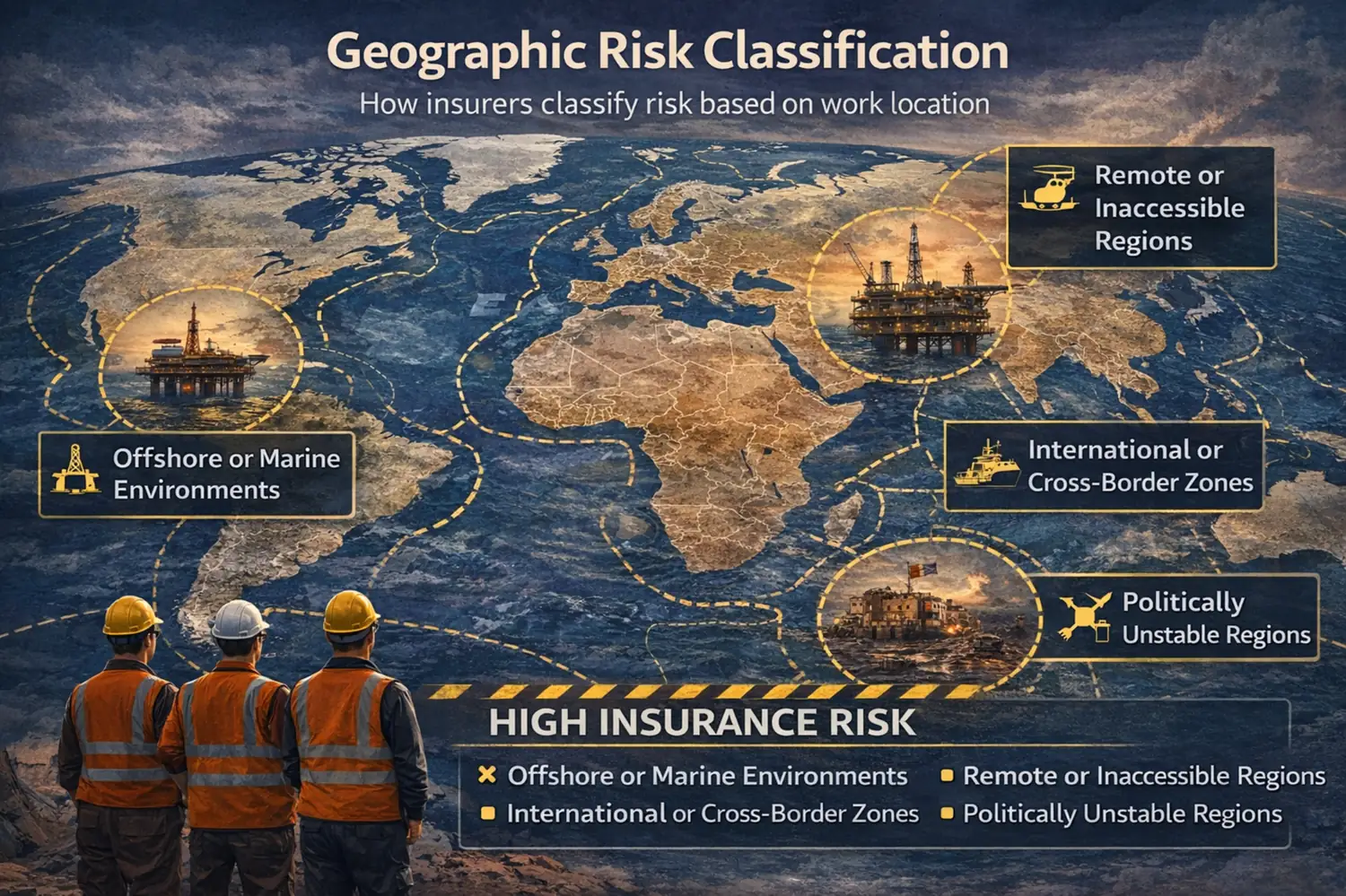
Geographic risk classification is the insurance process of adjusting occupational risk based on where work is performed, not just what work is done. Location determines how insurers apply eligibility rules, pricing, coverage limits, exclusions, and claims handling.
In high-risk insurance systems, geography is a primary risk variable, not a secondary detail.
Geographic risk classification is a core concept within the RJI Definitions Hub, explaining how insurers adjust risk assessment based on where work is performed rather than job duties alone.
Why Location Changes Insurance Risk
Insurance assumes predictable access to:
-
emergency services
-
stable infrastructure
-
clear legal jurisdiction
-
consistent regulatory oversight
Certain locations break these assumptions.
Risk increases when work occurs in:
-
offshore or marine environments
-
remote or inaccessible regions
-
international or cross-border zones
-
politically unstable or sanctioned areas
-
locations with limited evacuation capability
Insurance treatment of location-based risk is influenced by how territorial waters and exclusive economic zones are defined under international maritime law, which affects jurisdiction, enforcement, and coverage boundaries.
Insurers classify these environments separately because location alters loss probability and claim enforceability.
How Insurers Apply Geographic Risk Classification
When geographic exposure exists, insurers may:
-
assign a higher occupational risk class
-
apply territorial or location-based exclusions
-
reduce maximum coverage limits
-
restrict eligibility to approved regions only
-
require policies governed by a specific jurisdiction
Geographic classification often applies in parallel with occupational and hazard-based classifications.
Offshore and Remote Location Triggers
Geographic risk classification is most commonly triggered by:
-
offshore installations or vessels
-
work beyond national territorial waters
-
helicopter or vessel-only access
-
extended rotations without onshore access
-
operations in foreign or disputed regions
Even identical job roles may be classified differently solely due to where the work occurs.
Failure Points in Geographic Classification
Coverage and claims frequently fail when:
-
work location was under-disclosed or misunderstood
-
offshore or remote duties exceeded approved limits
-
territorial exclusions were overlooked
-
jurisdictional boundaries were crossed unknowingly
-
multiple geographic rules overlapped at claim time
These failures occur because geographic rules are applied automatically, not negotiated after loss.
Why This Definition Matters
This definition explains a structural insurance rule, not a discretionary or case-by-case decision.
In high-risk insurance systems, geographic classification determines:
-
whether coverage is available at all
-
which exclusions apply by default
-
how claims are assessed and enforced
-
where insurance protections stop
Misunderstanding geographic risk classification often leads to:
-
declined applications
-
unexpected exclusions
-
denied offshore or remote claims
-
disputes over territorial coverage
Once location triggers are present, insurers apply geographic rules automatically.
Related Definitions
Offshore Occupational Classification
Jurisdiction & International Waters Risk
Exposure Stacking
Occupational Risk Classes
High-Risk Occupation (Insurance Definition)