Introduction: When an Appeal Still Ends in “No”
For many high-risk workers, filing an insurance appeal feels like the last line of defense. A claim was denied. Evidence was submitted. Explanations were given. And still, the answer comes back the same.
Denied.
This outcome is especially difficult because appeals often feel justified. The injury is real. The income loss is real. The job is undeniably dangerous. From the worker’s perspective, being right should matter.
In insurance, it often doesn’t.
High-risk work changes how appeals function. Appeals fail not because workers are dishonest or undeserving, but because insurance appeals operate inside strict contractual boundaries that do not bend easily under pressure, fairness, or emotion.
This guide explains why insurance appeals fail in high-risk jobs, even when workers believe the decision is wrong, and what those failures actually mean.
What an Insurance Appeal Is Actually Allowed to Do
An appeal is not a second application and not a negotiation.
It is a formal request for an insurer to re-examine whether the original decision correctly applied the policy as written. Appeals do not:
-
Rewrite exclusions
-
Expand definitions
-
Increase limits
-
Override underwriting decisions
They only reassess whether the insurer applied the rules correctly.
This distinction explains why many appeals fail even when the worker’s situation feels obviously unfair.
Appeals do not re-evaluate fairness or hardship; they only re-check whether the policy was applied correctly, which is why understanding why insurance claims are denied in high-risk jobs is essential before an appeal is even filed.
The Most Common Reasons Appeals Fail in High-Risk Jobs
Appeals in dangerous work fail for predictable, structural reasons.
Clear policy exclusions
If the policy explicitly excludes a task, environment, or condition, an appeal cannot remove that exclusion.
Definitions override reality
Being unable to return to a physically demanding job does not always meet the policy’s definition of disability.
Underwriting assumptions were accurate
If job duties at claim time match what was classified during underwriting, appeals rarely succeed.
Limits were reached
Once benefit limits are exhausted, appeals cannot extend them.
These outcomes are not judgments. They are enforcement.
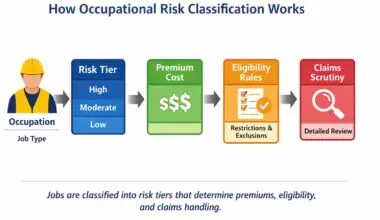
When underwriting assumptions match the actual job duties at claim time, appeals rarely succeed because they are enforcing the same classifications set during how insurers underwrite high-risk jobs.
Evidence vs Emotion: What Insurers Actually Reconsider
Appeals are evidence-driven, not emotion-driven.
Because claims are scrutinized more closely in high-risk jobs, appeal reviewers focus on definitions and documentation rather than emotional or financial arguments.
What helps:
-
Clarified job duties
-
Medical evidence focused on functional limits
-
Corrections to factual errors
-
Documentation that changes classification
What does not help:
-
Personal hardship stories
-
Financial stress explanations
-
Moral arguments
-
Repeating the same evidence
This is why appeals often feel cold or dismissive. They operate on definitions, not sympathy.
Timing Mistakes That Kill Appeals
In high-risk work, timing matters as much as evidence.
Appeals often fail because:
-
Deadlines were missed
-
Medical recovery was not yet stable
-
Evidence was incomplete at submission
-
Job duties changed after injury
Once an appeal window closes, even strong evidence may no longer matter.
Why Being “Right” Isn’t Enough in Insurance
Many workers are correct about their situation and still lose appeals.
Insurance does not answer the question:
“Is this unfair?”
It answers:
“Does this fall within coverage as written?”
This disconnect explains why appeals feel unjust even when they are procedurally correct.
When an Appeal Was Never Meant to Succeed
Some denials are structural.
If an appeal challenges:
-
Explicit exclusions
-
Absolute definitions
-
Non-covered conditions
then the appeal was never designed to succeed.
Understanding this prevents wasted energy and false hope.
If a denial reflects eligibility boundaries already set during insurance eligibility for high-risk jobs, an appeal cannot override those limits regardless of evidence.
What Workers Can Learn From a Failed Appeal
A failed appeal provides information.
It clarifies:
-
Where policy boundaries truly lie
-
Whether coverage gaps exist
-
Which risks are structurally uninsured
This knowledge is critical before pursuing job-specific insurance decisions later.
For many declined or restricted high-risk workers, a failed appeal clarifies that the issue is structural exposure rather than an application or claims error.
How Failed Appeals Fit Into Risk Job Insurance
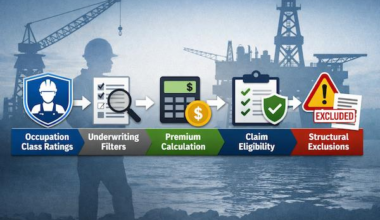
Within the risk job insurance system:
Eligibility sets boundaries
Underwriting defines exposure
Pricing reflects volatility
Claims enforce rules
Appeals verify enforcement
Appeals do not expand coverage. They confirm it.
This structure mirrors global occupational risk realities documented by the International Labour Organization, where hazardous work consistently shows higher injury severity and longer recovery periods.
Conclusion: A Failed Appeal Is Information, Not Defeat
For high-risk workers, failed appeals are frustrating but instructive.
They are not judgments of worth or honesty. They are confirmations of policy boundaries. Understanding why appeals fail helps workers move forward with clarity instead of anger.
For some workers, a failed appeal raises a new question: what happens next? In some situations, disagreements continue, sometimes into complaints, regulators, or legal action. Understanding why appeals fail helps workers approach those steps with clearer expectations.