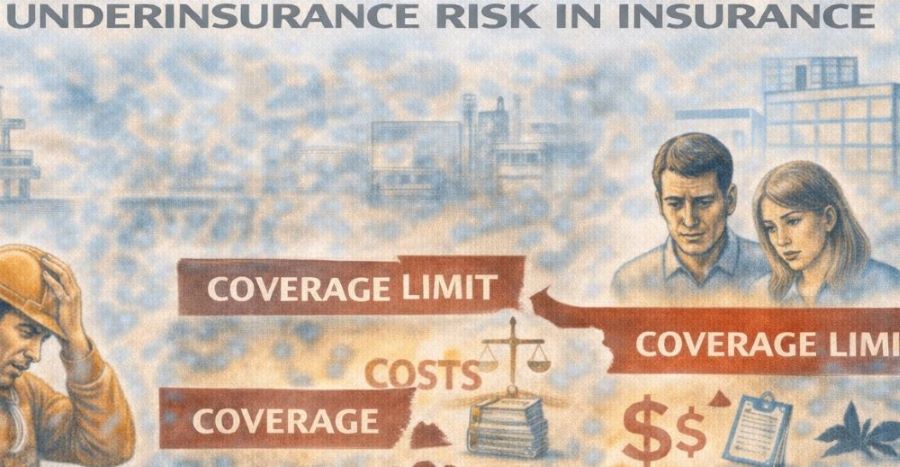
Underinsurance risk is the likelihood that a high-risk worker’s insurance coverage is insufficient to fully respond when a serious loss occurs.
It is not about having no insurance.
It is about having too little when it matters.
For high-risk workers, underinsurance is often invisible until a claim happens.
What Underinsurance Risk Means
Insurance can fail in two ways:
-
By not existing
-
By not being enough
High-risk insurance often exists, but with:
-
Low limits
-
Narrow definitions
-
High deductibles
-
Exclusions that activate under stress
That gap between loss and coverage is underinsurance risk.
Consumer insurance education groups such as the Insurance Information Institute warn that policy limits and exclusions often leave insured individuals under-protected after major losses.
Why High-Risk Jobs Face It More Often
High-risk work produces:
-
Severe injuries
-
Long recovery periods
-
High medical and income replacement costs
To keep premiums affordable, insurers cap coverage.
When a serious event happens, limits are hit quickly.
Over time, policy narrowing increases underinsurance risk by reducing what coverage actually responds to during serious claims.
How It Affects Workers
Underinsurance risk means:
-
Out-of-pocket expenses
-
Incomplete wage replacement
-
Long-term financial damage
-
Legal disputes
The policy responds, then stops.
When limits are hit or exclusions activate, coverage fragility becomes visible as protection suddenly ends.
Underinsurance risk is common in offshore workers’ compensation cases, where capped benefits, narrow definitions, and severe injuries leave workers exposed once policy limits are reached.
Why This Is Hard to Detect
Coverage looks adequate on paper.
Only real losses expose the shortfall.
In the Risk Job Insurance System
Underinsurance risk explains why:
-
Workers feel “insured but abandoned”
-
Claims leave financial gaps
-
High-risk coverage disappoints
It is one of the most dangerous hidden risks in high-risk insurance.
This definition fits within the larger Risk Job Insurance definition framework, which documents how coverage, pricing, and claims fail under high-risk conditions.