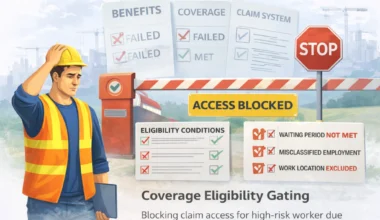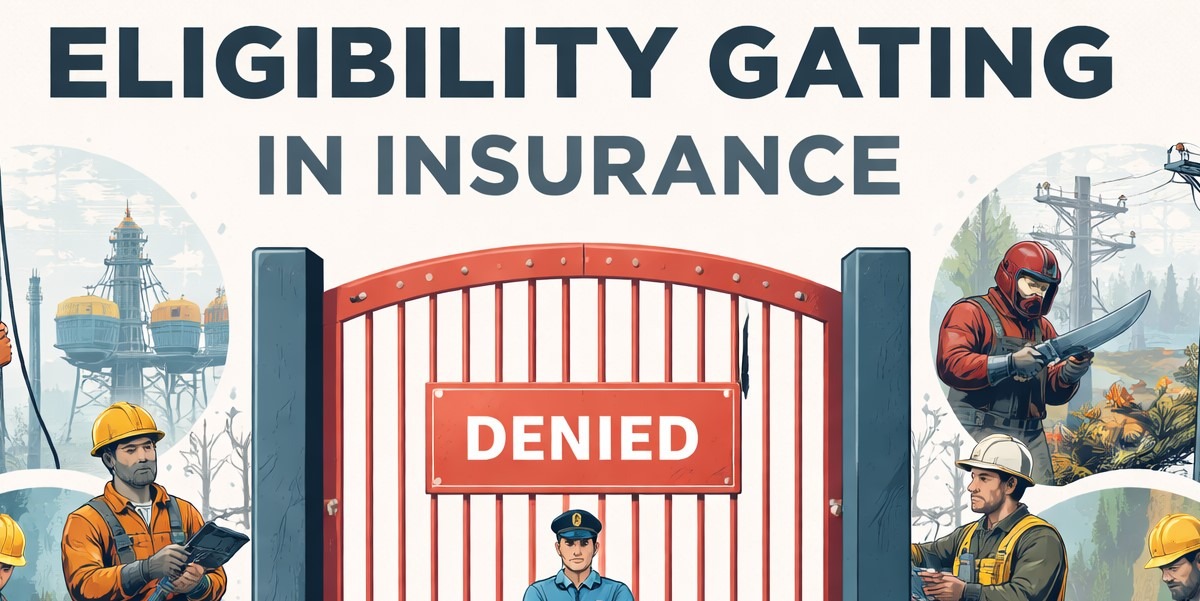
Eligibility gating in insurance is the insurance system’s process of deciding who is allowed to apply for coverage at all, based on occupational risk classification, before any underwriting, pricing, or policy terms are considered.
It is not about whether someone qualifies for better rates.
It is about whether their job is permitted inside the insurance system.
For many high-risk workers, the most important insurance decision happens before an application is reviewed. Their occupation either passes through the gate, or it does not.
Eligibility gating exists because insurers first assign every job to an occupational risk classification, which determines whether that type of work is allowed inside standard insurance systems.
What Eligibility Gating Actually Means
Insurance systems are built with hard entry rules. These rules determine:
-
Which occupations can submit applications
-
Which are restricted to special carriers
-
Which are automatically declined
These rules exist because insurers cannot price or manage certain exposures within standard risk pools. When a job produces loss patterns that exceed what a system is designed to absorb, it is removed from eligibility.
At that point, underwriting never happens because the worker is never admitted into the system in the first place.
That is eligibility gating.
These eligibility rules are based on standardized occupational systems published by organizations such as the National Council on Compensation Insurance.
Why High-Risk Workers Encounter Eligibility Barriers
High-risk jobs do not fail insurance because they are dangerous.
They fail because they create uncontrolled, continuous exposure that breaks actuarial assumptions.
Jobs that involve:
-
Working at height
-
Heavy machinery
-
Explosive, pressurized, or electrical systems
-
Offshore or remote environments
-
Industrial or extractive operations
often produce loss patterns that are too frequent, too severe, or too correlated for standard insurance pools to support.
So instead of raising premiums, insurers block access.
The system does not say, “You cost more.”
It says, “You are not eligible.”
How Eligibility Gating Shapes Everything That Follows
Once a worker is gated out:
-
No policy options are shown
-
No coverage tiers are available
-
No riders or exclusions can be negotiated
-
No underwriting review occurs
The person is invisible to the system.
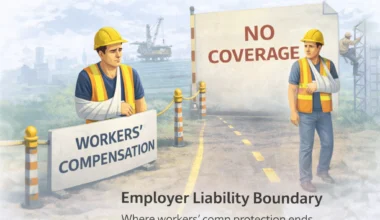
Eligibility gating frequently determines whether offshore workers can access workers’ compensation benefits at all, particularly when job duties, contractor status, or offshore classification are disputed
This is why many high-risk workers believe they were “declined” for insurance, when in reality they were never allowed to apply.
The Illusion of Choice in High-Risk Insurance
When workers are told to “shop around,” they assume different insurers will evaluate them differently.
But eligibility gates are usually shared across:
-
Reinsurers
-
Actuarial tables
-
Industry risk codes
-
Regulatory frameworks
This creates system-wide exclusion, not company-by-company disagreement.
So switching insurers often changes nothing.
Why Eligibility Gating Is the Hidden Engine of High-Risk Insurance
Most people think insurance starts with underwriting.
For high-risk workers, it starts earlier.
Eligibility gating determines:
-
Whether coverage is even theoretically possible
-
Whether specialized carriers are required
-
Whether entire job categories are excluded
Every other insurance outcome flows from this first gate.
In the Risk Job Insurance System
Eligibility gating explains why:
-
Two workers doing similar jobs receive different insurance access
-
Entire industries are labeled “uninsurable”
-
High-risk workers are pushed into specialty or surplus markets
It is the first structural filter in the Risk Job Insurance framework.
Without passing this gate, nothing else matters.
This is why Risk Job Insurance explained begins with system-level filters like eligibility gating before any job-specific coverage is discussed.