Construction insurance misconceptions often emerge when construction workers assume coverage will respond intuitively to risk on the job. For many construction workers, insurance feels straightforward, until it isn’t. Coverage is often assumed to be automatic, comprehensive, and responsive when something goes wrong. These assumptions usually make sense in the context of daily work, where risk is visible and responsibilities feel clear. Insurance, however, does not operate on intuition or intent. It operates on definitions, boundaries, and policy structure.
This gap between expectation and reality is where most insurance misunderstandings begin. When claims are limited, delayed, or denied, workers often feel blindsided. The confusion is not a result of carelessness or ignorance. It stems from how insurance is written and how construction risk is interpreted.
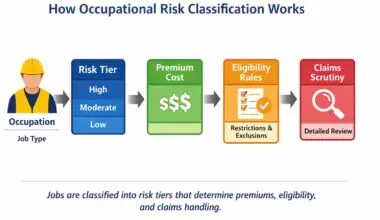
In construction, risk is visible and physical. Workers see hazards, understand danger, and adapt their behavior accordingly. Insurance risk, however, is abstract. It is defined by policy language, eligibility thresholds, and predefined triggers that do not always align with how work is actually performed on site.
This difference creates a gap between what feels reasonable to a worker and what is contractually recognized by an insurer. Misunderstandings grow in that gap, especially when coverage is expected to respond intuitively rather than mechanically. The result is surprise, not because something went wrong, but because assumptions were never aligned with how insurance systems are designed to function.
This article explains common insurance misconceptions construction workers encounter and why those beliefs often conflict with how coverage actually works. The aim is not to assign blame, but to clarify the logic behind outcomes that frequently surprise workers after an injury, illness, or time away from work.
Why “I’m Covered Because I’m at Work” Is Often Wrong
One of the most common assumptions in construction is that being on the job automatically means being covered. Work happens on a site, risk is present on that site, and insurance is associated with work, so coverage feels implied.
Insurance does not work this way. Coverage depends on how a policy defines work-related events, responsibility, and eligibility. Being physically present at work does not guarantee that every injury, condition, or interruption falls within those definitions.
Many policies distinguish between sudden incidents and gradual conditions, between direct causes and contributing factors, and between tasks that are clearly work-related and those that are not. When an event falls outside these definitions, coverage may not respond, even though the worker was technically “at work.”
This misconception persists because work and coverage are mentally linked. Insurance, however, responds to contractual triggers, not context.
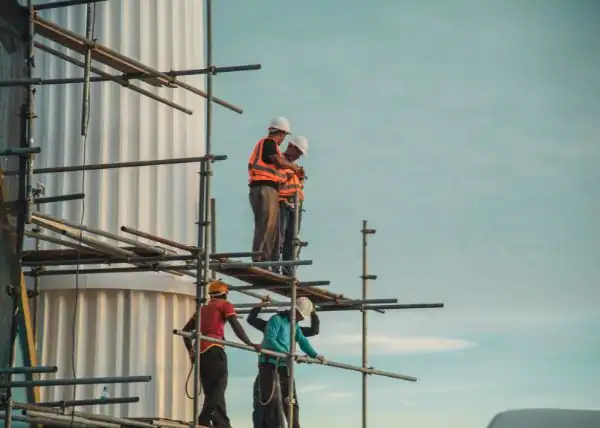
These assumptions conflict with the reality of construction workplace hazards, where risk exposure does not always align with how insurance coverage is triggered.
Why Employer Insurance Does Not Mean Complete Protection

Another widespread belief is that employer-provided insurance offers full protection. The presence of an employer often creates a sense of security, as responsibility feels shared and systems appear to be in place.
Employer-arranged coverage is usually designed to address specific risks under specific conditions. It does not function as a blanket solution for every situation a construction worker may face. Coverage may be limited to certain types of injuries, certain timeframes, or certain employment relationships.
Gaps often appear during transitions; between projects, during reduced hours, or when employment status is questioned. Long-term conditions, partial limitations, or issues that develop gradually may not align neatly with employer policy definitions.
This misunderstanding is common because employer insurance is visible and tangible. Its limits are often not, until a claim tests them.
Employer insurance is also structured around the employer’s exposure, not the worker’s long-term work ability. Policies are designed to address incidents that occur within defined employment relationships and timeframes. They are not designed to follow workers across projects, roles, or changes in work structure.
In construction, where employment is often project-based, transitional, or layered through subcontracting, this distinction matters. Coverage may respond fully in one context and not at all in another, even when the work performed looks similar. This inconsistency is not a flaw in the system; it reflects the fact that employer insurance is bounded by how responsibility is allocated, not by how risk feels to the worker experiencing it.
Why Partial Injury Can Still Mean No Benefits

Many construction workers assume that if they are injured and cannot perform their usual duties, insurance will respond. The logic feels reasonable: if work capacity is reduced, support should follow.
Insurance does not always define disability or inability in the same way workers do. Policies often assess whether a person can perform some work, not whether they can perform their usual construction tasks safely or effectively.
A worker who can no longer lift heavy materials, climb, or operate machinery may still be considered capable of other forms of work. From a practical standpoint, this may end a construction career. From an insurance standpoint, it may not meet the threshold for benefits.
This disconnect is one of the most painful misconceptions. It arises because insurance definitions are abstract, while construction work is physical and specific.
Construction work is especially vulnerable to this gap because it depends on full physical capacity rather than partial capability. Many roles cannot be meaningfully modified without changing the nature of the work itself. A worker who cannot lift, climb, kneel, or sustain repetitive motion may technically remain capable of employment in general, but not capable of construction work as it is actually performed.
Insurance policies rarely evaluate work at this level of specificity. Instead, they rely on generalized definitions of ability that apply across occupations. These definitions are designed for administrative consistency, not occupational nuance. As a result, a worker can lose functional access to construction work while remaining outside the policy’s definition of disability.
This outcome feels unfair because it conflicts with lived reality. From the insurer’s perspective, however, the policy is responding exactly as written.
Why Injuries Are Not Treated Equally by Insurers
Another common assumption is that similar injuries lead to similar outcomes. Two workers with comparable injuries may expect comparable treatment.
Insurance evaluates injuries in context. Factors such as how the injury occurred, how it is documented, how it aligns with policy definitions, and how it affects work ability all influence outcomes. Timing, causation, and classification matter as much as the injury itself.
An injury that fits cleanly within a policy’s framework may be covered, while another that appears similar but falls outside key definitions may not. This does not mean one injury is taken less seriously than another. It means one aligns more closely with the policy structure.
This misconception persists because injuries are visible and comparable, while policy language is not.
Why Timing, Definitions, and Structure Matter More Than Intent
Many construction workers believe that good faith, honesty, and clear effort should influence insurance outcomes. While these qualities matter in work and safety, they are not central to how insurance responds.
Insurance decisions are driven by timing, definitions, and structure. When an event occurs, how it is categorized, and whether it triggers a defined response determines coverage. Intent, effort, and personal circumstances are secondary to these mechanics.
This can feel cold or unfair, especially when a worker has done everything “right.” The reality is that insurance systems are designed for consistency and predictability, not for interpreting individual intent.
The broader logic behind these structural decisions is explained in why construction workers are treated differently by insurance, where insurer rules and classifications are unpacked in detail.
Understanding this helps explain why outcomes can feel detached from personal effort or responsibility.
Why Construction Insurance Misconceptions Keep Happening in Construction
These construction insurance misconceptions are not the result of poor judgment or lack of experience, but of how insurance policies define coverage boundaries in high-risk work environments.
These misunderstandings are not unique to construction, but they are more common and more impactful in high-risk work. Construction combines physical strain, variable environments, and changing work arrangements. This complexity makes intuitive assumptions more likely, and more likely to clash with policy design.
General insurance explanations often assume stable roles and predictable conditions. Construction does not fit that model. As a result, workers rely on assumptions that feel logical in their work environment but do not translate into insurance logic.
Construction work rarely offers that stability. Duties change by phase, site, and schedule. Risk exposure fluctuates daily. Employment relationships shift across projects. Insurance systems, by contrast, depend on fixed definitions and static categories. This mismatch makes construction workers more likely to rely on assumptions drawn from experience rather than from policy language.
Misconceptions persist because they are reinforced by everyday logic. If risk is present, coverage feels logical. If work is ongoing, protection feels implied. Insurance systems do not operate on those assumptions. They operate on predefined conditions that are often invisible until they are tested.
Understanding this does not resolve every frustration, but it explains why construction workers encounter the same surprises repeatedly. The issue is not misunderstanding on the worker’s part; it is the structural distance between how construction operates and how insurance defines responsibility.
This is why job-specific guidance, such as construction workers insurance, exists within the broader framework of risk job insurance. High-risk occupations require explanations grounded in occupational reality, not generic summaries.
These misconceptions are predictable because they arise from the gap between how construction work functions and how insurance policies are written.
Final Note
This article does not explain how to change outcomes or avoid gaps. Its purpose is clarity. When insurance responses are understood as structural and definition-driven rather than personal or situational, the disconnect between expectation and reality becomes easier to interpret. That understanding does not remove frustration, but it does replace confusion with context.