Table of Contents Hide
- Introduction
- What “Risk Job Insurance” Actually Means
- Common Misconceptions About Risk Job Insurance
- Misconception 1: “My job title alone determines my coverage.”
- Misconception 2: “Employer-provided insurance is enough.”
- Misconception 3: “All insurers automatically exclude high-risk jobs.”
- Misconception 4: “If I’m injured at work, life insurance won’t pay.”
- Misconception 5: “High-risk insurance is always unaffordable.”
- Misconception 6: “Once a policy is issued, job changes don’t matter.”
- Misconception 7: “Accidental death riders cover all work-related deaths.”
- Misconception 8: “Disclosure isn’t important if nothing has happened yet.”
- Misconception 9: “Risk job insurance only applies offshore or on rigs.”
- Misconception 10: “If one insurer declines me, all will.”
- Misconception 11: “Policies are the same across countries.”
- Misconception 12: “Marketing language reflects real coverage.”
- Why These Misconceptions Exist
- How Misconceptions Lead to Coverage Gaps
- How High-Risk Workers Can Protect Themselves
- Frequently Asked Questions (FAQs)
- Conclusion
Introduction
Misunderstandings about insurance are common across all professions, but for people in high-risk jobs, those misunderstandings can be far more costly. Construction workers, offshore crews, oil and gas personnel, miners, industrial operators, transport workers, and maritime professionals often rely on informal advice from colleagues, workplace assumptions, or marketing headlines to form their views about insurance.
This is where problems begin.
Many high-risk workers believe they are protected when they are not, assume coverage applies when it doesn’t, or avoid insurance entirely because they think it is unavailable or unaffordable. These misconceptions about risk job insurance can leave workers and their families exposed to serious financial gaps after injury, disability, or death.
This article addresses the most common misconceptions about risk job insurance, explains why they exist, and clarifies how insurance actually works for high-risk occupations in plain, neutral language. It is part of the broader pillar guide, “Risk Job Insurance Explained,” and is designed specifically for beginners who want clarity, not sales pressure.
What “Risk Job Insurance” Actually Means
Before addressing specific myths, it’s essential to clarify what the term risk job insurance actually refers to.
Risk job insurance is not a single type of policy. It is a broad category used to describe how insurers assess, structure, and manage coverage for people working in higher-risk occupations.
Independent insurance education bodies, such as the Insurance Information Institute, explain that insurance is structured around risk classification, underwriting, exclusions, and benefit limits rather than job labels or marketing terms.
In practice, this means that your job affects:
-
How insurers assess your application (underwriting)
-
What types of coverage are available
-
What exclusions apply
-
How limits and benefits are structured
-
How claims are reviewed
Risk job considerations can apply to many policy types, including life insurance, disability insurance, accidental death cover, and supplemental income protection. Understanding how job risk insurance works starts with recognizing that occupation affects policy structure, not just price.
Common Misconceptions About Risk Job Insurance

Below are the most widespread misconceptions that high-risk workers encounter, along with clear explanations of why they are misleading and what actually happens in real insurance policies.
Misconception 1: “My job title alone determines my coverage.”
Why do people believe this
Workers are often classified broadly at work: “construction worker,” “offshore technician,” “driver,” or “operator.” Many assume insurers use the same labels.
Why is it misleading?
Insurers focus far more on actual duties, work environment, and exposure level than on job titles.
What really happens
Two people with the same title may receive very different underwriting outcomes based on tasks performed, equipment used, and work conditions.
Example
A construction supervisor working mostly in an office environment may be assessed very differently from a site-based worker operating heavy machinery, even if both share the same title.
Misconception 2: “Employer-provided insurance is enough.”
Why do people believe this
Employer benefits are often presented as comprehensive protection, especially during onboarding.
Why is it misleading
Employer insurance is typically limited in scope, tied to employment, and may exclude certain risks or only provide minimal benefits.
What really happens
Coverage often ends when employment does, and it may not reflect a worker’s family’s actual financial needs.
Example
An offshore worker relying solely on employer life insurance may lose coverage immediately after changing contracts or leaving the company.
Misconception 3: “All insurers automatically exclude high-risk jobs.”
Why do people believe this
Stories of declined applications circulate widely in high-risk workplaces.
Why is it misleading?
While some insurers avoid certain risks, many specialize in covering high-risk occupations with structured terms.
What really happens
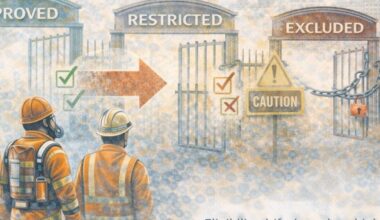
Coverage may be offered with adjusted conditions, exclusions, or benefit limits rather than outright rejection.
Example
A miner declined by one insurer may be accepted by another that regularly underwrites underground work.
Misconception 4: “If I’m injured at work, life insurance won’t pay.”
Why do people believe this
Workers confuse life insurance with workers’ compensation or accident insurance.
Why is it misleading?
Life insurance pays based on death not the cause, unless explicitly excluded.
What really happens
If the policy is valid and disclosures were accurate, many work-related deaths are covered.
Example
A transport worker who dies in a job-related accident may still be covered under a properly structured life policy.
Misconception 5: “High-risk insurance is always unaffordable.”
Why do people believe this
High-risk pricing is often discussed without context.
Why it’s misleading
Costs vary widely based on role, exposure, age, health, and policy structure.
What really happens
Many workers overestimate cost and underestimate available options.
Example
An industrial technician in a controlled environment may qualify for affordable coverage despite working in a high-risk sector.
Misconception 6: “Once a policy is issued, job changes don’t matter.”
Why do people believe this
Policies are often viewed as static documents.
Why is it misleading
Some policies require notification if occupational risk increases.
What really happens
Failure to disclose changes can affect claims.
Example
A warehouse worker who transitions into heavy equipment operation without updating their insurer may face coverage issues later.
Misconception 7: “Accidental death riders cover all work-related deaths.”
Why do people believe this
The term “accidental” sounds comprehensive.
Why is it misleading?
Accidental death riders often contain exclusions related to hazardous activities or environments.
What really happens
Coverage depends on the rider’s wording, not assumptions.
Example
A maritime worker may find that certain offshore activities fall outside the scope of rider coverage.
Misconception 8: “Disclosure isn’t important if nothing has happened yet.”
Why do people believe this
Some workers believe disclosure only matters at claim time.
Why is it misleading
Non-disclosure can invalidate policies retroactively.
What really happens
Insurers assess accuracy at claim time not application time.
Example
An oil and gas worker who understated offshore exposure may face claim denial years later.
Misconception 9: “Risk job insurance only applies offshore or on rigs.”
Why do people believe this
Media focus often highlights offshore disasters.
Why is it misleading
Many onshore roles carry significant risk.
What really happens
Manufacturing, transport, mining, and construction roles are all considered high-risk in insurance terms.
Example
A long-haul truck driver may face similar underwriting scrutiny as offshore personnel.
Misconception 10: “If one insurer declines me, all will.”
Why do people believe this
Rejections feel definitive.
Why is it misleading
Underwriting standards vary widely.
What really happens
Different insurers assess risk differently.
Example
An industrial welder declined by one provider may be accepted elsewhere with modified terms.
Misconception 11: “Policies are the same across countries.”
Why do people believe this
Insurance language often looks similar globally.
Why is it misleading
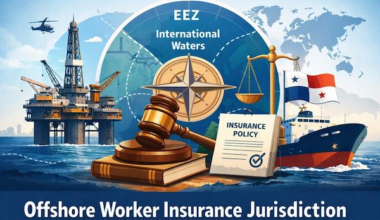
Legal frameworks, exclusions, and benefits differ by jurisdiction.
What really happens
International workers must pay close attention to the applicability of policies.
Example
A maritime worker insured in one country may not be covered while working abroad.
Misconception 12: “Marketing language reflects real coverage.”
Why do people believe this
Policy brochures simplify complex terms.
Why is it misleading
Marketing highlights benefits, not limitations.
What really happens
Actual coverage is defined in policy wording.
Example
A policy advertised as “comprehensive” may still exclude specific hazardous duties.
Why These Misconceptions Exist
These misunderstandings persist because of:
-
Simplified marketing messages
-
Workplace hearsay is passed between colleagues.
-
Overreliance on employer benefits
-
Complex policy wording
-
Lack of plain-language education
Insurance is rarely explained in a way that matches how high-risk workers actually live and work.
How Misconceptions Lead to Coverage Gaps
When workers rely on myths rather than facts, the consequences can include:
-
Claim denials
-
Policies voided due to non-disclosure
-
Insufficient benefit amounts
-
Loss of coverage after job changes
-
False confidence in employer insurance
These gaps often only become visible after a serious incident.
How High-Risk Workers Can Protect Themselves
Without buying anything or choosing providers, workers can protect themselves by:
-
Asking how their actual duties are assessed
-
Reading exclusion sections carefully
-
Confirming coverage after job changes
-
Understanding employer benefit limitations.
-
Learning how risk job insurance works before relying on it
Education is the most effective form of protection.
Frequently Asked Questions (FAQs)
Is risk job insurance a specific policy?
No. It refers to how insurers handle higher-risk occupations across many policy types.
Does every high-risk job face exclusions?
Not always. Exclusions depend on duties, not labels.
Do I need insurance outside my employer plan?
Many workers do, especially for long-term protection.
Can I update my policy if my job changes?
Often yes, and it’s essential to do so.
Does disclosure really matter?
Yes. Inaccurate disclosure can invalidate coverage.
Are international workers covered automatically?
Not always. Jurisdiction matters.
Conclusion
The most dangerous thing about insurance for high-risk workers is not the risk itself, but the misunderstanding of it. These common misconceptions about risk job insurance persist because clear, neutral education is rare. By understanding how policies actually work, what insurers assess, and where assumptions fail, workers can avoid false confidence and serious coverage gaps.
This article supports the broader guide, Risk Job Insurance Explained, and is intended to give high-risk workers clarity, not pressure, as they navigate complex insurance decisions.
Informational Disclaimer
This article is for general educational purposes only and does not provide legal, financial, or insurance advice. Insurance rules and policy terms vary by jurisdiction and individual circumstances. Please always look over official policy documents and seek professional guidance where appropriate.