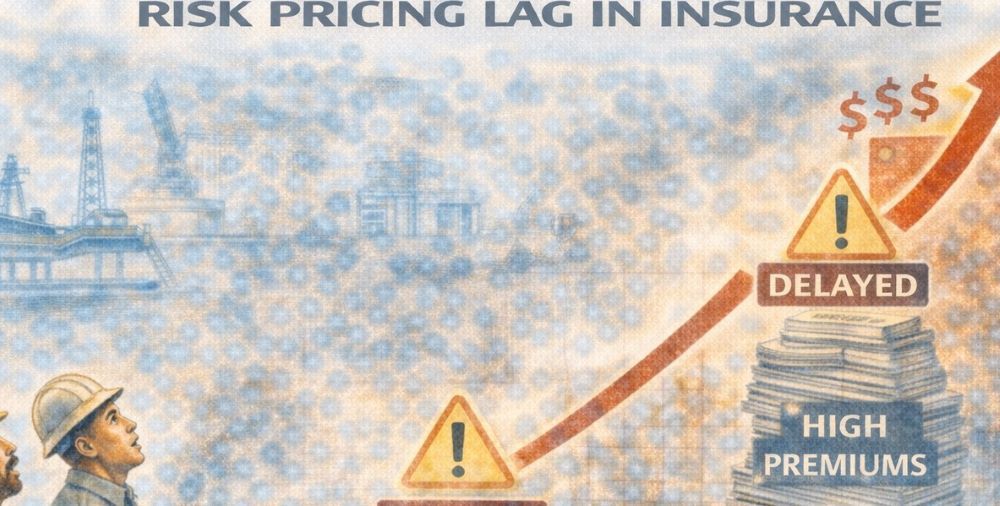
Risk pricing lag is the delay between when risk increases in high-risk jobs and when insurance prices finally reflect that increased danger.
It is not about cheap insurance. It is about outdated pricing.
For high-risk workers, premiums are often incorrect until they are not suddenly.
What Risk Pricing Lag Means
Insurance prices are based on:
-
Historical loss data
-
Actuarial models
-
Reinsurance terms
These update slowly.
When work becomes riskier, new equipment, new methods, harsher conditions, pricing does not change immediately.
The gap between reality and pricing is risk pricing lag.
This delay often exists because of risk model lag, where actuarial models fail to recognize emerging danger until losses force correction.
Market cycles and delayed pricing reactions are tracked by agencies such as AM Best.
Why High-Risk Jobs Experience It
High-risk industries evolve fast:
-
New technologies
-
New hazards
-
New failure modes
But insurance systems react slowly.
When losses finally show up, prices jump suddenly.
When risk pricing lag ends, it often triggers premium volatility as insurers rush to correct outdated prices.
How It Affects Workers
Risk pricing lag means:
-
Insurance seems affordable
-
Then becomes unaffordable
-
Coverage is pulled after losses
-
Workers feel blindsided
The risk was there.
The price was late.
After losses appear, capacity withdrawal frequently follows as insurers realize they mispriced the risk.
Why This Feels Like a Trap
Workers take coverage when it is cheap.
By the time the market catches up, they cannot afford it.
In the Risk Job Insurance System
Risk pricing lag explains why:
-
Markets swing violently
-
Premium volatility occurs
-
Capacity withdraws after losses
It is the time bomb inside high-risk insurance.
This definition fits within the larger Risk Job Insurance definition framework, which documents how coverage, pricing, and claims fail under high-risk conditions.