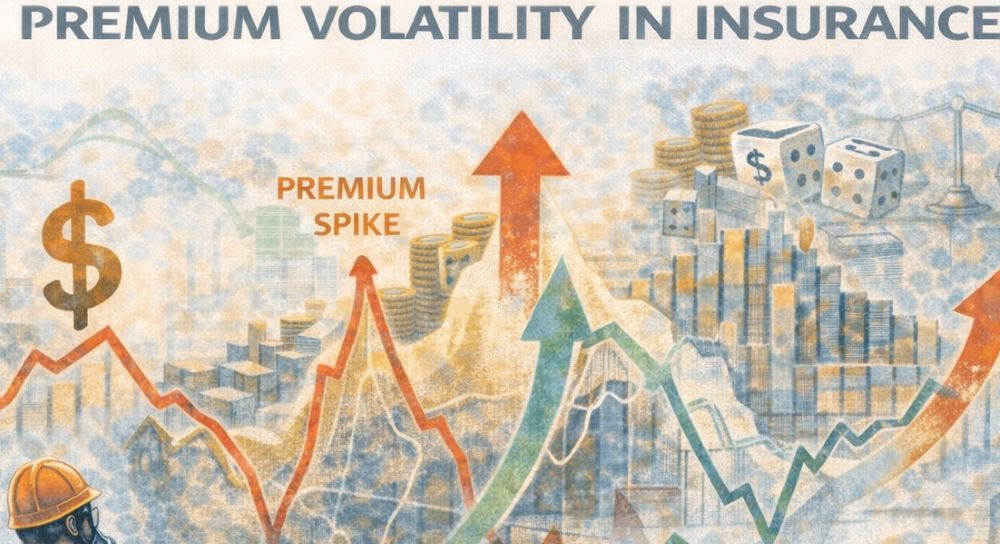
Premium volatility is the degree to which insurance prices for high-risk jobs rise, fall, or change unpredictably over time.
It is not about paying more.
It is about not being able to plan.
For high-risk workers, premiums do not move smoothly; they jump.
What Premium Volatility Means
In stable insurance markets, premiums change slowly.
In high-risk markets, they can:
-
Spike after a single claim
-
Double after a market shift
-
Drop temporarily when capacity floods in
-
Rise again when capital leaves
This instability is premium volatility.
When insurers reduce capacity through capacity withdrawal, premiums for high-risk jobs often rise sharply.
Market cycles and insurance pricing volatility are tracked by agencies such as AM Best.
Why High-Risk Jobs Experience It
High-risk work is affected by:
-
Loss correlation
-
Reinsurance dependence
-
Capacity withdrawal
-
Market cycles
These forces cause insurance pricing to swing rapidly.
Because pricing is driven by reinsurance dependence, changes in reinsurance markets quickly flow down to workers.
How It Affects Workers
Premium volatility means:
-
Budgets become unreliable
-
Coverage may become unaffordable
-
Employers drop or reduce insurance
-
Workers lose protection
The job may not change.
The price does.
Why This Feels Arbitrary
From the worker’s view, nothing changed.
From the market’s view, everything did.
In the Risk Job Insurance System
Premium volatility explains why:
-
High-risk insurance feels unstable
-
Coverage disappears when prices spike
-
Long-term planning is difficult
It is the financial shockwave of high-risk insurance.