What Is a Policy Trigger?
A policy trigger is the specific event or condition that activates insurance coverage, the moment an insurer becomes potentially responsible for a claim. In risk-job insurance, the trigger determines which policy responds when loss, injury, or liability occurs, especially when work spans hazardous conditions, long latency injuries, or multiple contracts.
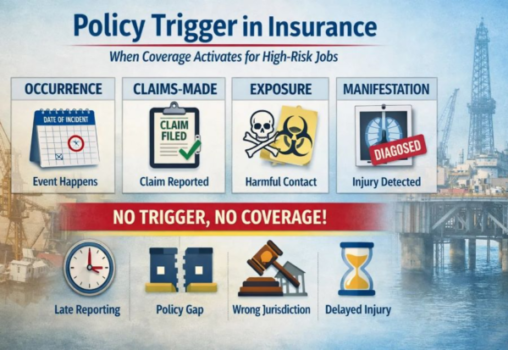
In plain terms: no trigger, no coverage, even if the job itself is insured.
Why Policy Triggers Matter for High-Risk Jobs
High-risk occupations (offshore, construction, mining, aviation, industrial maintenance) often face:
-
Delayed injuries (e.g., cumulative trauma, toxic exposure)
-
Cross-policy timelines (incident in one year, claim filed in another)
-
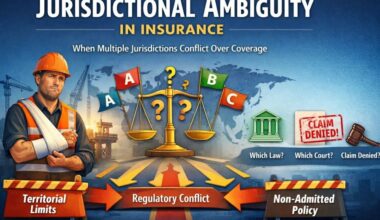
Jurisdictional overlap (where laws define triggers differently)
The trigger decides which insurer, which policy year, and which limits apply, or whether coverage fails entirely.
Common Types of Policy Triggers
-
Occurrence Trigger
Coverage is activated by the date the injury or damage occurs, regardless of when the claim is filed.
Common in: General liability, workers’ compensation
Risk-job impact: Favors long-tail injuries, older policies may respond years later. -
Claims-Made Trigger
Coverage activates when the claim is first made and reported during the policy period.
Common in: Professional liability, some contractor policies
Risk-job impact: Reporting delays can void coverage if outside the active term. -
Claims-Made-and-Reported Trigger
The claim must be made and reported within the policy period (or extended reporting period).
Risk-job impact: Strict timing, miss the window, lose coverage. -
Exposure Trigger
Coverage activates when exposure to a harmful condition occurs (even before injury manifests).
Common in: Environmental or toxic exposure contexts. -
Manifestation Trigger
Coverage activates when the injury or damage becomes apparent/diagnosed.
Risk-job impact: Can shift responsibility to later policies with different limits.
Failure Paths (Where Coverage Breaks)
Policy triggers are a frequent failure point in risk-job insurance:
-
Late Reporting: Claims-made policies deny claims reported after expiration.
-
Policy Gaps: Switching insurers without tail coverage leaves exposure uncovered.
-
Misclassified Trigger: Assuming “occurrence” when the policy is claims-made.
-
Jurisdictional Conflict: Local law defines the trigger differently than the policy wording.
-
Latency Mismatch: Injury manifests after the covered policy period ends.
Practical Example
A welder develops lung disease from long-term exposure:
-
Occurrence policy: The policy active during exposure years may respond.
-
Claims-made policy: Only the policy active when the claim is filed responds, if properly reported.
-
Manifestation trigger: The policy active at diagnosis may respond instead.
Same injury. Different triggers. Different outcomes.
Related Definitions
-
Coverage Trigger – The legal or contractual event activating insurance.
-
Claims-Made Policy – Coverage based on when a claim is filed/reported.
-
Occurrence Policy – Coverage based on when harm occurred.
-
Extended Reporting Period (Tail Coverage) – Time added to report claims after expiration.
-
Jurisdictional Ambiguity – When laws conflict on how triggers are interpreted.
Bottom Line
For high-risk workers, policy trigger language is as important as the coverage itself. Understanding when coverage activates often determines whether a claim is paid or denied, years after the work is done.