Executive Summary
Eligibility requirements for risk job insurance determine whether hazardous occupations can enter the insurance evaluation system at all. According to the International Labour Organization and occupational safety regulators, high-risk industries generate elevated injury severity, which forces insurers to impose strict eligibility filters before underwriting occurs.
Introduction: Eligibility as a System Gate, Not a Judgment
In insurance systems, eligibility is the first and most restrictive decision point. It determines whether a risk can be evaluated at all. For high-risk occupations, this gate operates before underwriting, before pricing, and often before any human review occurs.
Eligibility functions as a pre-underwriting gate within broader insurance evaluation frameworks, operating before the processes described in How Insurance Underwriting Works for High-Risk Jobs begin.
Eligibility does not assess whether a worker is acceptable, insurable, or desirable. It answers a narrower and more rigid question:
Can this risk enter the insurance system for further evaluation?
Many high-risk workers never reach underwriting, not because they were declined coverage, but because their work, exposure, or circumstances were never eligible for consideration in the first place. This distinction is rarely made clear to applicants, yet it explains why eligibility decisions often feel abrupt, opaque, and inflexible.
This article defines eligibility at a system level. It explains how eligibility functions, how it differs from approval and underwriting, and why it blocks coverage before evaluation occurs.
1. What “Eligibility” Means in Insurance Systems
1.1 Formal Definition of Eligibility
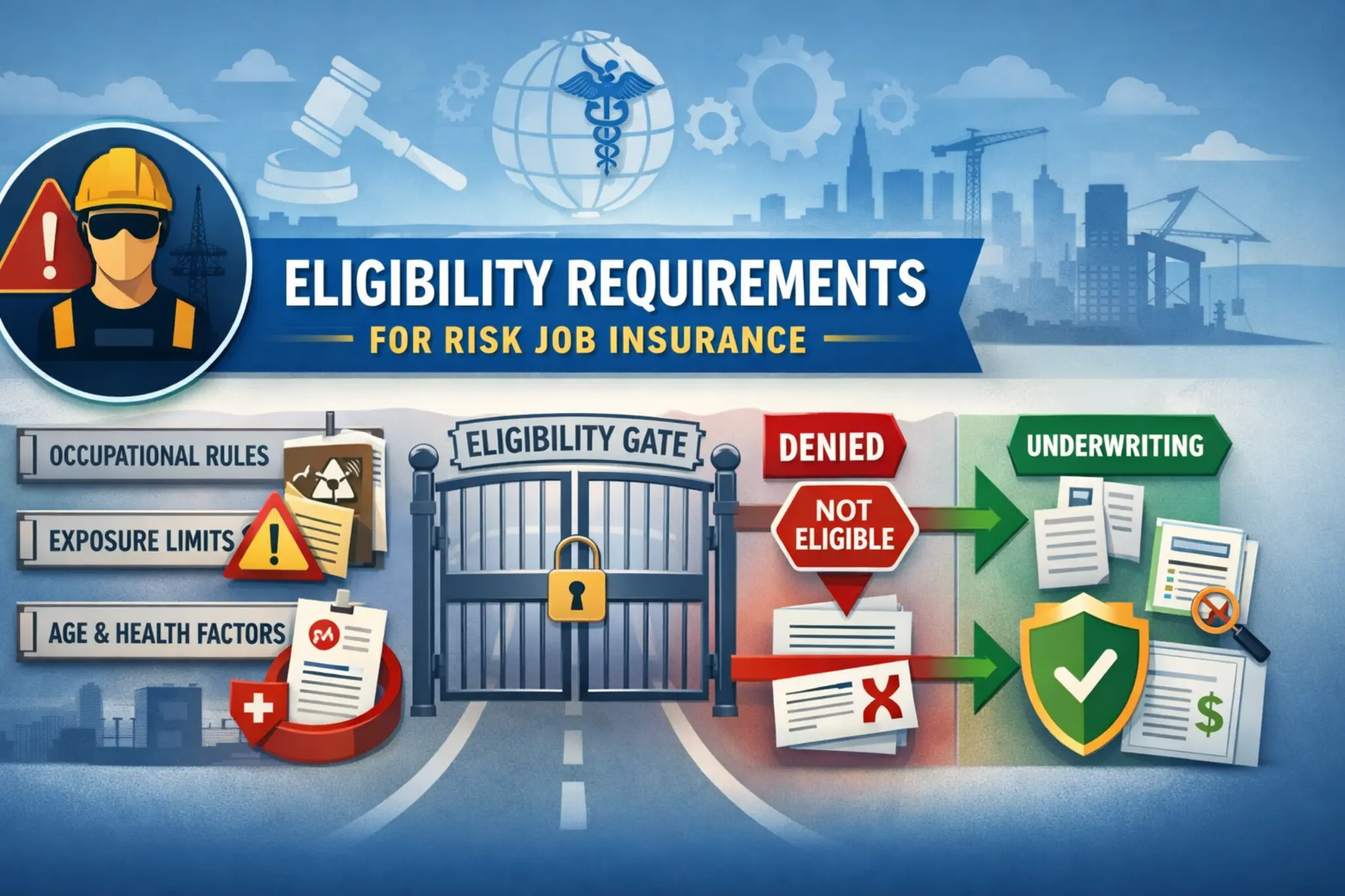
Eligibility is a pre-underwriting gate embedded within insurance system design. It functions as a binary filter that determines whether a submitted risk may proceed to underwriting evaluation.
At this stage, insurance systems do not analyze pricing, exclusions, or coverage structure. They only determine whether the risk is permitted to enter the underwriting process.
Eligibility outcomes are binary:
-
Eligible for consideration
-
Ineligible for consideration
There is no partial eligibility and no provisional status at this stage.
1.2 What Eligibility Does Not Decide
Eligibility does not determine:
-
Whether coverage will be approved
-
What coverage limits may apply
-
How the policy will be priced
-
What exclusions may be imposed
Confusing eligibility with approval leads to widespread misunderstanding. An eligibility failure is not a rejection of terms; it is a refusal to evaluate the risk at all.
2. Eligibility vs Approval vs Underwriting
2.1 The Insurance Decision Sequence
Insurance evaluation occurs in a fixed sequence:
-
Eligibility screening
-
Underwriting evaluation
-
Coverage terms, pricing, and exclusions
In regulated insurance markets, underwriting and eligibility functions are governed by formal insurer risk-selection frameworks rather than discretionary judgment, as outlined by U.S. insurance regulatory authorities.
Each step depends entirely on the previous one. If eligibility fails, the process ends.
2.2 Where the Process Can End Early
Eligibility acts as a hard stop. Once a risk is deemed ineligible:
-
Underwriting does not occur
-
Pricing logic is never applied
-
Coverage options are not explored
-
Negotiation is structurally impossible
This is why many high-risk workers receive no explanation beyond an apparent refusal.
2.3 Why Eligibility Is Often Invisible
Eligibility rules are typically embedded within:
-
Application logic
-
Rating engines
-
Carrier appetite matrices
Because these systems operate automatically, eligibility decisions often appear instant and unexplained, even though they are the result of predefined system constraints.
3. Baseline Eligibility Requirements for High-Risk Jobs
Eligibility requirements for high-risk work are not checklists. They are categories of system constraints that define what risks may be considered.
3.1 Occupational Eligibility Boundaries
Insurers define hard boundaries around:
-
Types of work
-
Recognized hazard classes
-
Operational contexts
Certain occupations or duties are excluded entirely, regardless of experience or safeguards.
3.2 Risk Exposure Thresholds
Insurers rely on structured risk assessment tools used by insurers to model injury probability, exposure frequency, and catastrophic loss potential before determining whether a risk exceeds eligibility thresholds.
Risks that exceed these thresholds are blocked before underwriting, even if losses are statistically infrequent.
3.3 Jurisdictional and Regulatory Constraints
Eligibility may be overridden by:
-
Geographic limitations
-
Cross-border work restrictions
-
Regulatory prohibitions
In such cases, insurers may be legally or operationally barred from considering the risk.
3.4 Insurer Appetite Constraints
Even where coverage is technically possible, insurers limit eligibility to protect portfolio balance. High-risk exposures may be excluded simply because accepting them would destabilize the insurance pool.
4. Automatic Declines vs Manual Eligibility Review
4.1 Automatic Ineligibility Rules
Most eligibility decisions for high-risk jobs are automated. System triggers include:
-
Occupation codes
-
Hazard flags
-
Work environment markers
When these triggers are activated, the risk is blocked without human intervention.
4.2 Manual Eligibility Review
Manual review is permitted only when eligibility rules explicitly allow it. This typically requires:
-
Clear alignment with defined risk classes
-
Absence of automatic exclusion triggers
Manual eligibility review is exceptional, not standard.
4.3 Documented Failure Paths
Many risks never reach human review. This is not an oversight but a design feature. When eligibility rules prohibit escalation, no appeal or clarification can alter the outcome.
5. Occupational Eligibility Constraints
5.1 Job Duties vs Job Titles
Eligibility systems rely on formal occupational coding structures that interpret duties rather than titles, as explained in occupation class ratings used by insurers.
Eligibility systems rely on formal occupational coding structures that interpret duties rather than titles, as explained in the occupational classification framework used by insurers.
Insurance eligibility systems rely on standardized occupational and hazard classification structures to evaluate exposure consistently across industries.
If declared duties exceed predefined risk boundaries, eligibility fails regardless of title.
5.2 Hazard Frequency and Severity
Eligibility logic accounts for:
-
Repetitive exposure to moderate hazards
-
Low-frequency exposure to catastrophic hazards
Some low-frequency risks are excluded due to loss severity alone.
5.3 Work Environment Constraints
Certain environments trigger ineligibility automatically, including:
-
Offshore operations
-
Remote or isolated worksites
-
Heavy industrial settings
-
Transport-based work environments
These settings often exceed eligibility tolerance before underwriting begins.
5.4 Mixed or Undefined Roles
Eligibility systems require defined scopes. When roles combine multiple hazard classes or lack clear boundaries, they often default to ineligible due to classification uncertainty.
6. Personal Eligibility Constraints
6.1 Age Band Restrictions
Age is frequently evaluated at the eligibility stage for high-risk work. Upper and lower age limits function as system safeguards rather than underwriting judgments.
6.2 Health and Medical Flags
In high-risk contexts, certain medical conditions block eligibility entirely. This differs from medical underwriting, where conditions may influence terms rather than access.
When risks pass eligibility screening, health factors are evaluated later through separate medical assessment processes rather than at the eligibility stage, as detailed in medical underwriting systems for high-risk occupations.
6.3 Prior Claims and Impairments
Historical loss indicators may trigger eligibility exclusion when combined with hazardous occupations. This reflects cumulative risk logic, not individual assessment.
7. Why Eligibility Rules Are Stricter for High-Risk Jobs
7.1 Loss Severity vs Frequency
High-risk jobs expose insurers to losses that are:
-
Severe when they occur
-
Difficult to absorb at scale
Eligibility gates exist to control catastrophic exposure, not to evaluate individual behavior.
7.2 Insurance Pool Sustainability
Eligibility protects the sustainability of insurance pools. Without strict gates, high-risk losses would overwhelm shared risk structures.
7.3 Why Uniform Eligibility Rules Fail
Rules designed for low-risk occupations cannot scale to hazardous work. Uniform eligibility would destabilize high-risk insurance systems and make coverage unavailable to all participants.
High-risk occupations operate under stricter access controls because insurers must limit catastrophic exposure. This structural constraint explains why high-risk jobs face stricter insurance approval across most insurance systems.
8. Common Points Where Eligibility Fails
8.1 Occupational Misclassification
Eligibility fails when declared roles do not align with actual exposure patterns recognized by the system.
8.2 Exposure Misalignment
When duties exceed stated exposure thresholds, eligibility is blocked regardless of intent or experience.
8.3 Jurisdictional Conflicts
Conflicts between work location and policy jurisdiction frequently result in automatic ineligibility.
8.4 Combined Risk Overload
Eligibility systems aggregate occupational and personal risk. Individually acceptable risks may fail when combined.
9. How Eligibility Shapes Everything That Follows
9.1 Access to Underwriting
Eligibility determines whether underwriting occurs at all. Without eligibility, no evaluation follows.
9.2 Influence on Coverage Structure
Eligibility decisions shape:
-
Available policy forms
-
Mandatory exclusions
-
Maximum coverage limits
Once eligibility permits underwriting to occur, subsequent decisions regarding exclusions and pricing are governed by underwriting logic rather than eligibility rules.
9.3 Downstream Effects on Claims
Eligibility decisions influence how claims are interpreted later, particularly when coverage disputes arise. Eligibility defines the framework within which claims are evaluated.
10. Common Eligibility Failure Paths for High-Risk Workers
Eligibility screening blocks many applicants before underwriting begins. The most common structural failure points include:
Occupation outside insurer appetite
Certain occupations exceed acceptable hazard classifications defined by insurer risk frameworks.
Exposure exceeding system thresholds
Jobs involving extreme injury severity or uncontrolled environments often fail eligibility before underwriting review.
Jurisdiction or regulatory conflict
Cross-border employment, offshore operations, or work in restricted jurisdictions may render risks ineligible.
Combined occupational and personal risk
Multiple moderate risk indicators may collectively exceed eligibility thresholds.
Understanding these failure paths helps explain why many high-risk workers never reach underwriting evaluation.
Conclusion: Eligibility as Structural Design
Eligibility rules are not discretionary judgments. They are designed, codified, and enforced at the system level. Their rigidity reflects structural necessity, not individual assessment.
Understanding eligibility explains why coverage feels inaccessible in high-risk work, where insurance systems must protect themselves before they can protect workers.
Understanding eligibility is easier when viewed alongside the broader underwriting system: