Introduction
For many people working in high-risk jobs, the word eligibility creates immediate anxiety. Construction workers, offshore technicians, miners, drivers, and industrial workers often assume they would never qualify for disability insurance. The job is dangerous, the work is physical, and the risks are obvious; so the conclusion feels logical: “Insurance probably isn’t meant for people like me.”
That assumption is one of the most common misunderstandings in this area. This guide focuses on disability insurance eligibility for high-risk workers, explaining how insurers assess job duties, health impact, and work ability in real-world roles.
In reality, disability insurance eligibility for high-risk workers is not based on a simple yes-or-no rule tied to job danger. It is shaped by context: what work you do, how you do it, how your health affects that work, and how insurers assess your ability to earn a living, not just whether you have an injury or diagnosis. Before understanding who may qualify, it helps to first understand what disability insurance is for high-risk workers and what it is designed to protect against.
This article exists to slow things down and remove unnecessary fear. It explains what eligibility actually means in disability insurance, why job duties matter more than job titles, and how work ability is assessed in practice. It will not tell you whether you personally will be approved or denied. It will not interpret policy language or predict claim outcomes.
Instead, it will help you understand how eligibility is evaluated so you can make informed decisions and avoid ruling yourself out based on assumptions.
This article is part of a broader guide on disability insurance for high-risk workers, which explains coverage types, definitions, and how these policies are structured overall.
What “Eligibility” Means in Disability Insurance (Plain Language)
Eligibility is not the same as approval
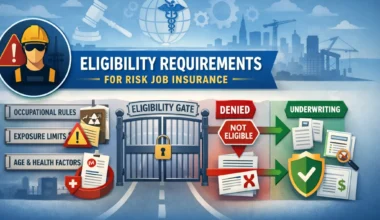
One of the first points to clarify is that eligibility does not mean approval. Eligibility refers to whether someone meets the basic criteria for coverage or evaluation under disability insurance rules. Approval comes later and depends on specific policy terms, medical evidence, and work circumstances.
Think of eligibility as being allowed into the conversation, not the outcome of it. When assessing disability insurance eligibility for high-risk workers, insurers focus less on job titles and more on how health affects the ability to perform essential duties.
A high-risk worker can be eligible even if approval ultimately depends on further review. Confusing these two ideas causes many people to stop researching too early.
Eligibility only makes sense when viewed alongside how disability insurance for high-risk workers works, including how work ability and occupation are defined.
Eligibility is not the same as making a claim.
Another common misunderstanding is the assumption that eligibility only matters after an injury. In reality, eligibility is assessed at different stages depending on context: before coverage begins, when work duties change, or when a claim is evaluated.
Eligibility is about fit. Claims are about proof. They are related, but they are not the same process.
Eligibility is context-based, not automatic.
There is no universal checklist that applies to every worker, every job, and every situation. Disability insurance eligibility requirements depend on:
-
The nature of the work performed.
-
The physical and mental demands of that work
-
How health conditions affect the ability to perform those duties
-
How “work” is defined within the policy framework
For high-risk jobs, this context matters more, not less. The work itself is more specific, more physical, and often less adaptable, so eligibility is assessed through that lens.
Why Job Duties Matter More Than Job Titles
One of the most essential concepts for high-risk workers to understand is that insurers focus on what you do, not what your job is called.
Two people with the same job title may have very different eligibility profiles because their daily duties are different.
Physical tasks
Insurers look closely at physical demands such as:
-
Lifting, carrying, pushing, or pulling weight
-
Climbing, crawling, kneeling, or working at height
-
Prolonged standing or walking
-
Use of heavy tools or machinery
For example, a construction worker who primarily performs manual framing work faces different work ability considerations than one who mainly manages schedules and inspections, even if both are called “site supervisors.”
Environmental exposure
High-risk jobs often involve environments that increase strain and danger:
-
Offshore platforms and remote locations
-
Extreme heat, cold, or weather exposure
-
Confined spaces or hazardous atmospheres
-
Noise, vibration, or unstable surfaces
Eligibility assessments consider whether a health condition limits a worker’s ability to function safely in these environments, not just whether the condition exists.
Repetitive strain
Repetitive movements are common in industrial, manufacturing, and transport roles. Over time, these can affect joints, nerves, and muscles.
Eligibility is not limited to sudden injuries. Conditions that gradually reduce work capacity, such as chronic back pain or shoulder damage, are often relevant, particularly when the job requires repetition that cannot be avoided.
Safety-critical responsibilities
Many high-risk roles involve responsibility for the safety of others:
-
Operating vehicles or heavy equipment
-
Managing hazardous materials
-
Working in teams where one person’s limitations affect group safety
If a health issue interferes with alertness, coordination, or reaction time, insurers evaluate how that impacts work ability, not just whether the worker could theoretically perform a less demanding task elsewhere.
Examples across industries
-
Offshore oil & gas: Rope access work, confined space entry, emergency response duties
-
Mining: Underground access, equipment operation, exposure to dust and vibration
-
Transport: Long-haul driving, night shifts, sustained concentration
-
Maritime: Vessel movement, emergency drills, manual handling in unstable conditions
In all of these cases, duties define eligibility far more clearly than job titles.
Medical History & Health Considerations (High Level)
Why insurers ask about health
Health questions are not designed to exclude high-risk workers automatically. They exist to understand how a person’s medical history interacts with their work demands.
A diagnosis alone does not define eligibility. Its impact on function does.
A health history does not automatically disqualify someone
Many workers assume that any pre-existing condition means automatic ineligibility. This is not how eligibility works in practice.
Examples of conditions that may still allow eligibility depending on context include:
-
Controlled high blood pressure
-
Previous injuries with full or partial recovery
-
Managed joint or back conditions
-
Stable mental health conditions
The key question is not “Do you have a condition?” but “Does it limit your ability to do your work safely and reliably?”
Conditions versus work impact
Two workers with the same medical condition may be assessed very differently:
-
A warehouse worker with knee damage may struggle to perform daily lifting and walking.
-
A technical inspector with the same condition may still meet work demands
Eligibility assessments focus on functional impact. This distinction is critical for high-risk workers whose jobs are physically specific.
Work Ability: How Insurers Actually Assess Capability
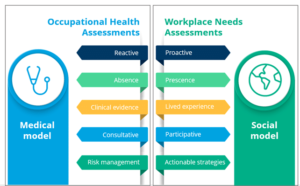
The concept of work ability is central to disability insurance eligibility for high-risk workers, yet it is often misunderstood.
In occupational and employment contexts, work ability is generally understood as a person’s capacity to perform their job safely and effectively, taking into account health, skills, and working conditions, rather than diagnosis alone.
Ability to perform usual work
At the core of most assessments is the question: Can this person perform their usual occupation as it is usually done?
For high-risk jobs, “usual work” is not a theoretical desk-based version of the role. It reflects real-world conditions, including physical demands, safety requirements, and work environments.
A construction worker who cannot climb, lift, or balance safely may be assessed as unable to perform their usual work even if they could perform lighter tasks in another setting.
Ability to earn a similar income
Another factor is whether a worker can earn income comparable to their previous role, given their skills, training, and experience.
This does not mean any job anywhere. It considers whether alternative work is realistically aligned with the worker’s background.
For example, suggesting office work to a lifelong offshore technician with no administrative experience may not reflect real work ability.
Why “any job” thinking is misleading
Many workers fear that if they can do any form of work, they will not qualify. This oversimplification causes unnecessary worry.
Eligibility assessments typically consider:
-
Training and experience
-
Physical and cognitive demands
-
Transferability of skills
-
Practical access to alternative work
High-risk roles often involve specialized skills that are not easily transferable to lower-risk work without retraining or significant income reduction.
High-risk examples
-
Construction: A scaffolder with balance issues may not be able to perform essential duties, even if capable of light manual tasks
-
Offshore: A worker who is unable to pass safety or medical clearance cannot perform their usual offshore work, regardless of other abilities.
-
Transport: A driver with impaired concentration or mobility may be unable to meet safety standards
In each case, work ability is evaluated in context, not in abstraction.
Employer-Provided Coverage vs Individual Eligibility
Why employer plans don’t define long-term eligibility
Many high-risk workers encounter disability insurance through their employer. While this can provide initial protection, it does not define long-term eligibility in all situations.
Employer-provided coverage is often:
-
Limited in duration
-
Tied to active employment
-
Based on standardized definitions
Eligibility under these plans may change if employment ends, duties change, or coverage conditions are no longer met.
What happens when employment ends
If a worker leaves a job due to injury, contract completion, or company changes employer-based eligibility may end as well. This does not mean the worker is no longer eligible for disability protection in a broader sense, but it does change how eligibility is assessed.
Understanding this distinction helps prevent false assumptions about future protection.
Why job-based coverage can be limited
Employer plans are designed for groups, not individual circumstances. They may not fully reflect the nuances of high-risk work or long-term earning potential.
Eligibility in these contexts is often narrower than many workers realize.
Common Eligibility Myths Among High-Risk Workers
“High-risk workers are automatically denied”
This is false. High-risk jobs exist precisely because people perform them every day. Disability insurance frameworks account for this reality.
Eligibility depends on how work demands interact with health, not on danger alone.
“Only permanent disabilities qualify”
Temporary or partial limitations can still affect eligibility depending on duration and impact. Not all disabling conditions are permanent, and eligibility assessments reflect that.
“If I can do office work, I won’t qualify”
This belief ignores skill transferability and realistic employment options. Eligibility is not based on hypothetical desk jobs disconnected from a worker’s background.
“Eligibility means guaranteed approval”
Eligibility opens the door to assessment. It does not promise outcomes. Understanding this prevents disappointment and unrealistic expectations.
Situations That Often Require Extra Review
Some work situations naturally involve more detailed evaluation.
Mixed-duty roles
Workers who split time between physical and administrative tasks may require closer analysis to determine which duties define their usual work.
Supervisory or hybrid jobs
Titles like “supervisor” or “foreman” do not automatically mean desk work. Eligibility depends on how much physical involvement remains.
Contract-based or seasonal work
Short-term or project-based roles can complicate eligibility assessments, particularly when duties vary between contracts.
Changing job duties over time
If a worker’s role has evolved, eligibility assessments may consider which duties truly define the occupation at the relevant time.
What This Article Does and Does Not Determine
This article does explain:
-
How disability insurance eligibility for high-risk workers is assessed
-
Why duties matter more than titles
-
How work ability is evaluated in practice
This article does NOT determine:
-
Whether any individual will be approved
-
Policy-specific definitions or exclusions
-
Claim outcomes or timelines
For deeper understanding, readers should also review foundational explanations such as What Is Disability Insurance for High-Risk Workers? and How Disability Insurance for High-Risk Workers Works, which provide context for how eligibility fits into the broader picture.
Conclusion
Eligibility for disability insurance is not a fixed label that either applies or does not. For high-risk workers, it is a contextual evaluation shaped by real work, real environments, and real limitations.
Understanding eligibility is not about predicting outcomes. It is about replacing fear and assumptions with clarity. Before comparing policies, worrying about claims, or ruling yourself out, it helps to understand how insurers think about work ability, duties, and health impact.
Eligibility is rarely binary. It sits on a spectrum shaped by experience, capability, and circumstance. Gaining that understanding is the first step toward informed decisions, before definitions, exclusions, or comparisons come into play.