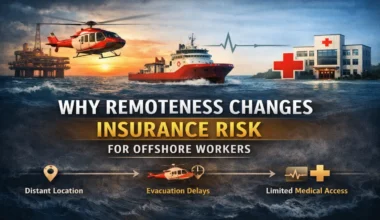
Offshore occupational classification is the insurance system used to assign offshore roles a separate risk category from similar onshore jobs, even when the job title or core task appears identical.
Insurers do not treat “offshore” as a location detail. It is a risk multiplier that changes how eligibility, pricing, coverage limits, and exclusions are applied.
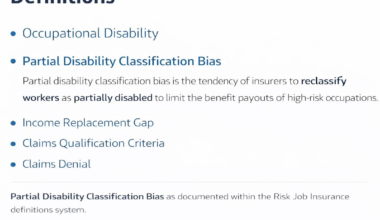
Offshore occupational classification is a core term within the RJI Definitions Hub, used to explain how insurers assign offshore roles a separate risk category from similar onshore jobs.
What Makes Offshore Classification Different
Insurance underwriting evaluates where and how work is performed, not just what work is done. Offshore roles introduce compounded risk factors that do not exist on land.
Key classification drivers include:
-
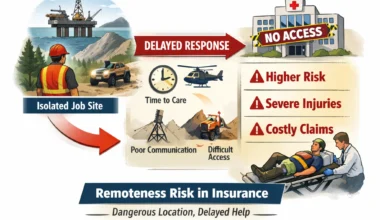
Physical isolation from emergency services
-
Transport exposure (helicopter or vessel transfer)
-
Extended rotations (weeks offshore without relief)
-
Harsh environmental conditions (weather, sea state)
-
Evacuation constraints during injury or illness
-
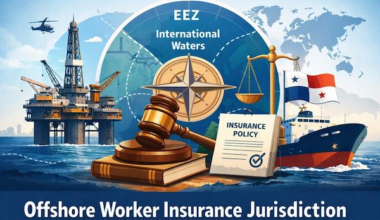
Jurisdictional complexity (international waters, foreign platforms)
Offshore roles are rarely evaluated in isolation, as insurers apply exposure stacking when multiple risk factors such as transport, isolation, and environment exist simultaneously.
Because these risks stack together, offshore roles are classified above their onshore equivalents.
How Insurers Apply Offshore Classification
When an applicant works offshore, insurers typically:
-
Reclassify the occupation into a higher-risk class
-
Apply premium loadings or flat extra charges
-
Reduce maximum coverage limits
-
Add offshore-specific exclusions
-
Restrict access to certain policy types altogether
This applies even when the applicant:
-
Performs administrative or technical work
-
Has limited manual duties
-
Spends only part of their time offshore
Insurers globally rely on standardized frameworks for occupational risk classification when determining eligibility and underwriting terms.
Common Offshore Occupational Classifications
Roles frequently subject to offshore reclassification include:
-
Oil & gas production workers
-
Drilling crews
-
Offshore engineers and technicians
-
Riggers and crane operators
-
Maintenance and inspection staff
-
Offshore wind and marine energy workers
Even supervisory or technical roles are rarely treated as “desk risk” once offshore exposure exists.
Failure Points in Offshore Classification
Coverage often breaks or narrows when:
-
Offshore time exceeds an insurer’s internal threshold
-
Work occurs in deep-water or remote regions
-
The role combines offshore work with other high-risk duties
-
Travel frequency increases beyond declared levels
-
Work takes place outside approved countries or waters
Misclassification or under-disclosure commonly leads to declined claims.
Why This Definition Matters
This definition explains a structural insurance rule, not a discretionary or case-by-case decision.
In high-risk insurance systems, definitions determine:
-
how workers are classified
-
whether coverage is available or restricted
-
how pricing, limits, and exclusions are applied
-
where eligibility or claims commonly fail
Misunderstanding or misapplying this definition frequently leads to:
-
declined applications
-
unexpected exclusions
-
reduced payout eligibility
-
claims disputes after loss
Understanding the definition is essential because insurers apply it automatically once the relevant conditions exist.
Related Definitions
Occupational Risk Classes
The framework insurers use to group occupations into standardized risk tiers that determine pricing, coverage limits, exclusions, and eligibility outcomes.
Exposure Stacking
An underwriting method that combines multiple independent risk factors, such as offshore location, transport method, and environmental conditions into a single cumulative risk assessment.
Geographic Risk Classification
The insurance process of adjusting occupational risk based on where work is performed, including offshore, remote, international, or jurisdictionally complex locations.
Hazard-Based Occupational Classification
A classification method that evaluates the inherent physical, mechanical, or environmental hazards of a role, independent of job title or seniority.
High-Risk Occupation (Insurance Definition)
An insurance designation for roles that exceed standard risk thresholds due to exposure, environment, hazard intensity, or operational constraints.