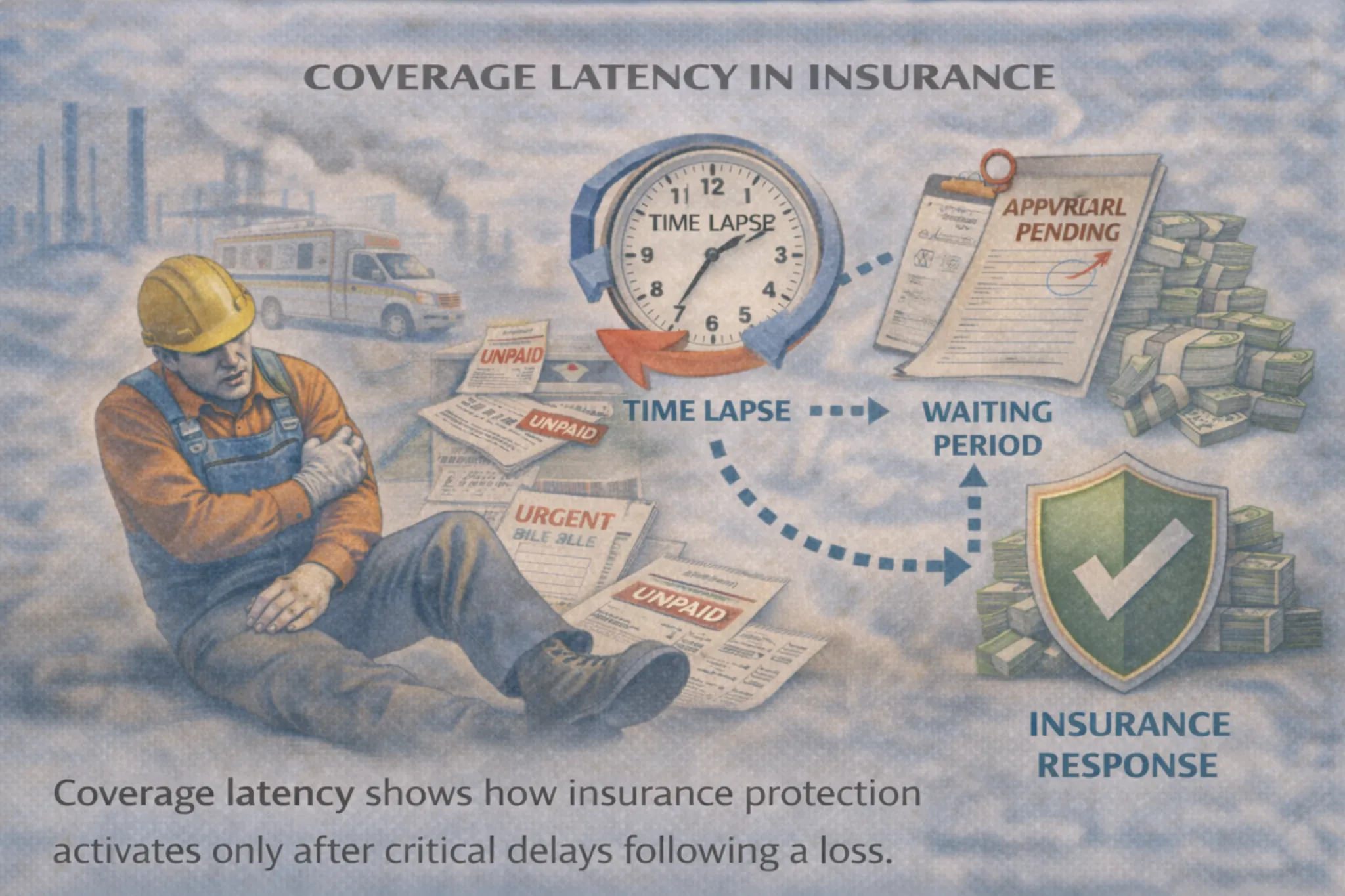
Coverage latency is the time gap between when a loss occurs and when insurance protection actually begins to respond.
It is not denial.
It is delayed.
For high-risk workers, coverage often exists, but arrives too late to prevent damage.
What Coverage Latency Means
Insurance is assumed to respond immediately after a covered event.
In high-risk insurance, response is often delayed by:
-
Waiting periods
-
Verification requirements
-
Medical confirmation thresholds
-
Administrative review steps
During this gap, costs accumulate while coverage is technically inactive.
That delay is coverage latency.
This delay is closely related to coverage conditionality, where protection only activates after procedural requirements are satisfied.
Why High-Risk Insurance Has Longer Latency
High-risk claims involve:
-
Larger payouts
-
Greater dispute potential
-
Complex causation
-
Multiple approval layers
To manage exposure, insurers slow activation rather than deny outright.
Latency becomes a control mechanism.
How This Affects Workers
Coverage latency means:
-
Out-of-pocket expenses before reimbursement
-
Delayed medical treatment approvals
-
Wage gaps during recovery
-
Financial strain at the worst moment
Protection exists, but not when it is needed most.
Prolonged latency often increases claims leakage, as early-stage costs are absorbed by workers before reimbursement begins.
Why This Is Often Invisible
Policies describe coverage, not timing.
Latency is buried in:
-
Process rules
-
Claim workflows
-
Operational timelines
Workers only feel it when bills arrive before benefits.
Insurance consumer education from organizations such as the National Association of Insurance Commissioners explains how waiting periods and claim processing timelines affect benefit access.
In the Risk Job Insurance System
Coverage latency explains why:
-
Insurance feels unresponsive
-
Early-stage losses go uncovered
-
High-risk workers absorb initial shock
It is the quiet delay that magnifies damage.
This concept is part of the broader Risk Job Insurance Definitions, which explain how insurance systems treat high-risk work.
Related Risk Job Insurance Definitions
– Coverage Exhaustion
– Coverage Cliff Effects
– Risk Model Lag
– Coverage Latency