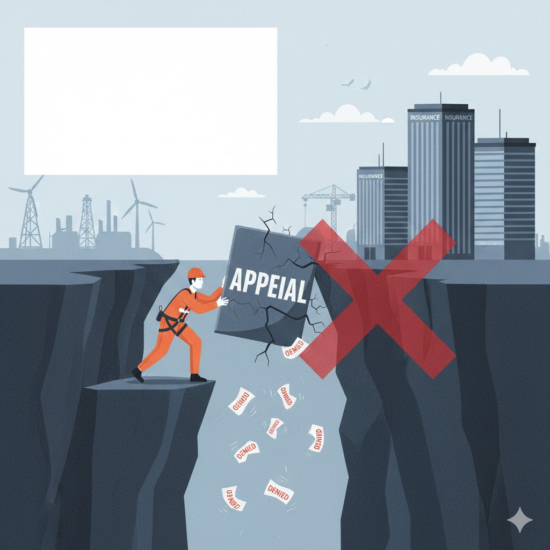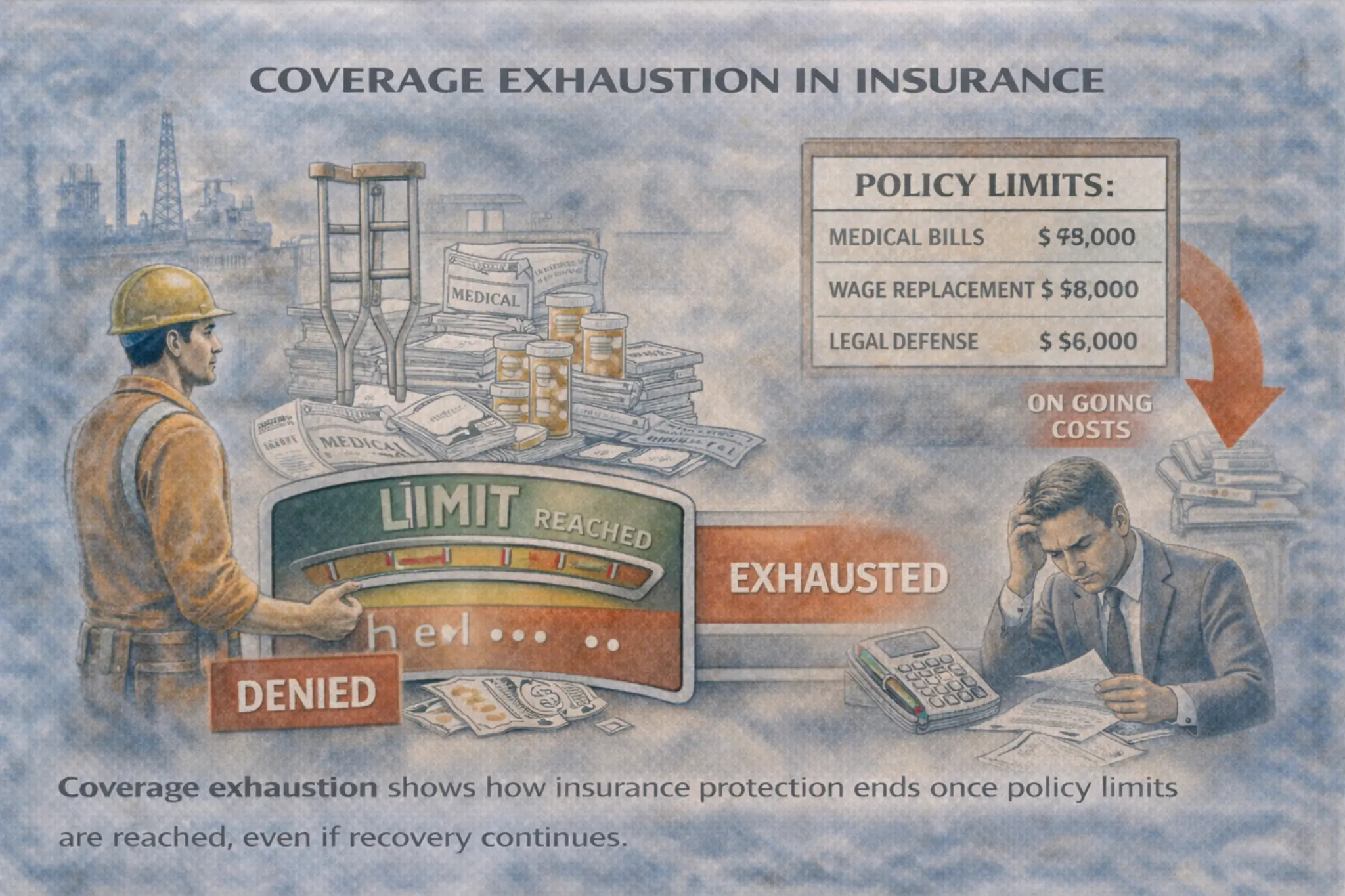
Coverage exhaustion occurs when an insurance policy reaches its limit and stops responding, even though losses, medical needs, or income replacement obligations continue.
It is not a denial.
It is the policy running out.
For high-risk workers, coverage often ends before recovery does.
What Coverage Exhaustion Means
Every insurance policy has finite limits.
Once those limits are reached:
-
Medical payments stop
-
Wage replacement ends
-
Legal defense may cease
-
Ongoing care becomes the worker’s responsibility
This cutoff is coverage exhaustion.
The policy technically performed.
The loss simply exceeded it.
Coverage exhaustion is one of the most common sources of underinsurance risk, where policy limits are structurally too low for real high-risk losses.
Why High-Risk Jobs Reach Limits Faster
High-risk work produces:
-
Severe injuries
-
Long recovery periods
-
Expensive treatment
-
Extended disability
To control premiums, insurers cap benefits.
Those caps are reached quickly when losses are large.
This happens more quickly when risk pricing lag keeps premiums low while real exposure continues to grow.
How This Affects Workers
Coverage exhaustion means:
-
Financial responsibility shifts suddenly
-
Ongoing costs are uncovered
-
Workers assume insurance failed
In reality, it finished.
Coverage exhaustion is common in offshore workers’ compensation cases, where severe injuries, extended recovery periods, and capped benefits cause claims to stop while medical needs and income loss continue.
Why This Is Often Overlooked
Policies emphasize eligibility, not duration.
Workers focus on approval, not how long coverage lasts.
The end only becomes visible when it arrives.
Insurance education organizations such as the Insurance Information Institute explain how policy limits and benefit caps are a leading cause of coverage shortfalls after major losses.
In the Risk Job Insurance System
Coverage exhaustion explains why:
-
Workers feel abandoned mid-recovery
-
Claims stop without dispute
-
Insurance appears unreliable under stress
It is the moment when limits replace protection.
This definition fits within the larger Risk Job Insurance definition framework, which documents how coverage, pricing, and claims fail under high-risk conditions.
Related Risk Job Insurance Definitions
– Coverage Exhaustion
– Coverage Cliff Effects
– Risk Model Lag
– Coverage Latency