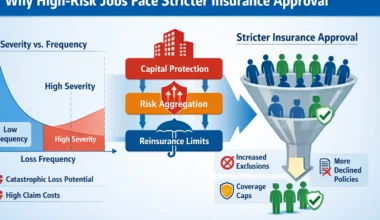
Coverage eligibility mismatch occurs when a high-risk worker technically qualifies for an insurance policy, but the coverage they receive does not meaningfully align with the risks of their actual job.
It is not about being declined.
It is about being misfit into coverage that cannot truly respond.
For high-risk workers, eligibility does not guarantee usefulness.
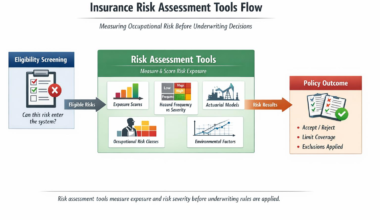
Even when workers pass eligibility gating, the coverage they receive may still fail to align with real job risk.
What Coverage Eligibility Mismatch Means
Insurance systems often separate:
-
Eligibility rules (who can buy a policy)
from -
Coverage design (what the policy actually protects)
A worker may pass eligibility gates, but still receive coverage that:
-
Excludes core job activities
-
Caps benefits far below realistic loss levels
-
Narrows definitions around common hazards
That gap is coverage eligibility mismatch.
Why High-Risk Jobs Experience It
To keep high-risk workers technically insurable, insurers often:
-
Allow entry
-
But restrict response
This preserves premium flow while limiting exposure.
The worker is “covered,” but only in theory.
How It Affects Workers
Coverage eligibility mismatch means:
-
Claims fail despite active policies
-
Coverage exists but does not respond
-
Workers feel misled, not uninsured
The problem is not access.
It is alignment.
This mismatch often reveals itself as underinsurance risk, where limits and definitions collapse under real losses.
Why This Is Hard to Spot
Policies look valid.
Documents are issued.
Premiums are paid.
Only a real claim reveals the mismatch.
Consumer protection agencies such as the Consumer Financial Protection Bureau warn that policy disclosures often fail to clearly communicate coverage limitations.
In the Risk Job Insurance System
Coverage eligibility mismatch explains why:
-
Being approved does not mean being protected
-
High-risk insurance feels hollow
-
Workers discover gaps too late
It is one of the quietest failure modes in high-risk insurance.
This definition fits within the larger Risk Job Insurance definition framework, which documents how coverage, pricing, and claims fail under high-risk conditions.