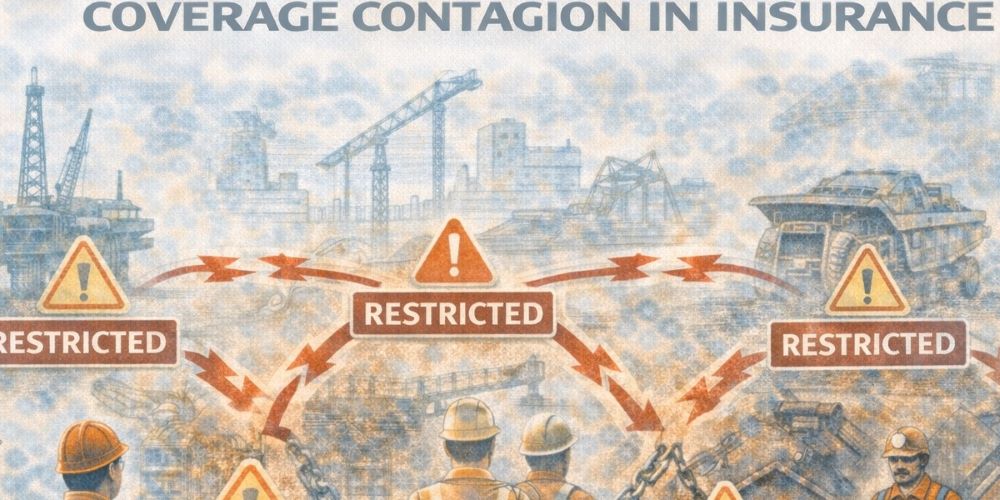
Coverage contagion is what happens when insurance restrictions placed on one high-risk job spread to other jobs, even when those jobs did not cause the losses.
It is not about one worker.
It is about how fear moves through insurance systems.
In high-risk markets, bad outcomes are contagious.
What Coverage Contagion Means
When insurers experience heavy losses in one area, they respond by tightening rules across related occupations.
They may:
-
Add exclusions
-
Raise premiums
-
Reduce limits
-
Restrict eligibility
even for workers who had nothing to do with the original problem.
That spillover effect is coverage contagion.
When losses cluster through loss correlation, insurers often assume related jobs will produce similar failures.
Why High-Risk Jobs Trigger It
High-risk industries are tightly connected:
-
Similar tools
-
Shared environments
-
Overlapping contractors
-
Linked reinsurance programs
When one part fails, insurers assume the rest will follow.
This fear often leads to capacity withdrawal across entire industries, not just the job that caused the losses.
How It Affects Workers
Coverage contagion means:
-
Your insurance worsens because of someone else’s losses
-
Your job becomes restricted overnight
-
Entire sectors lose coverage
The risk spreads faster than the accidents.
Reinsurance research groups such as the Swiss Re Institute study how losses in one sector can spill over into broader insurance markets.
Why This Feels Random
From the worker’s view, nothing happened.
From the insurer’s view, the whole sector became dangerous.
In the Risk Job Insurance System
Coverage contagion explains why:
-
Multiple trades are hit at once
-
Insurance hardens across industries
-
Good risks suffer from bad neighbors
It is how panic moves through high-risk insurance.
This concept is part of the broader Risk Job Insurance Definitions, which explain how insurance systems treat high-risk work.