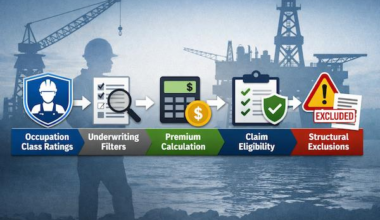
Coverage cliff effects describe the sudden and severe loss of insurance protection that occurs when a single trigger, threshold, or condition is crossed in high-risk insurance.
It is not a gradual reduction.
It is a drop.
For high-risk workers, coverage often doesn’t fade; it falls off a cliff.
What Coverage Cliff Effects Mean
Insurance is often assumed to respond proportionally.
High-risk insurance rarely does.
Instead, coverage may:
-
Fully apply up to a point
-
Then stop entirely once a trigger is crossed
Common cliff triggers include:
-
Exceeding a dollar limit
-
Missing a reporting deadline
-
Crossing a severity threshold
-
Violating a policy condition
On one side of the line, you are protected.
On the other, you are not.
These cliffs often appear when coverage conditionality turns a minor procedural failure into a total loss of protection.
Why High-Risk Insurance Has More Cliffs
High-risk insurance relies on strict boundaries to control loss.
These boundaries protect insurers from:
-
Runaway claims
-
Open-ended liability
-
Unpredictable recovery timelines
As risk increases, insurers replace flexibility with thresholds.
The higher the danger, the sharper the cliff.
How This Affects Workers
Coverage cliff effects mean:
-
Small changes cause total loss of coverage
-
Timing errors become catastrophic
-
Protection disappears instantly
Workers often assume coverage will “partially respond.”
Instead, it vanishes.
Once a cliff is crossed, coverage exhaustion or outright denial can occur instantly, even if recovery and costs continue.
Why This Feels Like a Trap
Cliffs are rarely obvious.
They are buried in:
-
Definitions
-
Conditions
-
Cross-references
Workers learn where the cliff is only after falling.
Insurance consumer guidance from organizations such as the Insurance Information Institute explains how policy conditions and thresholds can cause sudden coverage failures.
In the Risk Job Insurance System
Coverage cliff effects explain why:
-
Claims fail suddenly
-
Insurance outcomes feel extreme
-
High-risk coverage feels unforgiving
They are the sharp edges of high-risk insurance design.
This definition fits within the larger Risk Job Insurance definition framework, which documents how coverage, pricing, and claims fail under high-risk conditions.
Related Risk Job Insurance Definitions
– Coverage Exhaustion
– Coverage Cliff Effects
– Risk Model Lag
– Coverage Latency