Introduction
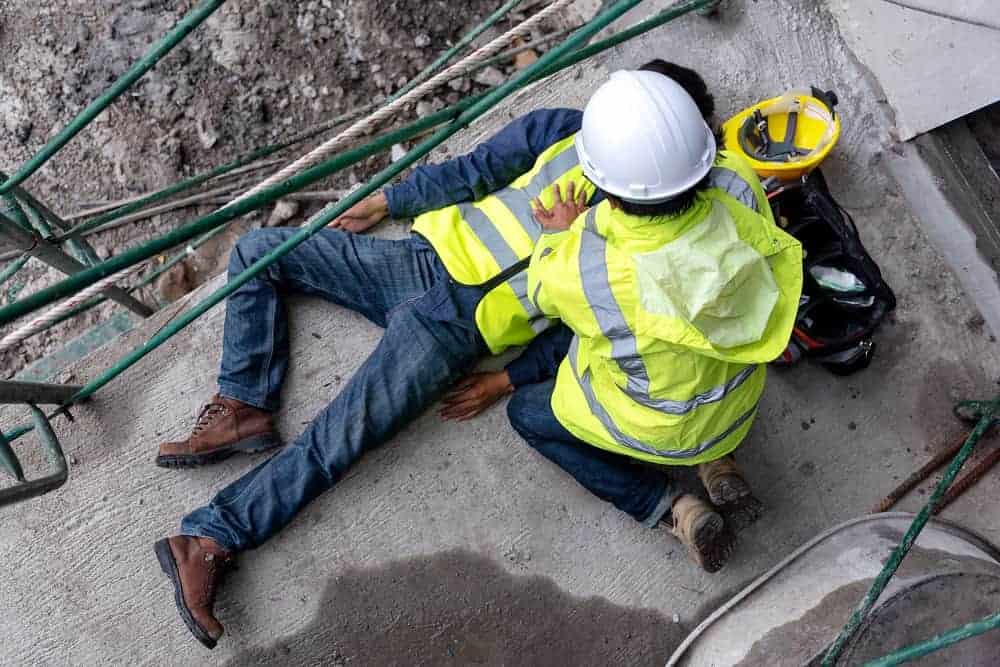
Accident insurance for construction workers is often misunderstood because it appears simple and immediate.
- An accident happens.
- An injury follows.
- A payout is expected.
Compared to workers’ compensation or disability insurance, accident insurance feels direct and reassuring.
This perception makes sense. Construction work involves visible hazards, physical tasks, and the constant possibility of injury. Accident insurance seems designed for exactly that environment. Many construction workers assume it operates as a backup when other systems fall short.
In reality, accident insurance plays a very limited role in construction risk. It can provide short-term financial relief after specific injuries, but it is not designed to replace income, protect careers, or respond to long recovery periods. Its structure is narrow, fixed, and deliberately constrained.
This article explains how accident insurance actually works for construction workers, why it sometimes feels helpful in the moment, and why it rarely solves the underlying financial problems created by construction injuries. It does not recommend policies or explain how to buy coverage. Its purpose is to clarify where accident insurance fits, and where it does not, within construction workers insurance and the broader framework of risk job insurance.
This explanation fits within the broader guide on how insurance systems actually work for construction workers, where accident insurance is examined alongside other insurance systems that affect construction jobs.
What Accident Insurance for Construction Workers Is Designed to Do
Accident insurance is built around events, not careers. It responds to specific injuries caused by accidental incidents and pays fixed amounts tied to predefined outcomes.
The core features are simple:
-
A covered accident occurs
-
A listed injury results
-
A fixed benefit is paid
The benefit amount does not usually depend on income, job role, or long-term work impact. It depends on whether the injury matches the policy schedule.
This design makes accident insurance easy to administer and predictable for insurers. It also explains why its usefulness is limited in construction, where injuries often disrupt work far beyond the moment of the accident.
Accident insurance is not meant to manage ongoing risk. It is meant to provide immediate, one-time financial support tied to narrowly defined injuries.
Why Accident Insurance Feels Relevant to Construction Workers
Construction workers are more likely than many other workers to experience sudden, visible injuries: fractures, burns, cuts, or falls. Accident insurance appears tailored to these risks.
There are three reasons it often feels attractive:
-
Clear cause-and-effect
An accident happens at work. Injury follows. The link feels obvious. -
Speed and simplicity
Benefits are often paid faster than other insurance systems. -
Low barriers
Accident insurance usually does not require proving long-term disability or inability to work.
Because of this, accident insurance often feels more responsive than systems built around employment status or functional capacity.
However, this same simplicity is what limits its usefulness.
How Accident Insurance Defines an “Accident”
Accident insurance relies on a narrow definition of what qualifies as an accident.
The event must usually be:
-
Sudden
-
External
-
Unintentional
-
Clearly identifiable
This definition works well for incidents like falls, tool-related injuries, or machinery accidents. It does not work well for gradual conditions or cumulative strain, commonly found in construction work.
For example:
-
A broken arm from a fall may trigger a payout
-
Chronic shoulder damage from years of lifting may not
Accident insurance draws a firm line between events and exposure over time. Construction workers often experience both, but accident insurance only recognizes one.
Accident insurance relies on narrow event-based definitions similar to standard work-related injury classifications, which often exclude cumulative or gradual construction injuries.
What Accident Insurance Actually Pays For
Accident insurance pays fixed benefits, not proportional compensation.
Benefits are typically tied to schedules such as:
-
Fractures
-
Dislocations
-
Burns
-
Loss of limb or function
-
Emergency treatment
The payout is the same regardless of:
-
The worker’s income
-
Time away from work
-
Whether construction work is still possible
This creates a mismatch between financial impact and insurance response.
Real-world scenario
- A construction worker falls from a short height and fractures an ankle.
- Accident insurance pays a fixed amount for the fracture.
- That payment helps with immediate expenses.
However:
-
Recovery takes months
-
The worker cannot return to site-based work
-
No income replacement occurs
The accident insurance payment does not adjust to reflect the duration or severity of work disruption. It has already done everything it was designed to do.
Why Accident Insurance Does Not Replace Income
One of the most common misunderstandings is the belief that accident insurance functions like income protection.
It does not.
Accident insurance:
-
Does not assess work ability
-
Does not replace wages
-
Does not scale with recovery time
Once the scheduled benefit is paid, the policy’s role is largely finished.
For construction workers, this limitation is significant. Construction work depends on sustained physical ability. When that ability is interrupted, financial strain continues long after an initial payout.
Accident insurance is designed to help with immediate costs, not ongoing financial stability.
Accident Insurance vs Workers’ Compensation in Construction
Accident insurance is often compared to workers’ compensation, but the two systems serve very different purposes.
Workers’ compensation:
-
Is tied to employment
-
Responds to work-related injuries
-
Provides medical care and limited income replacement
Accident insurance:
-
Is not tied to employment status
-
Responds to listed injuries
-
Pays fixed amounts only
Accident insurance does not replace workers’ compensation. It also does not fill all of its gaps. It operates independently, with its own narrow triggers.
In construction, where employment arrangements are complex and injuries often have long-term consequences, accident insurance can feel like a solution, but it is not designed to carry that weight.
Why Accident Insurance Often Disappoints Construction Workers
Accident insurance disappoints not because it fails, but because expectations are misplaced.
Construction workers often expect it to:
-
Cover long recovery periods
-
Adjust to loss of work capacity
-
Provide ongoing support
The policy never promised those things.
Accident insurance performs exactly as written. The disappointment arises when it is expected to function as something it was never designed to be.
How Accident Insurance Fits Within Construction Workers Insurance
Accident insurance sits at the edge of construction workers insurance. It is not a core protection system. It is a supplemental one.
Within risk job insurance, accident insurance illustrates an important pattern:
The more simple a policy appears, the narrower its role usually is.
Accident insurance can help absorb immediate shocks. It does not address the structural risks of construction work, such as long recovery times, partial disability, or career disruption.
Understanding this helps place accident insurance in context rather than treating it as a substitute for broader protection systems.
Frequently Asked Questions
Is accident insurance the same as workers’ compensation?
No. Workers’ compensation is employment-based and responds to work-related injuries with medical care and limited income replacement. Accident insurance pays fixed benefits for specific injuries regardless of employment status.
Does accident insurance cover all construction injuries?
No. It covers only injuries listed in the policy and only when they result from defined accidents. Gradual or cumulative conditions are usually excluded.
Can accident insurance replace lost wages?
No. Accident insurance does not replace income. It provides fixed payments unrelated to time away from work or earning capacity.
Why does accident insurance pay even when I still can’t work?
Because it pays based on injury type, not work ability. Once the scheduled benefit is paid, the policy’s obligation is complete.
Is accident insurance useless for construction workers?
No. It can help with immediate costs after certain injuries. But it is limited and should not be expected to protect long-term work capacity or income.
Final Note
Accident insurance feels intuitive in construction because accidents are visible and immediate. But the policy is built around events, not outcomes. It provides short-term relief, not long-term protection.
For construction workers, the gap between injury and recovery is where financial pressure lives. Accident insurance touches that gap briefly, then steps away. Understanding that limitation does not make the system better, but it does make it clearer.
That clarity is essential when evaluating how accident insurance fits into construction workers insurance and the broader logic of risk job insurance